Sales in Swiss Retail Collapse by Around 20% in April
3. June 2020THE LEFT wants a Mobility Corporation Deutsche Bahn-Lufthansa
3. June 2020DPD starts the VanAssist project with partners in the practical phase. Autonomous electric vehicles are intended to optimize delivery processes. The focus is on supporting human labor.
(Aschaffenburg) An ever-increasing order volume, a growing shortage of skilled workers, and the continuously rising traffic density are making the so-called last mile of parcel delivery, the handover to the recipient, more challenging. The funding project VanAssist aims to develop a locally emission-free, fully autonomous delivery electric vehicle. Behind VanAssist, alongside the international parcel and express service DPD, are scientific project partners such as the Lower Saxony Research Center for Vehicle Technology NFF of TU Braunschweig, TU Clausthal, Offenburg University of Applied Sciences, and the University of Mannheim, as well as BridgingIT GmbH, IAV GmbH, Ibeo Automotive Systems GmbH, and ZENTEC GmbH. The autonomous parcel transporter is intended to optimize the delivery process and effectively relieve parcel deliverers. With the installation of sensors and control technology in the basic structure of the autonomous electric vehicle, the project, funded by the Federal Ministry of Transport and Digital Infrastructure (BMVI), is now entering the practical phase.
As an interactive, intelligent system for autonomously remotely monitored small transporters in parcel logistics, the VanAssist project includes not only the autonomously driving motion board but also a complete software solution for calculating optimal delivery routes and flexibly controlling the vehicle. As a result of the project, a so-called “demonstrator” will be created, which realistically represents the functionality of later series vehicles and can serve as a basis for series development.
In practice, delivery is to take place in the so-called rendezvous mode in the future. The vehicle is to autonomously cover the distance from the depot to the delivery area, with the deliverer only boarding at a defined meeting point. At a previously determined stop point, established through route optimization, the deliverer retrieves the packages that can be delivered on foot in the immediate vicinity. While the deliverer, for example, delivers several packages in an area that is not accessible or only accessible via detours, the vehicle moves independently to the next stop point and waits there for the deliverer. In the meantime, the deliverer can be guided via indoor navigation from BridgingIT GmbH along the optimal path through an office building to the next meeting point with the vehicle.
Because the deliverer and the vehicle are always in contact via a secure communication unit, the vehicle can be flexibly directed to a different stop point than the originally defined next stop point if necessary. Furthermore, the vehicle is continuously connected to a control center, allowing for responses to problems without the deliverer’s intervention. As a result, unnecessary travel distances and walking paths of the deliverer are to be reduced, thus enabling more packages to be reliably delivered in a shorter time and effectively relieving deliverers.
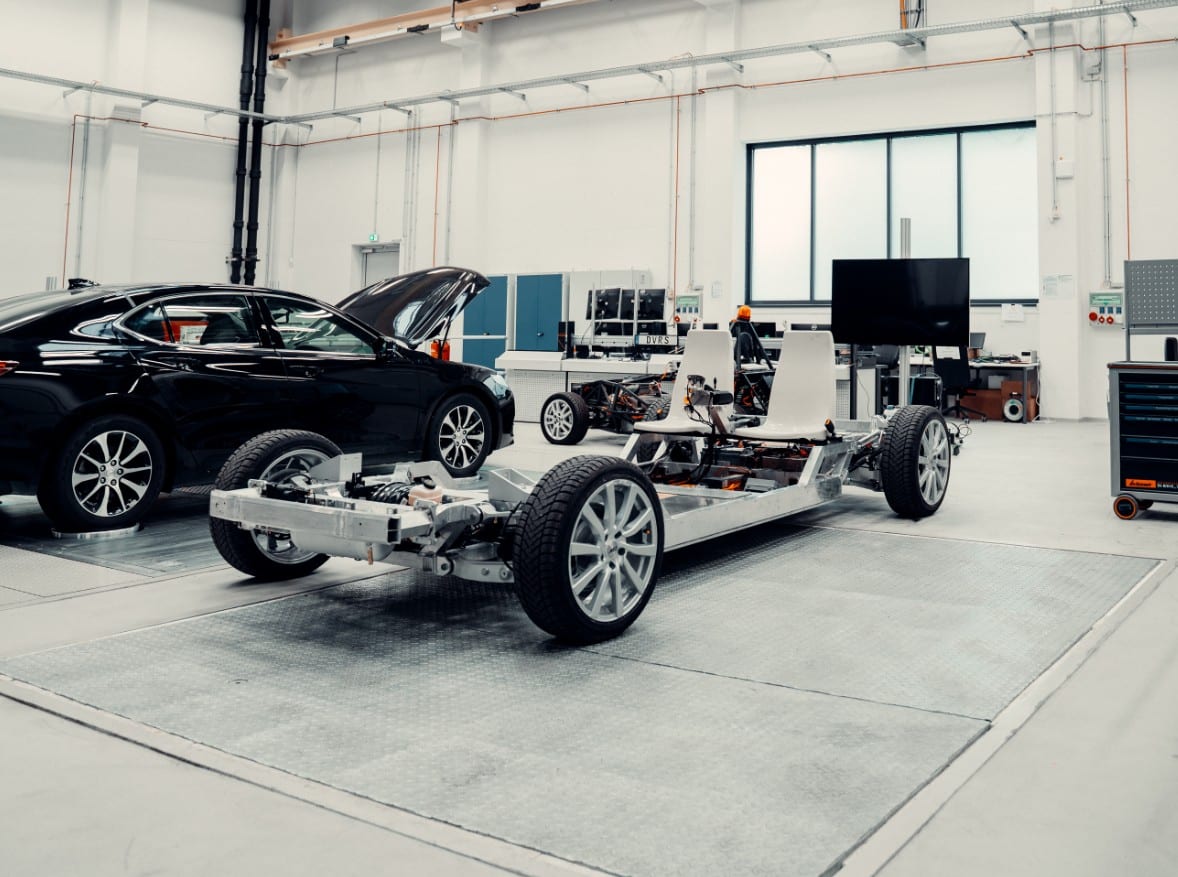
After the development phase, VanAssist is now starting the implementation of the project: The demonstrator will be assembled on the campus of TU Braunschweig, where the test track for demonstrating the functions of the fully autonomous delivery vehicle is also located. This is based on the motion board supplied by Hanseatische Fahrzeug Manufaktur GmbH. Ibeo equips it with its 4D LiDAR Solid State technology for 360° all-around visibility and a safety system for monitoring autonomous driving. By the end of the year, the vehicle is expected to be fully operational, with the final presentation scheduled for summer 2021.
“After an intensive planning phase, we are very pleased to now embark on the concrete implementation of the project together with our partners from science and industry,” says Gerd Seber, Group Manager City Logistics & Sustainability at DPD Germany. “We see autonomous vehicle technology primarily as support for the human deliverer. With a fully autonomous delivery vehicle, the delivery process can be significantly more efficient in the future – and human labor can focus even more on the actual parcel delivery.”
“The VanAssist project opens up the opportunity for us to develop a completely new modular, electrified, and autonomous vehicle. Through the application case of parcel delivery, we have the chance to test existing functionalities of automated driving in a new traffic environment,” explains apl. Prof. Dr.-Ing. Roman Henze, head of the research field “Intelligent Vehicle and Connected Driving” at the Lower Saxony Research Center for Vehicle Technology (NFF). “The further development of HMI concepts through the interaction between automated vehicles and the user, i.e., the deliverer, is also an exciting research question.”
“This project is particularly exciting for us: We can further develop our research results in the field of safety for autonomous vehicles and test them in a concrete environment. Through our on-board monitoring and the connection with a central control center, we can demonstrably and substantially increase the safety of such systems. This way, the introduction of autonomous vehicles can be realized much faster,” says Prof. Dr. Andreas Rausch, director of the Institute for Software & Systems Engineering (ISSE) at TU Clausthal and board member of the Lower Saxony Research Center for Vehicle Technology (NFF).
The project, budgeted at a total of 4.3 million euros, is funded by the Federal Ministry of Transport and Digital Infrastructure. As part of the funding program “Automated and Connected Driving,” the project receives a total funding volume of 2.7 million euros. DPD Deutschland GmbH is the consortium leader and is supported by ZENTEC GmbH in project administration.
KEP Industry Responds to Challenges
Online shopping and the associated courier, express, and parcel deliveries (KEP) are enjoying unabated growing popularity. This is particularly evident in B2C shipments: In 2017, 74 billion parcels were shipped worldwide, while in 2018 there were already 87 billion – an increase of 17 percent. By 2025, experts even expect a parcel volume of up to 200 billion parcels per year. In contrast, the KEP industry faces significant challenges: In addition to the growing shortage of skilled workers, there is particularly the increasing traffic density in the continuously growing large cities. As a result, the “last mile,” i.e., delivery to the recipient, is becoming increasingly complex. Innovative delivery solutions like VanAssist demonstrate how the parcel industry can address these challenges.
Overview of Project Partners:
- BridgingIT GmbH
- DPD Deutschland GmbH
- Offenburg University of Applied Sciences – Institute for Reliable Embedded Systems and Communication Electronics
- IAV GmbH – Engineering Company for Automotive and Traffic
- Ibeo Automotive Systems GmbH
- NFF, Technical University of Braunschweig – Institute for Vehicle Technology
- NFF, Technical University of Clausthal – Institute for Software and Systems Engineering
- University of Mannheim – Institute for Enterprise Systems
- Project Coordinator: ZENTEC Center for Technology, Start-up and Cooperation GmbH
Photos: DPD