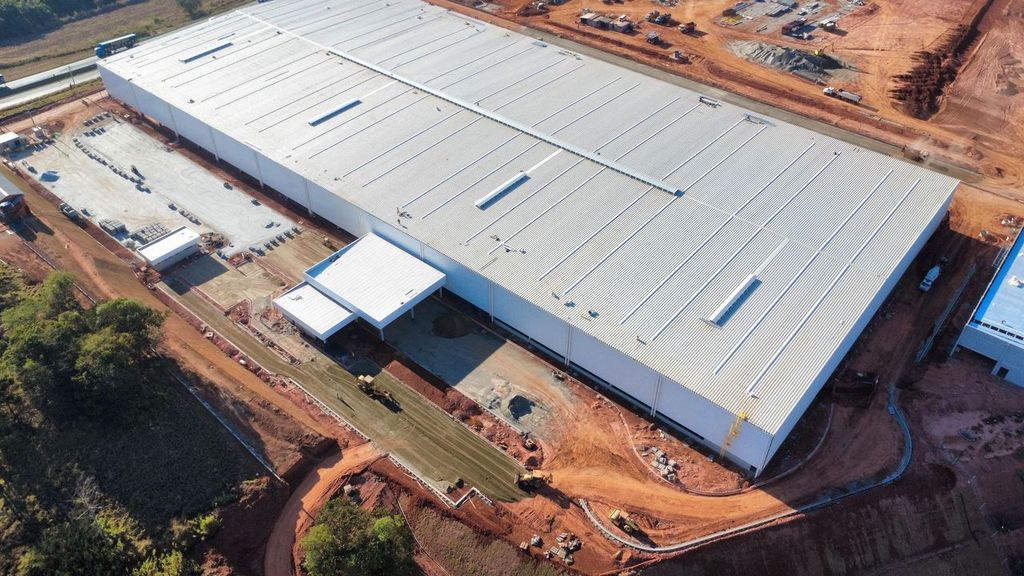
Hellmann Opens New KEP Location in the Leipzig / Halle Region
10. June 2020DHL Launches New Full Train Connections from Germany to China
11. June 2020The German Transport Forum (DVF) welcomes the decision of the National Hydrogen Strategy by the Federal Cabinet. This step is seen as important for climate protection and for the industrial future of Germany.
(Berlin) The mobility association of the German economy, the German Transport Forum (DVF), welcomes the decision of the National Hydrogen Strategy by the Federal Cabinet as an important step for climate protection in transport and for the industrial future of Germany.
DVF President Prof. Dr.-Ing. Raimund Klinkner: “In addition to the direct use of electricity from renewable energies, such as in battery-electric vehicles, green hydrogen is also necessary to establish the transport sector on a non-fossil basis in the long term. Only in this way can we achieve our climate protection goals. It is now important to integrate the various approaches into a coherent overall strategy. The hydrogen strategy, the P-t-X roadmap, and the strategy for battery applications must be considered together. This requires a high level of coordination regarding the EU’s strategy on hydrogen and e-fuels.”
Diverse Positive Points
The DVF positively assesses the following points in the National Hydrogen Strategy:
- The topic of “hydrogen” has received an additional boost with the government’s economic and future package. The federal government sees a financial need of seven billion euros for the implementation of the hydrogen strategy, plus two billion euros for international partnerships.
- The strategy is correctly formulated as a fundamental framework. Transport needs green hydrogen for climate protection. Battery-based electromobility and hydrogen or e-fuels are not contradictory. They complement each other.
- Important areas of application for hydrogen in transport are correctly identified in the strategy: fuel cell vehicles, e-fuels, aviation, shipping, heavy trucks and buses, trains, primary and secondary drives, special vehicles for waste disposal, ports, airports, and the construction industry.
- The strategy also contains good starting points for funding measures in the areas of infrastructure, vehicles, supply industry, fuel cell technology, research, and development.
- In Germany, industrial production facilities for green hydrogen with a total capacity of 5 GW are to be established by 2030, with an additional 5 GW by 2040 at the latest.
- The federal government is launching a research offensive “Hydrogen Technology 2030,” which includes the transport sector.
- In the long term, Germany will need to import large quantities of green hydrogen. Therefore, it is good that the federal government is paying high attention to the establishment of international partnerships.
Include Further Measures
The DVF advocates for a swift start to the implementation of the hydrogen strategy, including the following measures:
- Promotion of industrial electrolysis plants in Germany to stimulate production, scaling, and successful technology export
- Launching a market introduction program for e-fuels
- Exemption for e-fuels and hydrogen from the EEG levy and energy tax
- Inclusion of a minimum quota of five percent e-fuels/hydrogen by 2030 in the EU directive for the promotion of renewable energies (RED II)
Klinkner: “Hydrogen technology requires an alliance of strong partners. Therefore, it is essential to set up the entire value chain internationally and with capable players from Germany. Due to the very high economic hurdles, corresponding incentives are necessary. The federal government and the EU must therefore quickly adapt the regulatory framework to pave the way for the hydrogen economy.”
Photo: © Adobe Stock