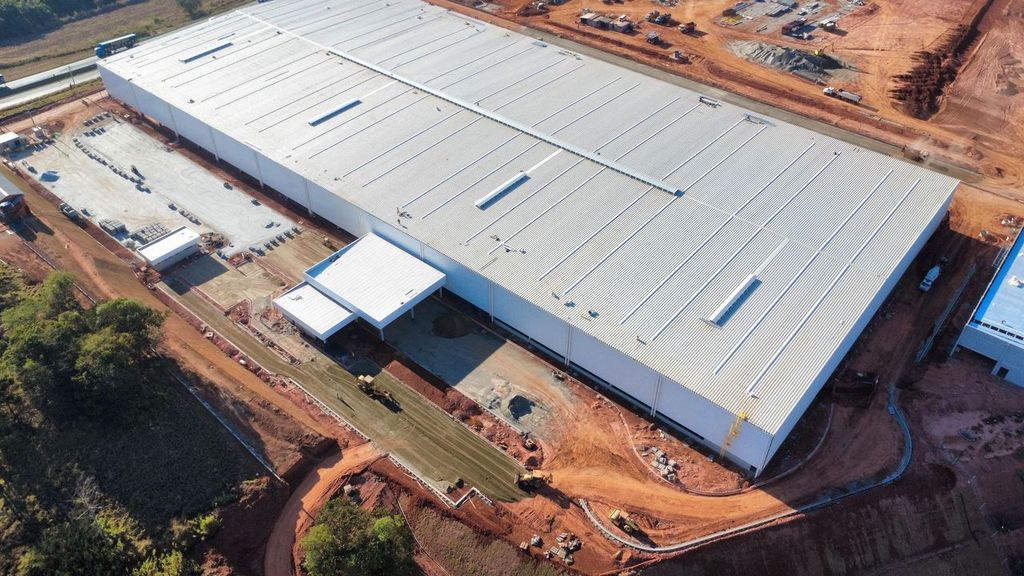
SSI Schäfer equips new logistics center of Shop Apotheke Europe
12. June 2020DB Cargo and Kombiverkehr Expand Capacities Antwerp Duisburg
15. June 2020Visibility in the Supply Chain is becoming increasingly important, and only comprehensive digitalization ensures Supply Chain Excellence and optimal customer satisfaction, as Thomas Kofler explains in detail in his report.
By Thomas Kofler
(Feusisberg) Supply chain transparency is important, but it is no longer sufficient in today’s world. Those who want to not only react to supply chain disruptions but also act proactively and inform their customers correctly need Predictive Supply Chain Visibility.
Supply shortages of medications and medical equipment, delivery difficulties with the Tesla Model 3, long waiting times for the iPhone 11 and iPhone 11 Pro made headlines in 2019/2020. Only Amazon seems to shine with Supply Chain Excellence.
Supply Chain Management is one of the most complex tasks in a company. Global supply sources, the involvement of various partners (production sites, suppliers, warehouse operators, freight forwarders, transporters, customs authorities, distributors, etc.), as well as diverse physical and digital interfaces – the sheer volume makes it difficult for executives to maintain an overview of the supply chain ecosystem and gain insight.
Due to the “Amazon effect,” many companies are under significant competitive pressure. Consumers expect a flawless, uninterrupted delivery of ordered goods at the right place, at the right time, and in the right quantity – even during the Corona times. One hundred percent customer satisfaction is the key to sustainable success.
This demand has now also transferred to the B2B business. It forces companies to rethink and act; only comprehensive digitalization ensures Supply Chain Excellence and optimal customer satisfaction.
Confusing Data Variety vs. Transparency
For decades, supply chain managers have fought for more process transparency – from raw material suppliers to end customers. A multitude of software solutions is now in use by shippers, freight forwarders, and transporters: Global Trade Management (GTM), Transport Management (TMS), Warehouse Management (WMS), Enterprise Resource Planning (ERP), or Carrier Dispatch Systems, to name a few. Yet many pieces of information are still exchanged manually via email, fax, or telephone along the supply chain. The reason: there is little or no interoperability between all systems. This prevents process participants from having a holistic view of their deliveries. As a result, neither quick recognition nor proactive communication of delivery issues is possible. The lack of visibility also leads to numerous operational shortcomings, reduces productivity, and prevents cost savings.
Moreover, the information needs and interpretation of individual data contents can vary significantly depending on the supply chain partner. For example, the handling sea freight forwarder has a different perspective on a delivery than the receiving transport service provider at the central hub. There is also great diversity in data standards, data volume, and applied semantics in SCM software. Furthermore, not every partner in the supply chain is willing or able to share their data with everyone – out of fear that the data will not be treated confidentially or due to different ERP systems. Another weakness is the enormous amounts of data flowing through the supply chain. To fully exploit the potential of the supply chain, this data must be processed. However, it often only provides a picture of the past, possibly the present, but rarely offers a glimpse into the future.
Accurate Information
The importance of accurate, reliable data is clearly demonstrated in goods shipping. In sea transport, up to 30 partners are often involved. Errors can multiply quickly. The impacts of the Corona pandemic, blank sailings, slow steaming, strikes, etc., lead to exceedances of the estimated time of arrival (ETA), and thus usually also to delays in subsequent transport.
About a quarter of all container ships arrive late at the port. Only a few shipping companies inform their customers in real-time about impending delays. However, the goods can also be stuck in customs or the truck can be caught in traffic and miss the ship’s departure. To react in time, the goods recipient should be notified as soon as the first disruption occurs that the ETA is being pushed back. Then they are still able to react proactively and develop a cost-efficient contingency plan.
This shows that supply chain transparency alone is not enough. Large companies need predictive visibility solutions that provide them with accurate, reliable data at shipment/item level in real-time across all orders at a glance. This is especially true for ETA data.
Predictive Supply Chain Visibility
New open platform technology solutions, artificial intelligence, and machine learning now allow data from various sources to be collected, cleaned, corrected, evaluated in real-time, and thus create predictions for predefined events with great precision. To return to our example, ship positions can now be tracked in parallel by numerous providers thanks to satellites, predictions can be improved with weather forecasts, port and terminal information, and thus the ETA can be continuously refined. The more sources are tapped, the higher the reliability of the statements. With objective and accurate ETA, entrepreneurs can quickly anticipate delivery problems. This enables them to proactively communicate with end recipients so that they can dynamically reorganize their logistics and sales processes and mitigate the impact of problems. Current and reliable data thus lead to better decision-making.
Immediate access to real-time information and accurate arrival times is a must for all companies that want to remain competitive. For successful companies, the customer and their satisfaction are at the beginning of the process chain. They determine the organizational workflow. Process management is developed with a focus on results.
Investment in Predictive Visibility Solutions:
- increase revenue because goods are available for sale on time,
- reduce costs because the impacts of supply chain disruptions can be resolved more cost-efficiently,
- increase supply chain agility and efficiency,
- improve cash flow because safety stocks can be reduced,
- increase customer satisfaction, as the customer always has the part on the production line they need or the goods on the shelf they want to buy.
 |
Thomas Kofler, VP Sales EMEA, ClearMetal, Zurich
Thomas Kofler has been VP Sales EMEA at ClearMetal Inc. since December 1, 2019, with an office in Feusisberg near Zurich (Switzerland). He has accompanied numerous software companies in their market entry into Europe and has many years of sales and consulting experience in logistics, supply chain management, and international trade. In addition, he is familiar with the operational challenges of the digital transformation of companies. ClearMetal is a provider of predictive supply chain applications based on state-of-the-art platform technology and machine learning. |