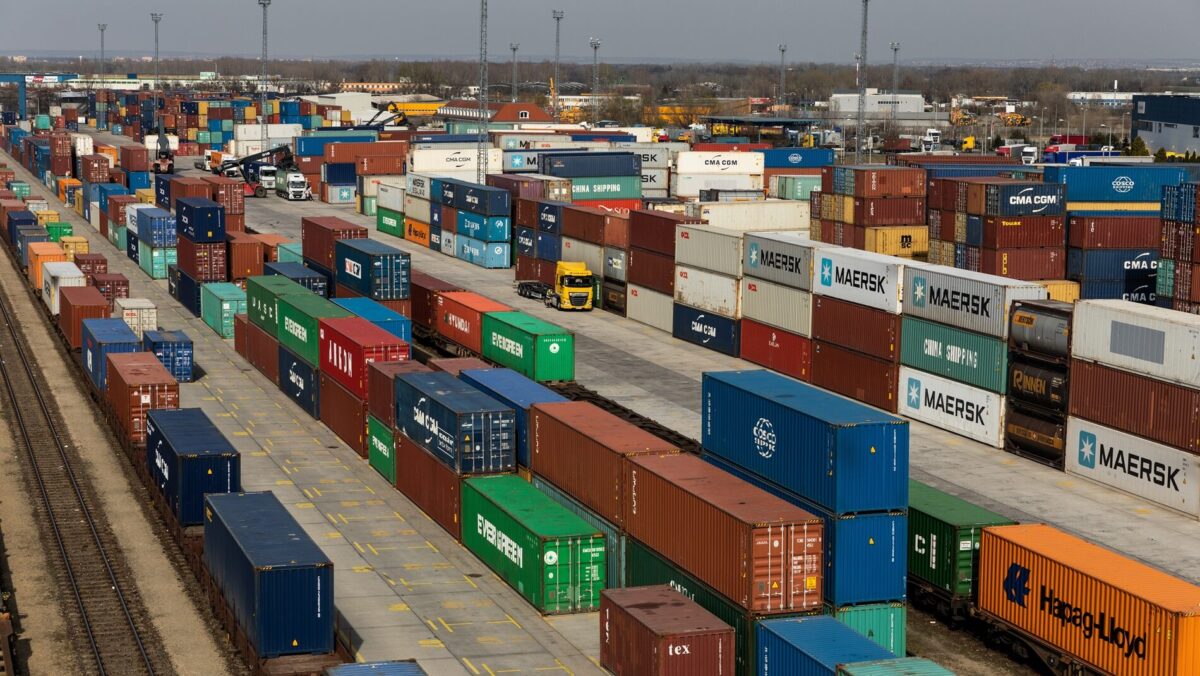
duisport plans an investment in the Interporto Trieste
3. August 2020TFG Transfracht Expands with 100 New Connections to and from Bremen
4. August 2020A coalition of various parties around the cargo bike has addressed an open letter to the German Association of Cities and Towns (DStGB). The primary demand is for more and wider bike paths, as cargo bikes are wider than conventional bicycles. In addition to other demands, the charging infrastructure should also be improved.
(PresseBox, Berlin) Open letter from GreenPack, Swobbee, ONO, BAYK, Radkutsche, SaR Radlogistik, Carla Cargo, Heinzmann, Martin Seißler, and the German Cargo Logistics Association (RLVD) to the German Association of Cities and Towns (DStGB), the German City Day, the Federal Ministry for Transport and Digital Infrastructure (BMVI), and the transport policy spokespersons of the parties represented in the Bundestag.
Introduction
Unintentionally, the Corona crisis has contributed to the mobility transition: The reduced car traffic has prompted some cities to set up temporary bike paths. Berlin has taken a pioneering role in this regard in Germany. While all the impacts of the Corona pandemic are painful, particularly the health and economic ones, these infrastructure measures are nonetheless encouraging and to be welcomed!
The measures initiated can only represent a first step. For the mobility transition in cities to succeed, we need a political shift in transport policy! We must end the one-sided fixation on cars and bring bicycles and cargo bikes into focus. Cargo bikes can already replace many cars and diesel vans today. What is missing is adequate infrastructure!
The Corona situation required a rapid setup and expansion of the temporary cycling infrastructure. The next steps must involve structural changes for a permanent integration into existing transport systems. This sets a signal against mere actionism and for a sustainable mobility transition.
We, the undersigned of this call, demand that politics at the federal, state, and municipal levels strengthen existing mobility and transport alternatives. Bicycles and cargo bikes must be brought out of their marginal position in road traffic and given the space that corresponds to their contribution to climate protection and the enhancement of quality of life!
Background
Germany has set itself the goal of reducing its greenhouse gas emissions by 55 percent by 2030 compared to 1990 levels. Motorized traffic is the third-largest contributor to CO2 emissions in Germany. Despite more efficient drive technologies, total traffic-related emissions in Germany have even increased due to the rise in the number of vehicles and the trend towards larger vehicles. The burden is particularly high in cities – and there are already solutions available for cities today.
Demands
1. More Bike PathsA large network of bike paths increases the attractiveness of the environmentally friendly mobility alternative of cycling. When more people ride bikes, noise, traffic pressure, and emissions in city centers are sustainably reduced. Therefore, even beyond the Corona crisis, work must continue at an increased pace to expand the existing bike path network.
2. Wider Cycling FacilitiesA cargo bike requires more space than a normal bicycle. We need wide bike paths that can be safely used by cargo bikes while ensuring a safe distance from car traffic – the StVO amendment already takes the necessity of cycling safety into account, now the infrastructural implementation must follow!
3. Bike HighwaysCargo bikes and e-cargo bikes not only represent an environmentally friendly and cost-effective alternative to diesel-powered delivery vans, but they can also significantly accelerate urban transport. New urban transport concepts must appropriately consider cargo bikes and provide for the establishment of bike highways. This directly increases the attractiveness of this mobility alternative, encourages a switch, and relieves city centers.
4. Create Charging Infrastructure for E-Cargo BikesWhile the potential of e-cargo bikes has already been recognized, there is a lack of awareness regarding the necessity of adequate charging infrastructure. We need a refueling station for micromobility! A public network of battery swap stations meets the logistics practice characterized by flexibility and speed and increases the efficiency of cargo bike logistics.
5. Adapted Legal FrameworkWe need a legal framework that reflects both the current and future importance of cargo bikes and improves the conditions, especially for the commercial use of e-cargo bikes. Additionally, the barriers to establishing charging stations for e-cargo bikes in public spaces must be reduced.
6. Linking Climate Protection and Economic PromotionIn light of the necessary reduction of emissions, economic promotion must be increasingly aligned with climate protection in the future. Supporting sustainable technologies, transport systems, and forms of mobility is a direct investment in the future and in a sustainably strong economy. Furthermore, the higher costs for heavy cargo bikes should be taken into account with higher funding amounts.
7. Expand Research Funding for Cargo Logistics SystemsCargo bikes and e-cargo bikes, as well as innovative battery swap systems, play a crucial role in sustainable multimodal logistics systems. Research and development at both the technical and systemic levels must be strengthened to further enhance the societal and economic benefits. Additionally, consulting services for the expansion of cargo bike-based logistics concepts should also be promoted.
Photo: © Swobbee
www.greenpack.de