Chemical Labels Often Incorrect, Especially for Hazardous Goods
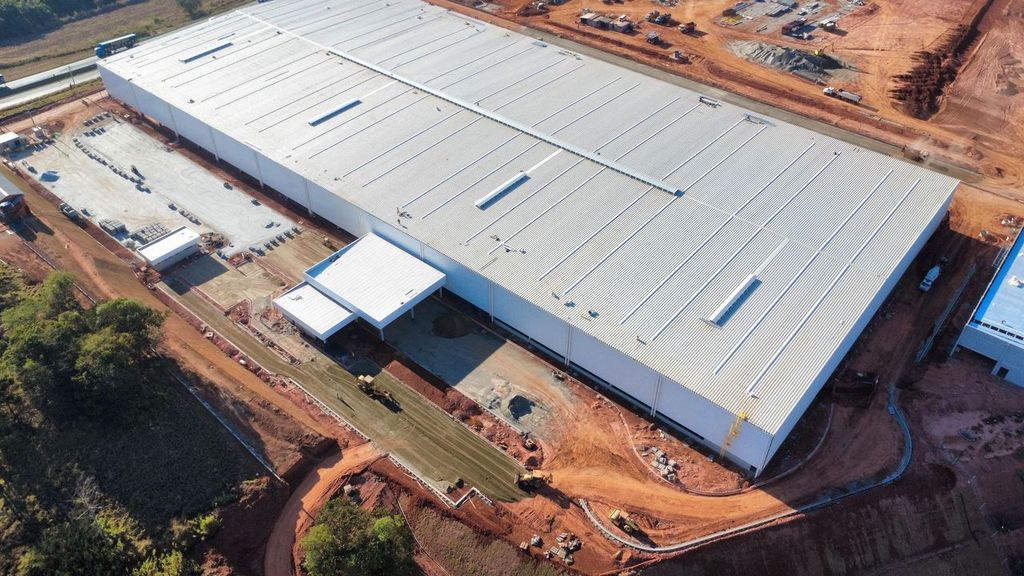
12. November 2020Jungheinrich Expands Distribution Center for Ski Manufacturer Atomic
12. November 2020Deutsche Post DHL Group and the non-profit organization Smart Freight Centre are jointly advocating for a new approach to decarbonizing the transport sector – Carbon Insetting. The jointly developed white paper ‘Carbon Insets for the Logistics Sector’ presents an innovative approach that allows financial resources to be targeted for decarbonization projects in the logistics industry. This not only reallocates significant financial resources but also creates an effective lever to drive the technical transition to greener logistics. Numerous flagship projects already exist today, such as the use of sustainable fuels, fleet renewal, engine retrofitting, and other efficiency programs. Further investments in these segments would not only be a highly efficient way to achieve an emissions-free transport sector but would also lead to structural improvements along the entire supply chains in the long term.
(Bonn) Deutsche Post DHL Group and Smart Freight Centre, a non-profit organization for sustainable transport, are jointly advocating for a new approach to decarbonizing the transport sector – Carbon Insetting. The jointly developed white paper ‘Carbon Insets for the Logistics Sector’ presents an innovative approach that allows financial resources to be targeted for decarbonization projects in the logistics industry. This not only reallocates significant financial resources but also creates an effective lever to drive the technical transition to greener logistics. Numerous flagship projects already exist today, such as the use of sustainable fuels, fleet renewal, engine retrofitting, and other efficiency programs. Further investments in these segments would not only be a highly efficient way to achieve an emissions-free transport sector but would also lead to structural improvements along the entire supply chains in the long term.
Industry-Specific Standards
“If we as the logistics industry want to continue to contribute successfully to combating climate change, we need a uniform and industry-specific standard for the compensation and reduction of CO2 emissions,” explains Tim Scharwath, member of the board of Deutsche Post DHL Group and CEO of DHL Global Forwarding, Freight. “In the long term, the increased decarbonization of the transport sector is key to a positive change. Therefore, forward-looking logistics companies must now address the development of a convincing insetting strategy.”
“There is a way to direct compensation payments for transport emissions into projects in the logistics sector – the so-called Carbon Insetting,” says Suzanne Greene, expert advisor at Smart Freight Centre and author of the white paper. “Our paper lays the foundation for a toolkit that can successfully accelerate the decarbonization of the freight sector.” The concept of Carbon Insetting was developed by Suzanne Greene in collaboration with the ‘Sustainable Supply Chains’ initiative of the Massachusetts Institute of Technology (MIT).
Background: CO2 Emissions in the Logistics Industry
The logistics industry is currently responsible for 8 percent of global CO2 emissions (11 percent when including emissions from logistics sites). Current studies by the International Transport Fund predict a doubling of these emissions by 2050 – with a tripling of demand in the same period. Sustainability activities in the freight sector are largely based on voluntary measures by market participants, and there is a lack of effective harmonization. While some freight service providers offset their transport emissions with high CO2 compensation payments for offsetting projects, only a small portion is allocated to projects directly related to freight operations. The majority of these payments do not contribute to the sustainable reduction of emissions in the freight and logistics sector. In 2018, only 0.2 percent of the total amount of 268 million US dollars from voluntary compensation measures went to transport-related projects. Investments outside the transport sector are certainly sensible but do not drive the decarbonization of the global freight transport network itself.
Proposed Solution: Carbon Insetting
Carbon Insetting, where compensation payments are used for projects with a direct connection to transport and supply chains, can play an effective role in accelerating the transition to emissions-free logistics.
Various projects are eligible for Carbon Insetting. For example, transport networks can be made more climate-friendly through the increased use of alternative, sustainable fuels, fleet renewal, or engine retrofitting. More efficient shipping reduces fuel consumption and avoids unnecessary emissions. All these approaches significantly reduce climate impacts and also bring benefits for public health and safety. Therefore, they not only contribute to the realization of the Paris Climate Agreement but also support the Sustainable Development Goals.
Implementation in Practice: Flagship Projects Already Underway
Deutsche Post DHL Group and Smart Freight Centre provide concrete examples in their report. Regarding the use of sustainable aviation fuels (SAFs), an insetting solution with a book-and-claim mechanism for biofuel certificates could remove previous barriers – for example, the need to physically track these fuels in a company’s supply chain. Another solution is the GoodShipping program for the increased use of biofuels in maritime freight. The insetting program Skicka Grönt (‘Green Shipping’) by Deutsche Post DHL Group in Sweden is also presented, which supports sustainable road transport. Participating customers pay a fixed surcharge for each package sent, which is then fully invested in biofuels and electric vehicles in the Swedish transport network.
Call to Action: Industry-Wide Collaboration Required
The transport sector holds tremendous potential for the application of Carbon Insetting. However, the further development, promotion, and standardization of this concept require an industry-wide initiative. Smart Freight Centre, MIT Sustainable Supply Chains, and the Global Logistics Emissions Council, which also includes Deutsche Post DHL Group, want to take action now. In a first step, procedures and guidelines for the accounting and reporting of Carbon Insetting must be developed and subsequently tested in companies. The basis for this is the Global Logistics Emissions Council (GLEC) guideline for calculating emissions in logistics. This is a prerequisite for expanding Carbon Insetting in further steps into a practical tool for emission reductions in freight transport that is fully accepted in the logistics industry. The next step is the recognition of these mechanisms by existing and new reporting and accounting standards. To achieve this goal, freight carriers, forwarders, and shippers must collaborate.
Download the White Paper
Photo: © DPDHL
www.dpdhl.com www.smartfreightcentre.org