Kühne+Nagel Distributes Corona Vaccine for Moderna
7. January 2021Hellmann Becomes Sole Shareholder of Hellmann East Europe
9. January 2021Niels Beuck, Managing Director of DSLV and Head of European Affairs, answers questions about the impact on the German freight forwarding and logistics industry regarding the trade agreement concluded just before Christmas between the United Kingdom (UK) and the EU. He sees that not all companies are equally familiar with the new scenario.
(Berlin) Five questions to Niels Beuck, Managing Director of DSLV and Head of European Affairs. What impact does the trade agreement between the EU and the United Kingdom (UK), concluded just before Christmas, have on the German freight forwarding and logistics industry?
Does the agreement provide relief for the economy after years of Brexit negotiations?
Yes, but a significantly earlier agreement would have been much more helpful than a last-minute deal. The economy now has hardly any time to prepare. Nevertheless, the agreement is to be welcomed – as the best possible conclusion to this overall very unfortunate exit process of an EU member state. Now it is important to review and implement the numerous details of the nearly 1500-page agreement. Despite all uncertainties, one thing is certain: Brexit will keep us and our member companies busy for a long time to come.
Doesn’t much remain the same with the long-awaited deal?
Clearly no. It was clear from the beginning that there is a significant difference between the UK being part of the EU or, as it is now, a third country. Trade with the UK has become more complex and bureaucratic as of January 1, 2021. Goods flows will be more closely monitored in the future, and the administrative burden will increase for all links in the supply chain. What is often overlooked: Even if mostly no tariffs apply, customs declarations must still be submitted, as import VAT must be paid in any case. Additionally, companies must deal with the various national customs IT systems, particularly with the new Border Operating Model in the UK. Trading companies that export or import goods to or from the UK must build their own competencies or hire service providers such as freight forwarders or customs agents. In any case, new documentation obligations must be fulfilled. Exceptions apply to Northern Ireland, which, although part of the customs territory of the United Kingdom, is treated for customs purposes as if it were part of the EU customs area.
Are German freight forwarding companies adequately prepared for the changes?
We have informed our member companies early on about the measures to be taken in the event of a no-deal Brexit and the resulting customs conditions. As early as autumn 2018, DSLV, together with the German customs authorities, held information events. For a long time, the no-deal was considered the most likely variant of Brexit. Many of the associated consequences are also relevant to the agreement now concluded.
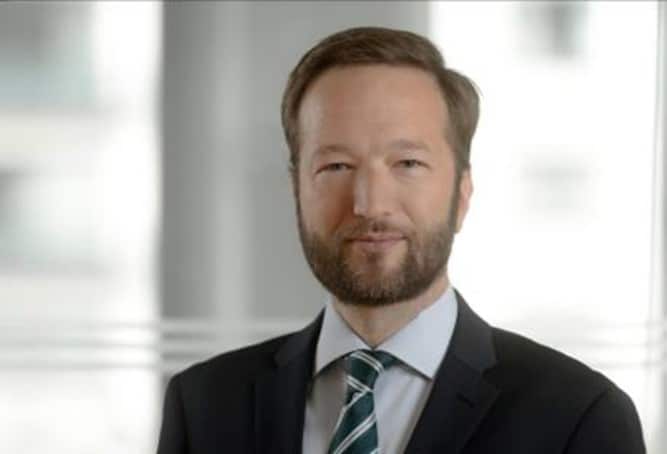 Niels Beuck, Managing Director of DSLV and Head of European Affairs
The majority of logistics companies have prepared intensively for various scenarios in recent years by increasing staff and training them as experts, investing in new IT, adapting processes, and informing their customers. These preparations are now paying off. But of course, the new processes will only run smoothly if the new legal framework, which was decided and announced just two weeks ago, has been fully implemented and the knowledge of logistics customers from industry and trade houses is appropriately available.
Based on our previous experiences, too many companies in the shipping industry and also smaller transport companies that have previously operated solely in the EU internal market are still operating under false assumptions and are therefore not adequately prepared. Although customs clearances and documentation obligations for trade with third countries have been in effect for years, the customs clearances and documentation obligations that must be implemented since the beginning of the year are overwhelming these companies. It is high time for them to deal with the new customs formalities and systems for EU-UK traffic.
During the Christmas holidays, up to 10,000 trucks were stuck in long queues at the border crossings between the UK and the EU. However, in the first days after the agreement came into force, the expected traffic jams did not occur. Does the agreement already bring order?
No, unfortunately, I cannot give an all-clear. The border disruptions had pandemic-related causes, but they have likely already given us a taste of what could become reality at the border crossings in the coming weeks. Many companies have anticipated this, which is why the industrial and commercial warehouses in the UK are currently filled to capacity. In November and December 2020, 50 percent more goods were transported across the English Channel than in previous years. The stocks are expected to last another two to three weeks. After the seasonal decline in traffic performance at the beginning of the year, we now expect a rapid increase in EU-UK traffic. Already from the second week of January, we expect problems at the border crossings to increase again. The weaknesses of the system are likely to become particularly evident in Kent, where trucks must wait for a permit before they can approach the ferry terminals in Dover. Additionally, there are stricter entry regulations due to COVID-19. To prevent two problems from compounding, the British authorities must act very pragmatically.
What challenges need to be addressed urgently now?
New practical detail problems arise daily, whether they are technical deficiencies in company or authority IT, lack of or contradictory communication, especially from the British authorities, or the already mentioned knowledge deficits of some companies in the supply chain. It is often overlooked that goods in transit between the EU and the UK are only duty-free if they are EU or UK originating goods and this is evidenced by so-called preference proofs. These preferential origin rules are legally and materially extremely complex. Simply put, the majority of the materials contained in or processed into a final product must originate from the territory of the EU or the United Kingdom to avoid tariffs. This is hardly the case in the automotive sector or the textile industry. Also, the lack of recognition of veterinary certificates and the treatment of packaging materials will cause problems in practice for the foreseeable future. DSLV is in constant contact with British, German, and European authorities to quickly and unbureaucratically eliminate these hurdles.
Title photo: © Adobe Stock
www.dslv.org