HHLA acquires majority stake in automation specialist iSAM AG
22. January 2021
The Logistikum Creates High-Quality Jobs in Uri
22. January 2021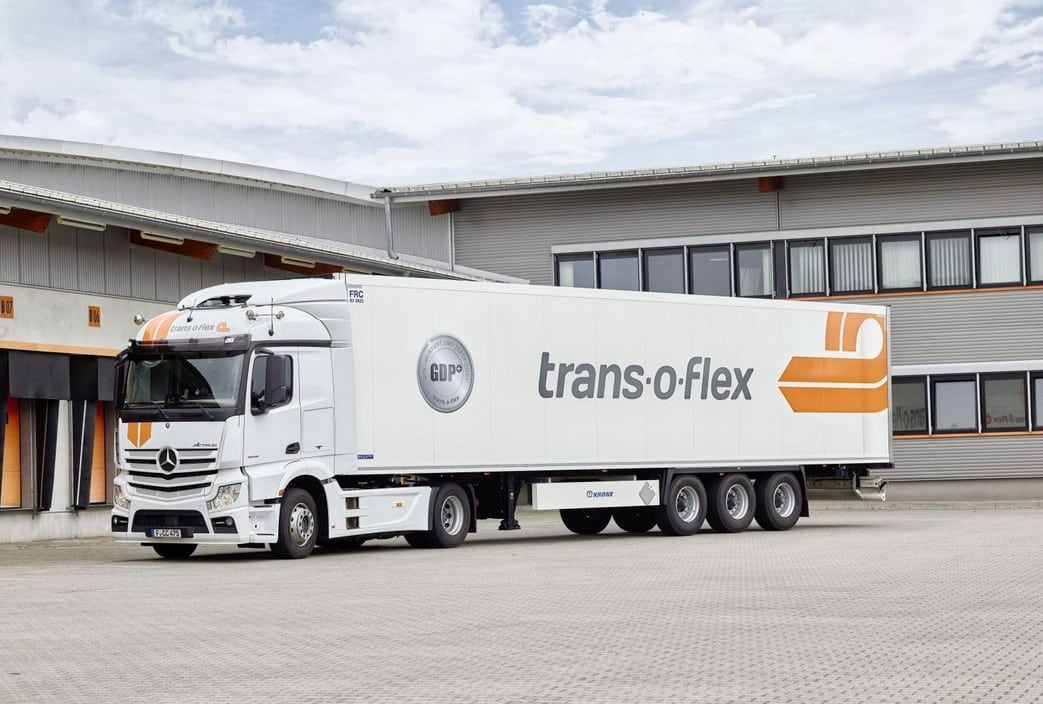
The express service provider and pharmaceutical logistics specialist trans-o-flex has received the contract from Bavaria, Germany’s largest federal state, to supply vaccination centers and storage facilities. Compliance with transport temperatures between 2 – 8 degrees is guaranteed by the use of special vehicles. (Weinheim). The logistics service provider specialized in pharmaceutical distribution, trans-o-flex, ensures the nationwide delivery of Corona vaccines to vaccination centers in Bavaria. A special feature is that trans-o-flex transports the shipments in vehicles with active temperature control. These vehicles are equipped with a unit for the cargo area that cools or heats depending on the outside temperature, keeping the temperature of the cargo area consistently between 2 and 8 degrees Celsius. The contract for the nationwide distribution from the Bavarian storage facilities of the Corona vaccine to around 100 different locations (in addition to vaccination centers, also the storage facilities for Corona vaccines designated by independent cities and districts) was awarded to trans-o-flex by the Ministry of Health of the Free State.
“Our active direct traffic disposition, the vehicle technology used with GPS monitoring and active temperature control, as well as a special task force for Corona vaccine logistics not only ensure the highest level of safety but also provide the necessary transparency in the supply chain of sensitive goods,” says Wolfgang P. Albeck, CEO of trans-o-flex.
Special boxes for varying temperature requirements
When vaccines need to be transported at temperatures other than 2 to 8 degrees Celsius as specified by the manufacturer, trans-o-flex receives the corresponding shipments in special packaging, which, depending on product requirements, are additionally equipped with cooling elements and a data logger. These data loggers measure the temperature inside the boxes and store it unalterably, allowing the temperature history to be documented and later verified. “The active temperature control has two crucial advantages in this context,” explains Albeck. “Should a defect occur in the special packaging, we ensure and document that the goods were transported in a controlled environment.
The manufacturer can then decide based on our documentation whether the efficacy of the vaccine has been affected by the packaging damage or not.” This is because the temperature in the cargo area of the vehicles is displayed, monitored, and documented both in the vehicle and in the central disposition. The second crucial advantage of active temperature control, according to Albeck, is: “As soon as vaccines are approved in Europe that remain stable at 2 to 8 degrees Celsius for longer periods, we will no longer need the elaborate and expensive special packaging in our vehicles and specialized storage locations. This reduces the freight weight, saves on the return of the packaging and cooling elements, and allows for even more efficient logistics concepts to be implemented.”
Photo: © trans-o-flex