New DPD Depot in Holzgünz near Memmingen Begins Operations
25. January 2021
MAN Electrifies City Logistics with the ZEUS Project in Munich
25. January 2021
The financial service provider Tradeshift publishes its index for the fourth quarter of 2020. The transport and logistics sector records an increase of almost 10 percent. Trade activities rise by 14 percent, technology purchases even by 16 percent. China is recovering faster than the rest of the world, and the liquidity problems of suppliers persist.
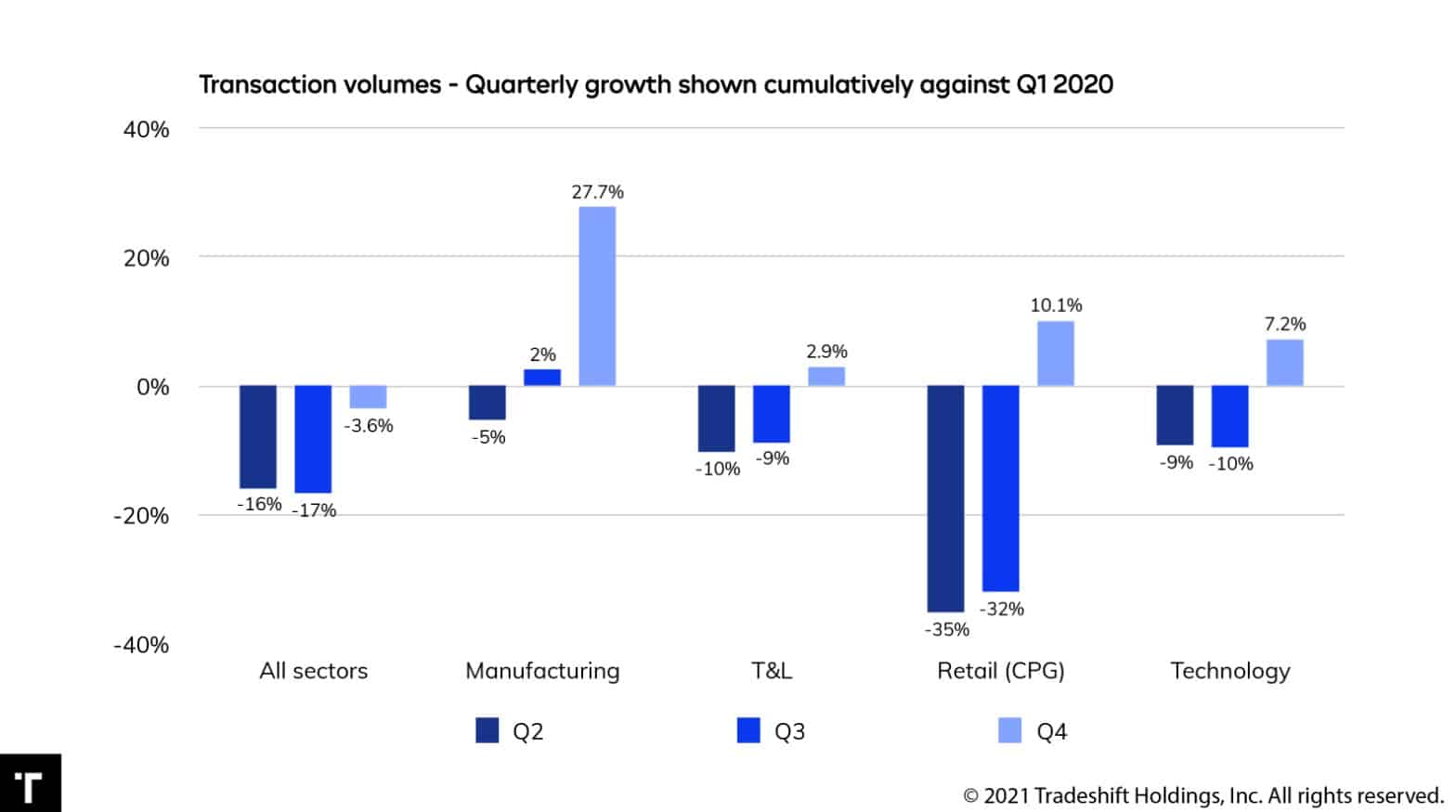
(San Francisco) – After a year of massive instabilities and disruptions in the supply chain, new data from Tradeshift’s Index of Global Trade Health indicates a significant recovery in global supply chain activity. The quarterly growth rates exceed pre-pandemic levels by 14 percent. Recent data shows a high increase in orders from buyers in almost all regions. The introduction of vaccines in December prompts companies to push forward purchasing decisions that had previously been postponed or canceled.
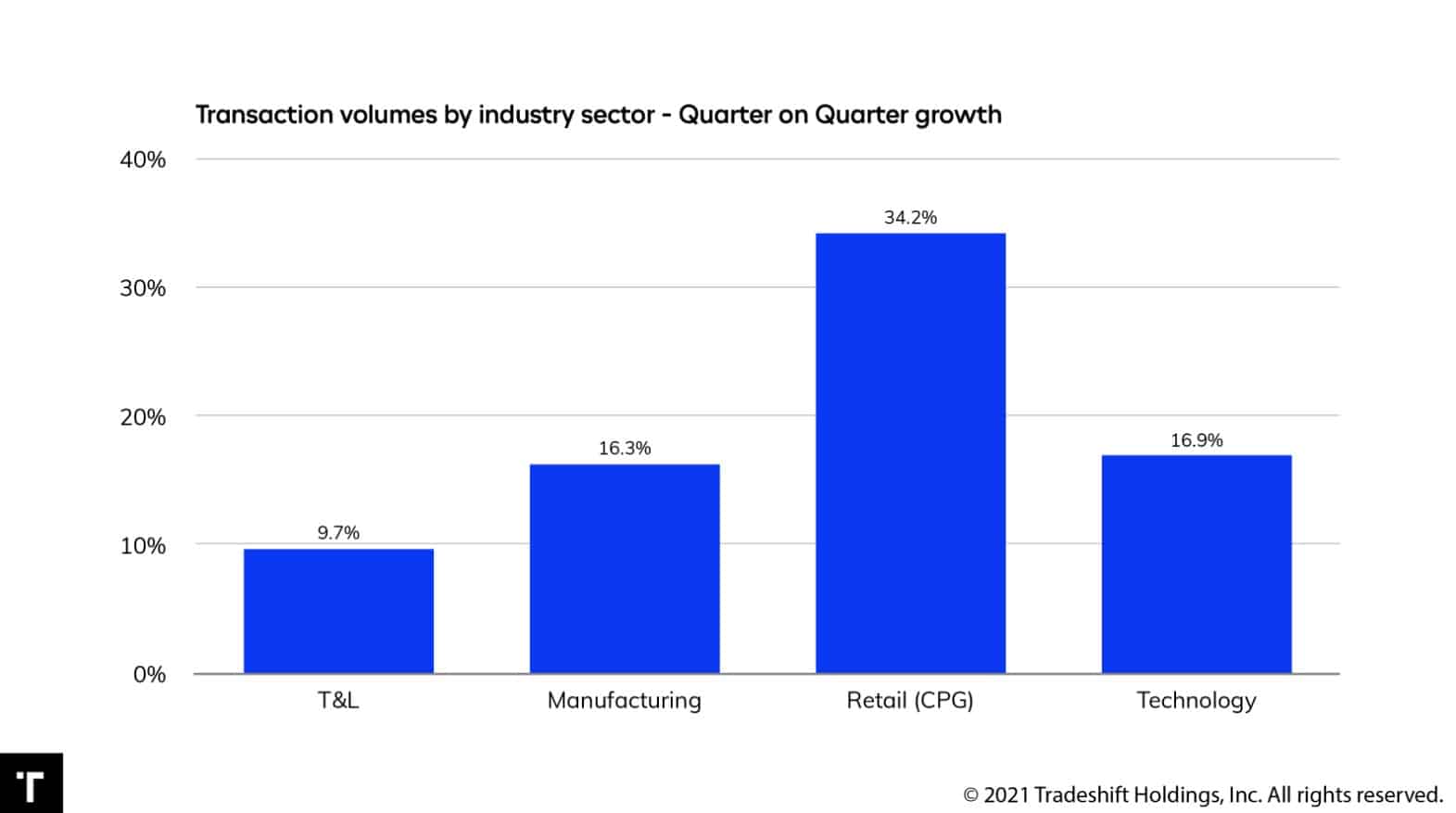
Transport and Logistics Sector Grows in the Fourth Quarter
The transport and logistics sector, where activity remained relatively constant during the pandemic, recorded an increase of almost 10 percent compared to the third quarter of 2020. The index also highlights the rise in purchasing activities between technology providers and their customers. The number of new orders and invoices related to technology purchases increased by 16 percent in the fourth quarter of 2020. The cumulative growth figures show that the total transaction volume in the industry at the end of the year was up by 7.2 percent compared to pre-COVID levels.
Eurozone and USA Lead Recovery
In the Eurozone, the transaction volume, meaning the number of new orders and invoices, increased by 22 percent compared to the third quarter of 2020. The USA had a particularly strong year-end. Here, the number of transactions between buyers and suppliers increased by 29 percent in the fourth quarter of 2020. Twice as fast as the global growth rate during this period.
“Modern supply chains are built like high-performance vehicles,” explains Christian Lanng, CEO of Tradeshift. “When you ask them to navigate the kind of unpredictable environment we saw in 2020, it’s like driving a Formula 1 car over a series of speed bumps. Conditions are certainly improving, but supply chains bear the scars of a long period of volatility.”

China Leaves the Rest of the World Behind
Data shows that companies in China have been nearly fully operational since April 2020. The cumulative growth of transaction volume since the second quarter of 2020 was 118 percent by the end of 2020, compared to a global activity decline of 3.4 percent during the same period. “China has significantly outperformed the West. It has recovered quickly,” Lanng continues. “The consistency we see in the transaction data provides a level of predictability that has not yet fully returned in other regions.”
Suppliers Face Ongoing Liquidity Issues
Lack of liquidity among suppliers was a key issue in 2020. Recent data suggests that this will remain a significant challenge in 2021 as well. Invoice payments to suppliers did not recover in the fourth quarter of 2020 at the same pace as order volume. The resulting gap makes it very difficult for suppliers to manage cash flow.
The liquidity crunch is exacerbated by the fact that buyers, wanting to maintain their own cash flow, are extending payment terms further. According to a report by Frost & Sullivan, the share of overdue invoices that remain unpaid even after 90 days past due rose to 16 percent of the total in 2020, up from 10 percent the year before.
“COVID has exposed an imbalance in the relationship between buyers and suppliers,” says Lanng. “While buyers focus on improving their resilience to future shocks, we need to consider how best to equip suppliers to accompany them on this journey. Technology can help tackle this challenge by enabling faster, more predictable cash flow, better access for various suppliers, and greater optionality in the event of disruptions. What is good for suppliers will also be good for buyers.”
About Tradeshift
Tradeshift drives supply chain innovations for the digitally connected economy. As a market leader in supply chain payments and marketplaces, the company helps buyers and suppliers digitize all their trade transactions, collaborate on every process, and connect with every supply chain app. Companies in 190 countries trust Tradeshift, making it the largest global business network for buying and selling. Discover trade for all at
About the Tradeshift Index of Global Trade Health
Many of the world’s largest buyers and their suppliers use Tradeshift’s trade technology platform to exchange digitized purchasing and invoicing data. The index analyzes anonymized transaction data flowing through the platform. It provides a timely overview of how external events impact business-to-business trade.
Current Report
Photo: © Tradeshift