

NEE is dissatisfied with the decision of the Federal Ministry of Finance
9. February 2021FineCom Simplifies Omnichannel Logistics with Roqqio
10. February 2021Freight transport services decreased by 2.2% in 2019 compared to the previous year. The decline on the road was 2.7%, while on the rail it was 1.4%. About one-third of the transport volume of the rail was carried out in combined transport. This is evident from the freight transport statistics of the Federal Statistical Office (BFS).
(Bern) In 2019, the transport services on the Swiss road and rail network amounted to a total of 27.2 billion ton-kilometers, where one ton-kilometer corresponds to the transport of one ton over one kilometer. Compared to the previous year, this represents a decrease of 2.2%. The road freight transport declined slightly more (–2.7%) than the freight transport by rail (–1.4%). The share of rail in the total transport performance remained unchanged at around 37% in 2019, while that of the road was 63%. In international comparison, the rail share in Switzerland is high; the average across all EU countries is around 19%.
Domestic Transport Accounts for Almost Two-Thirds of Heavy Road Traffic
In heavy road freight transport with trucks and articulated lorries, transport within Swiss borders represents by far the most important segment: in 2019, the share of domestic transport in transport services was 65%. The import traffic accounted for 16%, the export for 10%, and the transit traffic for 9%. Compared to the year 2000, an increase in transport performance can be observed for all types of traffic – except for transit.
After the road transit traffic through Switzerland had increased significantly in the 2000s, it has shown a declining trend since 2011 and was nearly 8% lower in 2019 than in 2000. This is likely a result of Swiss relocation policy, which aims to handle cross-Alpine freight transport primarily by rail. On the other hand, the weak economic development in Italy since the financial and economic crisis of 2009 has also had a dampening effect on transit traffic through Switzerland.
Eastern European Carriers Continue to Gain Ground
Almost one-third of the transport services in heavy traffic in Switzerland in 2019 were provided by vehicles registered abroad. Of the services provided by foreign trucks and articulated lorries, 22% were from German vehicles, and 13% each from Italian and Polish vehicles. In 2008, the share of German vehicles was still 29%, and that of Italian vehicles was 26%, while vehicles with Polish license plates contributed only 5% to transport services.
Transport services from goods vehicles registered in other Eastern European countries have also increased significantly between 2008 and 2019. For example, the transport services of Romanian vehicles have increased sixfold during this period – likely also because Romania joined the EU in 2007 and was able to benefit from market opening. Vehicles from Lithuania have particularly increased in the last five years and have now reached fourth place. The competitiveness of Eastern European transport companies in the Western European market can be attributed, among other things, to lower production costs in the Eastern states.
One-Third of Transport Volumes on Rail Are in Combined Transport
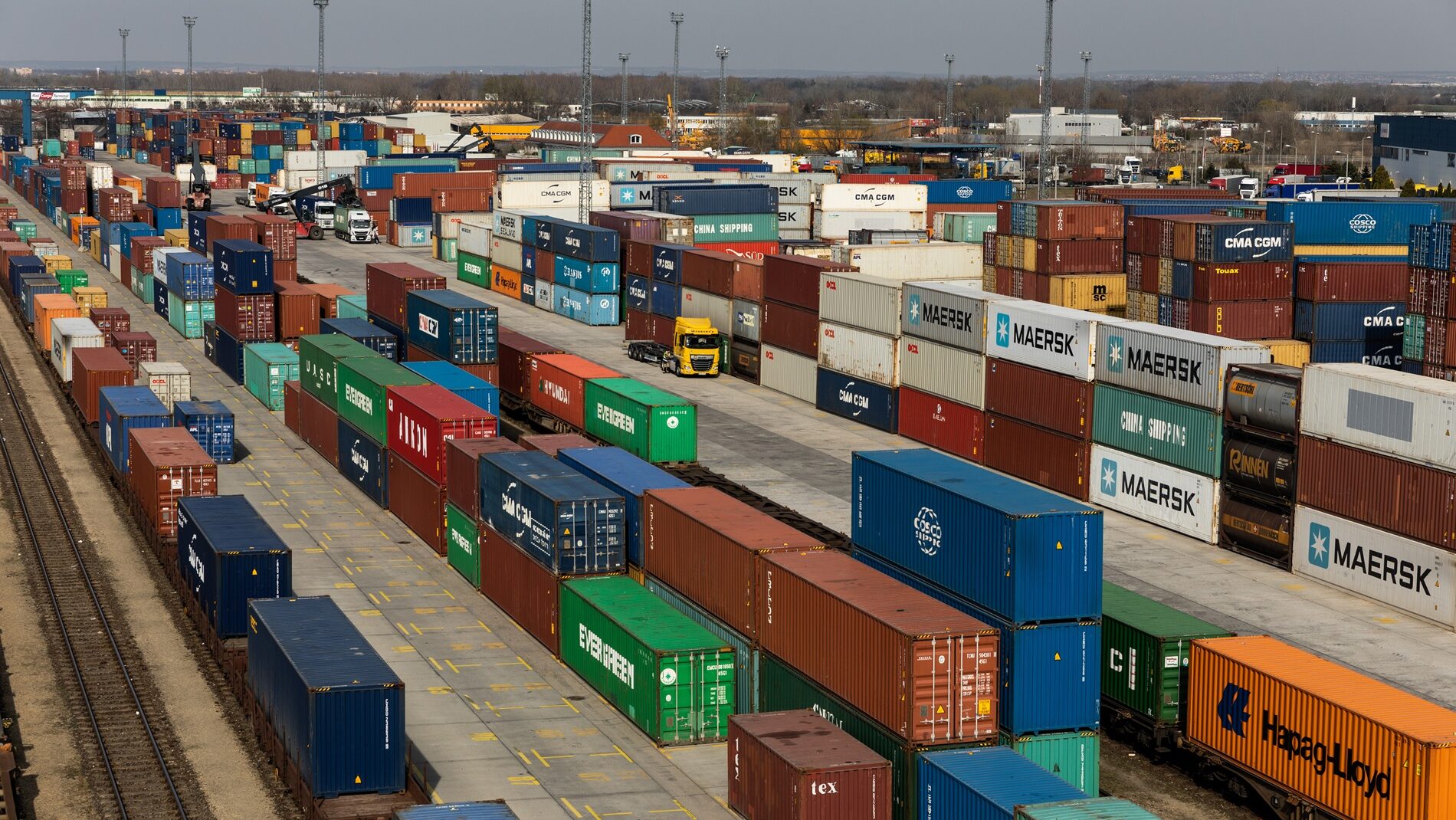
The so-called combined freight transport has gained importance in recent years. In this case, goods are transported on at least two modes of transport (road, rail, water), where it is not the actual transport goods that are transshipped, but the transport containers (e.g., containers).
In the case of rail, around 20.7 million net tons were transported in combined transport in 2019, which corresponds to a share of around 34% of the total transport volume of the rail. In cross-Alpine rail freight transport, combined transport accounted for even three-quarters. Within combined rail transport, unaccompanied combined transport (UKV), which means the transport of containers, swap bodies, and semi-trailers, clearly predominated with 19.3 million net tons. The rolling highway (loading of road freight vehicles) accounted for only 1.4 million net tons.
10% More Container Handling in the Rhine Ports than in 2010
In 2019, goods amounting to 732,000 net tons in containers were transported to the Swiss Rhine ports in Basel or from there by Rhine ships. This corresponds to a share of 12% of the total goods volume handled in the Swiss Rhine ports. In 2019, 73,656 containers were handled in the Basel ports from the water side. This is 10% more than in 2010 (66,959 containers). At the same time, the share of large 40-foot containers increased from 48% in 2010 to 59% in 2019. The share of smaller 20-foot containers decreased accordingly from 52% to 41%.
In heavy domestic road freight transport, combined transports with 5.2 million net tons accounted for 1.7% of the total transport volume. In terms of transport performance, combined transport accounted for nearly 300 million net ton-kilometers, which is 2.7% of the total freight transport with heavy domestic vehicles.
Photo: © Erich Westendarp on Pixabay
www.bfs.admin.ch