Software provider leogistics opens location in Rostock
6. October 2021
LOXXESS fully acquires LOXXESS Pharma
6. October 2021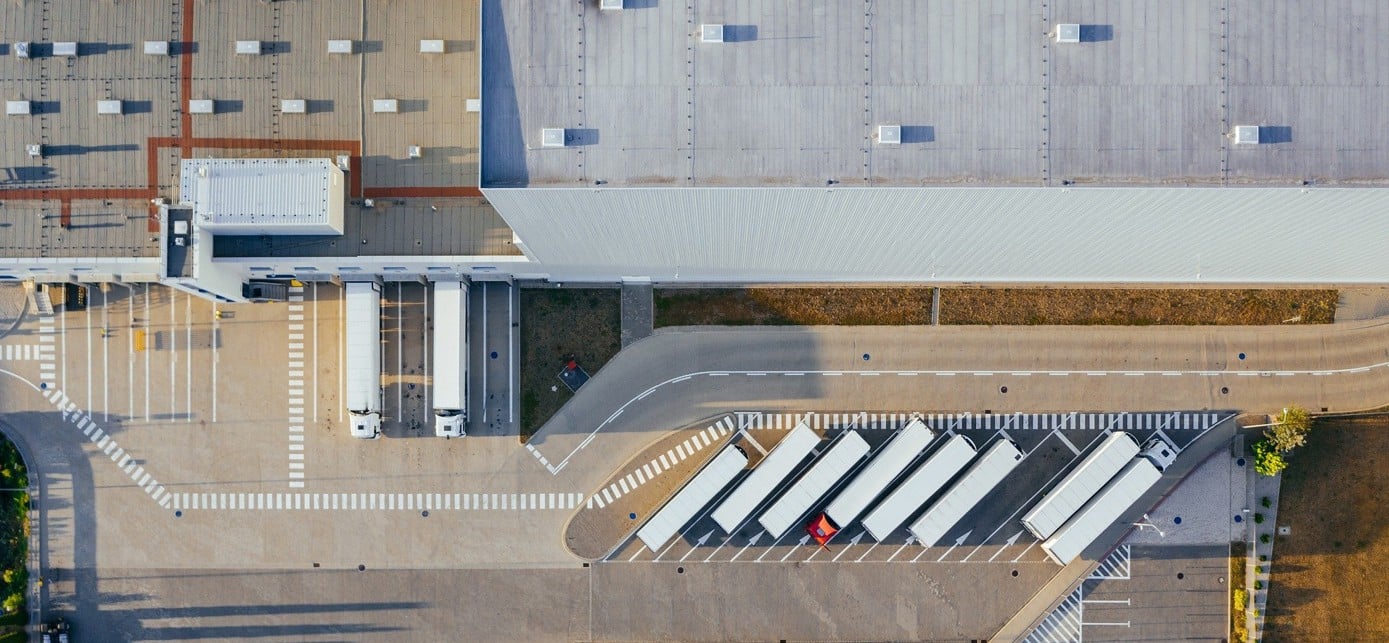
Due to the ongoing material shortages and the increasing personnel shortages in the logistics sector, global goods and supply chains are under significant pressure. Accordingly, strategies for regionalization and the expansion of local supply structures are becoming increasingly important. Logistics properties in the form of warehouses, transshipment, and distribution centers play a crucial role in this context. They serve to maintain supply security as well as economic stability and growth within the supply chain. However, to fulfill this function, there needs to be greater acceptance in the public perception regarding the establishment of logistics properties.
The aftereffects of the COVID-19 pandemic and the ongoing personnel shortages in the logistics sector pose significant challenges for international goods and supply chains. In the United Kingdom, gas stations nationwide are experiencing fuel shortages due to a current shortfall of up to 100,000 truck drivers. Many supermarkets are lacking goods, dairy farmers are stuck with their milk, furniture stores are missing mattresses, and wastewater treatment plants are short on essential chemicals.
In Germany, many companies across various sectors are affected by the transformation of supply structures and the resulting shortages of raw materials and components. The bottlenecks affect intermediate products such as steel, plastics, or microchips, as well as raw materials like wood. The shortage of chips is particularly challenging for companies. According to a recent survey by the Ifo Institute, four out of five manufacturers of electrical products are struggling to keep up with production – the highest value recorded by the Ifo Institute to date. The household appliance manufacturer Miele, as well as car manufacturers Volkswagen, Daimler, and BMW, have implemented short-time work, and Opel has already had to close a production plant in Germany. The economic damage from material shortages is also noticeable on a macroeconomic level: The Ifo Institute recently revised its economic forecast for the current year downward by 0.4 percent due to the bottlenecks.
In many places, companies are responding by expanding domestic production and/or supply structures. Such “local sourcing” strategies are particularly in demand in the semiconductor industry but also affect other sectors to ensure future supply security even in crisis situations.
Additional Storage Required
“The disruptions in supply chains and the shortage of intermediate products require additional storage as well as a higher number of suppliers, preferably close to the company’s location and in geographically diverse regions. Moreover, domestic production is easier to control than in emerging countries, which face increasing issues such as tariffs, currency fluctuations, bureaucracy, and a lack of planning and legal certainty,” explains Rainer Koepke, Managing Director and Head of Industrial & Logistics Germany at CBRE.
This restructuring of supply chains, moving away from the previously dominant “just-in-time” principle, has tangible effects on the logistics property sector. An expansion of regional supply means increased demand for warehouse and logistics space where goods and products are stored and processed.
“Due to the explosion in freight costs, the higher risks, and the alignment of wage costs, distant production is becoming less and less viable. This creates potential, especially for logistics service providers, as they can take on not only storage but also assembly or production steps and offer these locally near the customers. This will lead to a surge in demand for logistics services and spaces,” says Prof. Dr. Christian Kille from the University of Applied Sciences Würzburg-Schweinfurt FHWS.
Supply Chains Have Lost Stability
“The logistics situation has changed enormously in the last two years. International supply chains, built and established over years, have lost stability due to the COVID-19 pandemic. Goods shortages, delivery bottlenecks, and consequently, production failures are the result. Of course, this leads many companies to question their logistics strategy. Especially international supply chains are under scrutiny, but our trade is and will remain global. Thus, the need for so-called regional buffer warehouses to balance delivery fluctuations will continue to rise,” confirms Kuno Neumeier, CEO of the Logivest Group.
Nevertheless, the logistics property sector is grappling with a multitude of challenges that hinder rapid expansion of space. On one hand, project developers and users are struggling with a nationwide acute shortage of land, particularly in strategically important cities and metropolitan areas. Additionally, logistics properties and establishment projects still face reservations in municipalities and among the population.
Increasing the Importance of Logistics
To address this issue, the Logix Initiative is advocating for an increase in the importance and acceptance of logistics properties in professional circles and the general public. In addition to awarding the Logix Award for the best logistics property development of the past two years, it is also engaged in research and publication work as well as proactive dialogue with municipalities.
“Logistics properties are a central component of a functioning economy and for the supply of the population. Recent developments surrounding the COVID-19 crisis, Brexit, and labor shortages have further confirmed this significance. To ensure supply security in the future, there will be no way around expanding logistics spaces. Here, politics is also called upon to support the expansion of logistics infrastructure,” says Dr. Malte-Maria Münchow, spokesperson for the Logix Initiative and head of acquisition and sale of special properties at Deka Immobilien Investment GmbH.
Presentation of the Logix Award at Expo Real in Munich
In 2021, the Logix Initiative was involved in the study “Logistics in the Municipality” published by the German Association of Towns and Municipalities (DStGB). For this, the DStGB, together with Logix, conducted a nationwide survey among municipalities regarding their views on logistics. With its own publications, the Logix Initiative provides foundational work on logistics properties and addresses current topics such as climate change.
On October 11, 2021, Logix will present the Logix Award for the fifth time at the real estate trade fair Expo Real in Munich.
All publications are available free of charge at:
www.logix-award.de/forschung or www.logix-award.de/download
Photo: © Logix