New Electric Truck BAX with Outstanding Features
14. October 2021
Raben Group Supports Bat Project of BUND Heidelberg
17. October 2021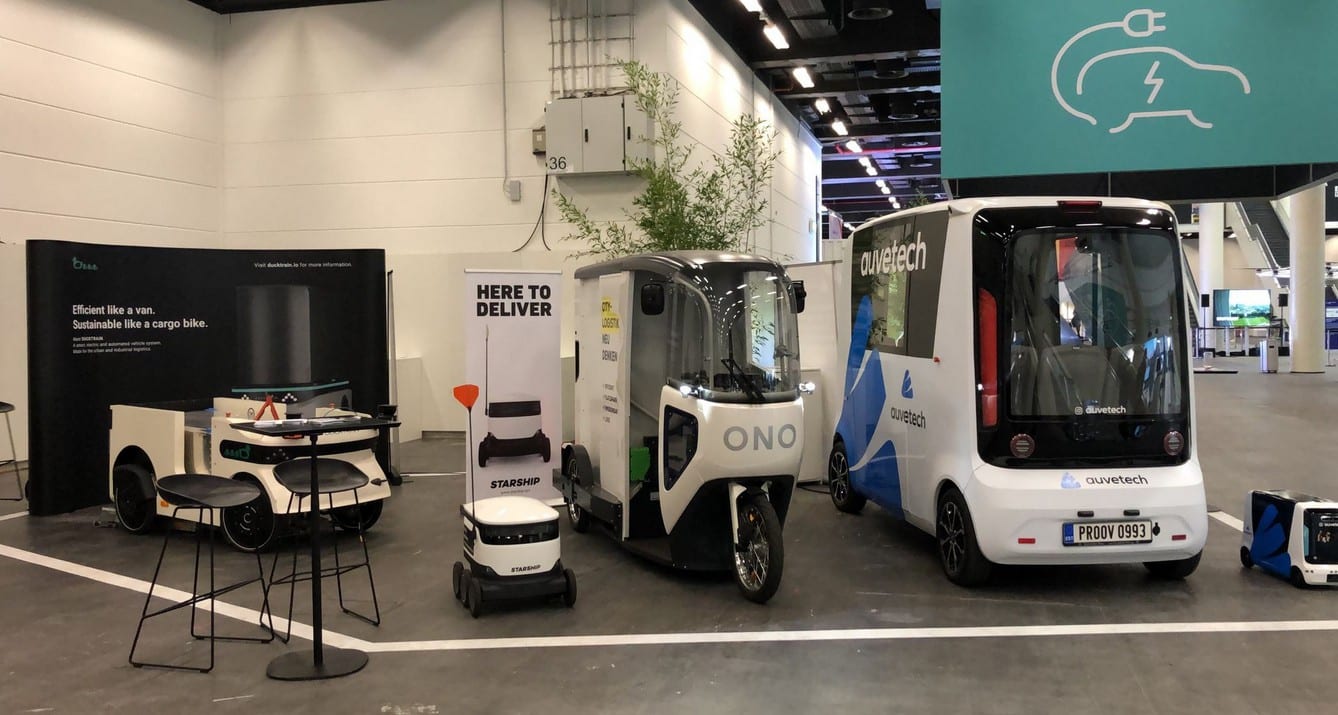
What could climate-friendly goods transport in large cities look like? ONOMOTION GmbH has developed a unique solution that the cargo bike manufacturer presented to an international audience for the first time at the ITS World Congress in Hamburg. Instead of delivering goods from a depot outside the city to end consumers using a conventional transporter, goods are transported throughout the supply chain in standardized containers using a Cargotram and the e-cargo bike ONO.
(Berlin/Hamburg) The interplay of multiple modes of transport on the “last mile,” such as trams and e-cargo bikes, has great potential to become the new standard in urban logistics. Letters and packages, as well as other goods like spare parts for workshops, could be transported this way. The integration of trams and cargo bikes on an international level is a consistent implementation of the white paper “Intermodal Logistics Chain in Urban Areas.” The authors demonstrated using Frankfurt am Main as an example that with combined transport, up to 80 percent of urban deliveries could be realized, and CO2 emissions could be reduced by nearly 64 percent.
In Germany alone, 4.05 billion packages were delivered in 2020, according to the Federal Association of Parcel & Express Logistics. This represented an increase of 10.9 percent – a trend that continues to rise. In addition to high CO2 emissions, traffic volume and the number of trucks parked in secondary streets are increasing. Cities like Paris, Barcelona, and London have already responded to the rising delivery traffic by banning conventional transporters from certain streets in their city centers.
Integration of Existing Infrastructure into the New Approach
To stop this trend, ONOMOTION integrates existing infrastructure such as tram tracks, tram trains, and emission-free e-cargo bikes into a combined logistics approach. Goods are transported from a depot outside the city in standardized, compact, and rollable city containers. These can be easily rolled onto the tram via a ramp and secured there. The containers, with a capacity of 2.1 cubic meters and a length of 1.70 meters, fit comfortably into the multipurpose area of a tram. “It is clear that the road cannot solve the problem alone. With ONO, we offer an ecologically and economically sensible alternative,” says Benjamin Federmann, Chief Innovation Officer at ONOMOTION.
Two Types of Use for a Cargo Tram are Possible
Theoretically, two types of use for a cargo tram are conceivable for public transport companies: on the one hand, mixed use of goods and passengers. In this case, companies can integrate container transport into regular operations, thus avoiding empty trips during off-peak hours in the evening and early morning. On the other hand, exclusive use of the tram as a cargo tram. This would pick up the already commissioned containers from a depot on the outskirts of the city and transport them to suitable stops along the inner-city routes. From there, the ONO would take over the dockable containers for fine distribution to households.
Practical Tests Show the Great Potential of the Intermodal Logistics Chain
This new approach to the intermodal logistics chain with standardized containers has already shown potential in a test run this year with the Berlin Transport Company (BVG) and during a demo ride by the Frankfurt am Main Transport Company (VGF). Further projects are to follow. The ITS World Congress provided the Berlin company with the opportunity to present the concept worldwide as part of the Technical Program for the first time. In addition, ONOMOTION was also an exhibitor in the Startup Area of the ITS – including a pitch. The organizers accepted only 41 startups, and ONOMOTION was one of the few that were allowed to bring exhibits. Hermes also used an ONO at the stand of the Hamburg Real Lab, which tests the mobility solutions of the future.
Photo: © ONOMOTION