On the “Logistics Day”, logistics shows what it moves
19. October 2021
DHL Express Named Best Employer in the World
19. October 2021
The European Union adopted the Green Deal in 2019, aiming for a 90 percent reduction in greenhouse gas emissions in the transport sector by 2050. The Bertschi Group, with its market-leading position in sustainable intermodal transport and further plans and initiatives in the field of climate-neutral technologies, is far ahead of this goal.
(Dürrenasch) The transport sector is responsible for 25% of European greenhouse gas emissions. In land freight transport, 99% of CO2 emissions come from trucks and only 1% from rail, despite the latter having a market share of 20%.
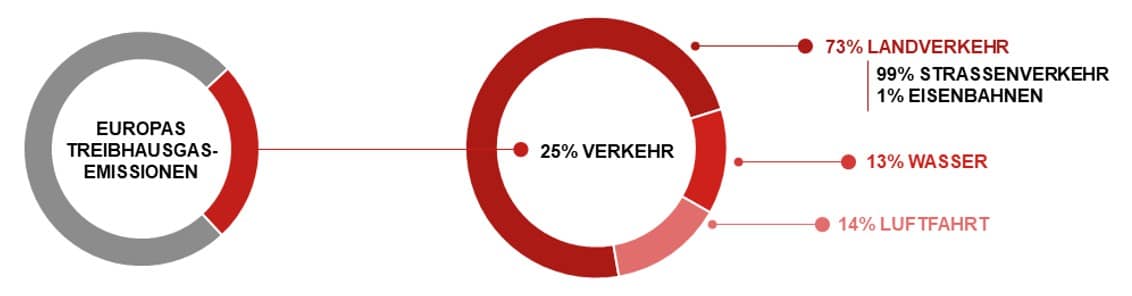
Figures from the EU Commission publication on the Green Deal in the transport sector (2019)
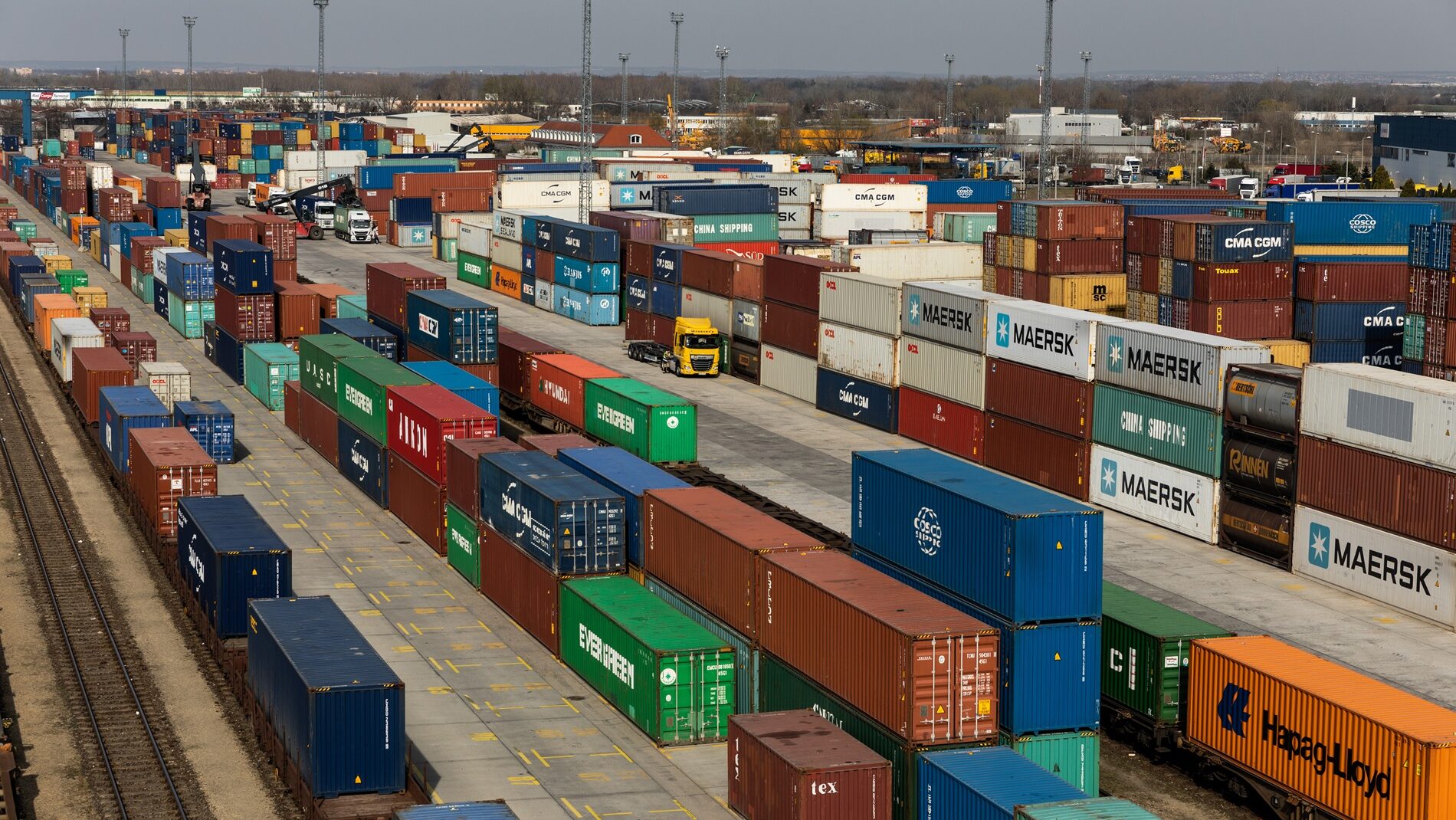
Intermodal transport is freight transport that combines different modes of transport (trucks, trains, and ships) in the supply chain. By shifting to rail, the Bertschi Group, a globally operating chemical logistics company, reduces CO2 emissions generated by transport by 300,000 tons per year. This corresponds to the total emissions of a city with 70,000 inhabitants.
“Bertschi already handles 90% of all European land transport intermodally today, putting us far ahead of the desired development,” says Jan Arnet, CEO of the Bertschi Group. “Our intermodal transports through Switzerland are already emissions-free, as the trains running through Switzerland are powered exclusively by electricity from non-fossil sources (hydropower, solar, wind, and nuclear power),” he adds.

EU figures from the seventh monitoring report of the EU Commission on the development of the railway market (2021)
Significant Investments in Intermodal Transport
With the new EU funding measures for shifting from road to intermodal transport, more and more customers are looking for environmentally friendly logistics alternatives. “Thanks to Bertschi’s leading position in intermodal transport in Europe, interesting opportunities are opening up for us. However, significant investments are needed to take advantage of these,” says Hans-Jörg Bertschi, Executive Chairman of the Bertschi Group.
Bertschi plans to expand its terminal network for intermodal transport, with the expansion of the KV terminals in Rotterdam Botlek and Duisburg being implemented this year, and further investments in the Benelux countries to follow in 2022. In addition, Bertschi is increasingly focusing on environmentally friendly rail transport worldwide, including trade with China via the Silk Road, in Russia, and in the USA.
The company is also optimizing its internal infrastructure: A significant example is the tank cleaning facility in Birrfeld, Switzerland, where Bertschi has been able to reduce heating energy and CO2 emissions by two-thirds through investments in optimizations and heat recovery.
Hydrogen Trucks Enable Climate-Neutral Intermodal Transport Chains
The company’s next climate goal is door-to-door transport chains with zero CO2 emissions, including intermodal pre- and post-haulage on the road. Bertschi is focusing on hydrogen technology with fuel cells: Green hydrogen (H2) produced from renewable energies enables the operation of trucks with zero CO2 emissions. The company is preparing for the delivery of the first 40 / 44-ton hydrogen tractor units in about three years for a pilot project in Switzerland.
After a successful pilot launch, a hydrogen filling station is to be installed at the Birrfeld terminal (Switzerland). The hydrogen will be produced using solar energy and hydropower during surplus times. Excess electricity cannot be stored and must otherwise be “destroyed.” However, the energy from this electricity can be stored in hydrogen and converted back into electricity in the truck’s fuel cell to power the vehicle.
“The first climate-neutral transport chains made by Bertschi could therefore become a reality in the near future,” predicts Jan Arnet proudly. “For consumer-oriented customers, climate-neutral logistics is already a value-added service today. And customers from the chemical industry are also increasingly focusing on climate goals for logistics.”
Zero Emissions Means Anticipating the Future
From the steps outlined above, it is clear that the Bertschi Group is preparing as a company for developments arising from climate change.
Hans-Jörg Bertschi emphasizes that the speed of this development heavily depends on the framework conditions that politics will set in the coming years: “We will not wait for politics, but will start anticipating the future now. We believe that by doing so, we are not only doing something good for the climate and the environment, but also increasing the long-term success prospects of the company in rapidly changing markets.”
Graphics/Photo: © Bertschi