


Hermes Tests A-N.T. Cargobikes in Stuttgart City Center
27. October 2021
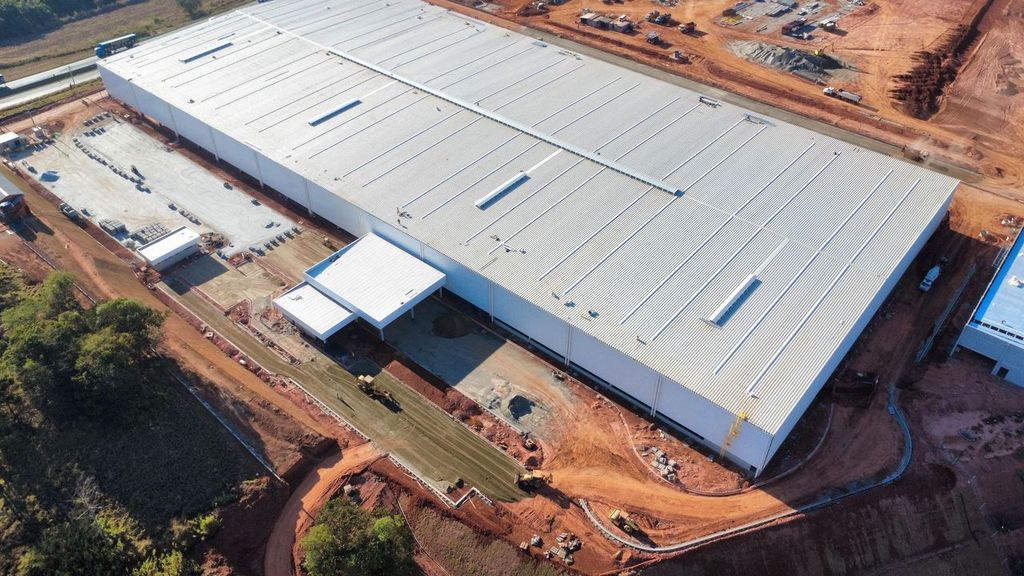
Panattoni Celebrates Topping-Out Ceremony at Panattoni Park Berlin South
28. October 2021
Daimler Truck AG and BP Advanced Mobility Limited (“BP”) aim to jointly advance the development and scaling of a hydrogen infrastructure to support the decarbonization of the UK freight transport network. To this end, the companies have signed an agreement. They intend to develop a hydrogen infrastructure as well as introduce hydrogen-powered fuel cell trucks.
(Stuttgart/Sunbury) The signed Memorandum of Understanding (MoU) includes provisions for BP to explore the establishment and operation of up to 25 hydrogen refueling stations in the UK by 2030. Starting in 2025, Daimler Truck AG plans to deliver hydrogen-based fuel cell trucks to its customers in the UK.
Karin Rådström, responsible for the Mercedes-Benz Trucks brand and a member of the board of Daimler Truck AG: “We are consistently pursuing our vision of CO2-neutral transport. Especially for CO2-neutral long-distance transport with heavy trucks, hydrogen-powered fuel cell drives will be indispensable in the future. Together with BP, we want to build the necessary hydrogen infrastructure in the UK with the goal of supporting the decarbonization of British freight transport. However, to advance the establishment of a hydrogen infrastructure and enable our customers to economically use fuel cell trucks, support from politics is also required.”
Emma Delaney, Executive Vice President for Customers and Products at BP: “The use of hydrogen is crucial for the decarbonization of certain sectors – and for long-distance transport with heavy trucks, it is sometimes the only way. By collaborating with a leading manufacturer like Daimler Truck, we can accelerate the deployment of both the vehicles and the infrastructure, pioneering the establishment of hydrogen as a future fuel for the UK transport industry. From hydrogen production to building refueling stations – BP is perfectly positioned as an integrated energy company to transform transport and ultimately create a better future in terms of energy.”
Only CO2-neutral trucks from 2039
Daimler Truck AG pursues a sustainable corporate strategy and aims to offer only new vehicles in Europe, Japan, and North America that are CO2-neutral in operation (“tank-to-wheel”) by 2039. The truck manufacturer focuses on truly locally CO2-neutral technologies, namely battery and hydrogen-based fuel cells. Currently, Daimler Truck is testing an advanced prototype of the Mercedes-Benz GenH2 Truck on public roads in Germany – starting in 2027, the truck manufacturer plans to deliver the first series vehicles to customers. Daimler Truck prefers the use of liquid hydrogen, as this energy carrier in this state has a significantly higher energy density in terms of volume compared to gaseous hydrogen. This allows a fuel cell truck refueled with liquid hydrogen to operate with much smaller and significantly lighter tanks due to the lower pressure. This results in a larger cargo space and a higher payload capacity for the trucks. At the same time, more hydrogen can be refueled, significantly increasing the range. Thus, the series GenH2 Truck is suitable for long-haul transports that are difficult to plan, where the daily energy throughput is high, just like corresponding conventional diesel trucks.
Over 11,000 Charging Points for Electric Vehicles Worldwide
Mobility and comfort are at the center of BP’s strategy, which also includes collaboration with partners to offer customers the future of mobility and services. In the field of electrification, BP already has over 11,000 charging points for electric vehicles worldwide and plans to expand its charging network to 70,000 by 2030. With the signed MoU, BP commits for the first time to the use of hydrogen in the transport sector. The company also intends to establish hydrogen refueling stations in Europe and is already pursuing plans to set up hydrogen refueling stations in Germany. BP aims to take a leading role in the production and delivery of hydrogen. In Teesside, UK, the company plans to build a production facility for low-carbon hydrogen. This facility could produce 1 GW of blue hydrogen from natural gas with carbon capture and storage. At the same time, BP is also exploring the potential for green hydrogen in the region, including possible support to establish Teesside as the first hydrogen transport hub in the UK. These activities support the UK government’s goal of developing a hydrogen production capacity of 5 GW by 2030.
Photo: © Daimler Truck