Liebherr Port Mobile Cranes with Electric Drive are in Demand
1. November 2021
Dematic Automates Central Warehouse at BMZ Group
2. November 2021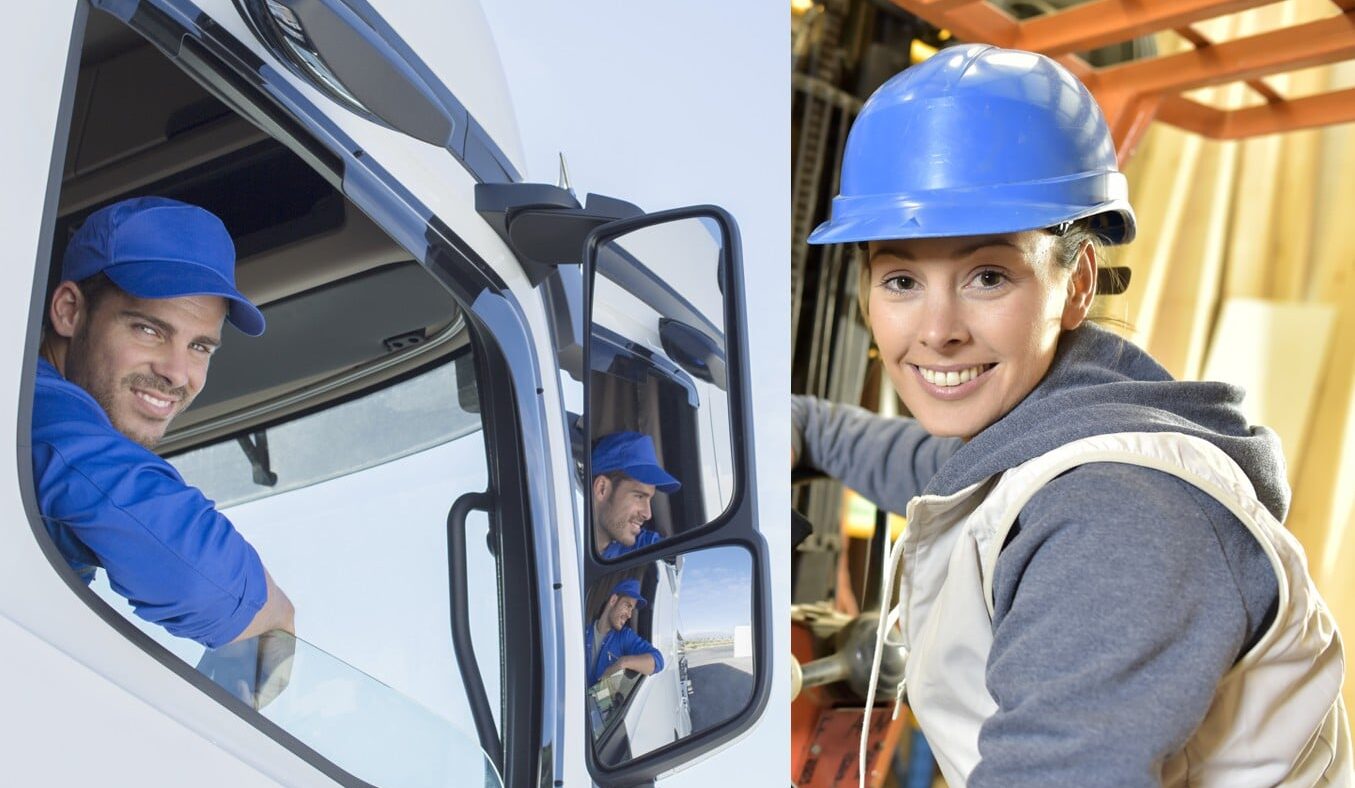
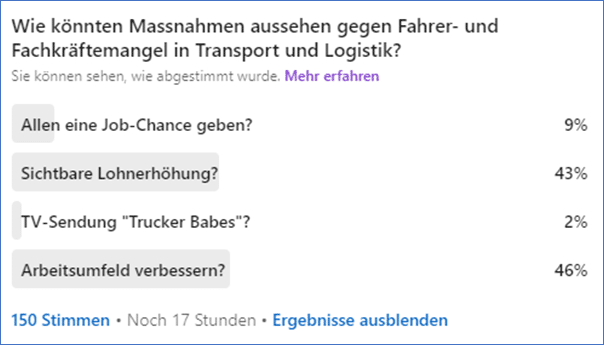
In a small survey on LinkedIn, we at Loginfo24 explored what measures could most effectively counteract the shortage of drivers and skilled workers in transport and logistics. Not everywhere are. After all, 150 LinkedIn users participated in the survey. Most saw the greatest success in improving the working environment, followed by a significant wage increase.
(Basel) The shortage of drivers and skilled workers has been in the headlines even before Brexit and Corona. However, these two significant events have exacerbated the situation. The problem is global, but it is particularly becoming a real issue in Europe.
Currently, the UK is feeling this problem drastically. At times, the food trade and gas stations could no longer be supplied with replenishments. Although the government intervened and the situation has calmed somewhat, it is not resolved.
In Germany and Austria, the shortage, especially of driving personnel, is also increasingly severe. The boom after Corona and the demand for cargo space in Europe highlight that the dilemma is becoming more pronounced. Solutions are desperately being sought.
In Switzerland, there is also a constant demand for driving personnel and skilled workers. Here, wages for driving personnel are higher than in the rest of Europe, allowing for recruitment from nearby foreign countries.
In all three countries of the DACH region, drivers are being trained, and there is a professional certificate upon successful completion of training.
Various Approaches to Improvement
We are pleased that 150 people participated in our survey. All are people from the logistics industry. This provides a representative picture. The vast majority advocated for an improved environment and higher wages. Indeed, the environment for driving personnel in the EU is precarious.
Starting with the lack of parking and congested roads to the undignified treatment at loading and unloading points, these are reasons for many potential candidates to make an unreasonable decision. While a financial enhancement of the profession is helpful, it is not a cure-all.
Despite Success Certificates, “Chance for All” Has Not Made Headway
An opportunity for all applicants and the TV show “Trucker Babes” were largely overlooked as possible tools for improving the situation.
If, despite higher wages and an improved working environment, skilled workers are still lacking, then new paths must be taken. For example, the Belgian logistics provider H. Essers has decided to give every applicant a chance. Depending on suitability, individuals are trained internally and then deployed. The model has proven successful and even caught the attention of Belgian King Philippe, who visited Essers to gain a personal impression of the model.
In Switzerland, Schöni Transport AG has had good experiences with the training of refugees. They are now working as drivers and enjoy their profession. However, these opportunities are limited due to regulations.
Few See “Trucker Babes” as a Tool
The TV show “Trucker Babes” may also encourage some women to apply for the profession of driver. The format is simple and certainly glorifies life on the road, and it was not created to help eliminate the shortage of skilled workers. However, if only 10 women take up the profession of driver because of it, then it has helped.
The entire topic also applies to skilled workers in intralogistics.
Original on LinkedIn
Photo and graphic: © Loginfo24