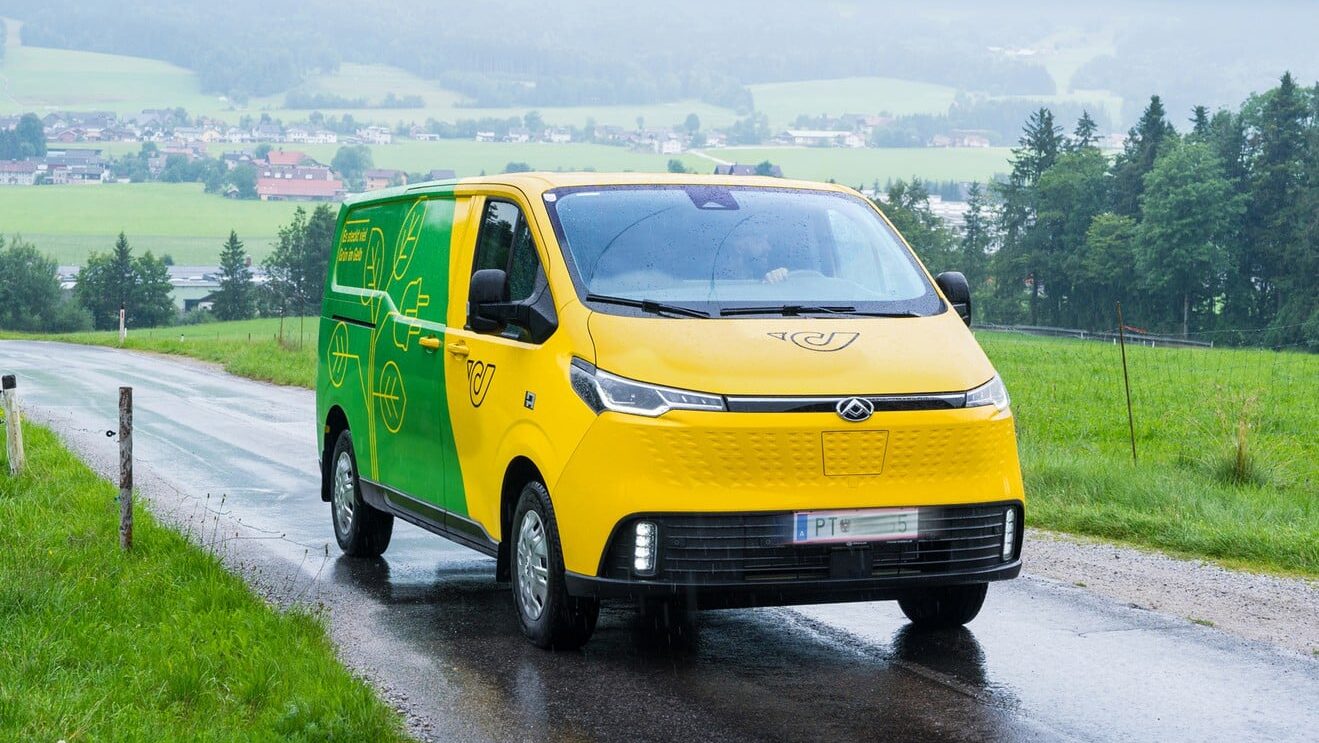
Austrian Post Delivers CO2-Neutral in Graz
5. November 2021
Scandlines orders emission-free ferry for the Puttgarden-Rødby route
8. November 2021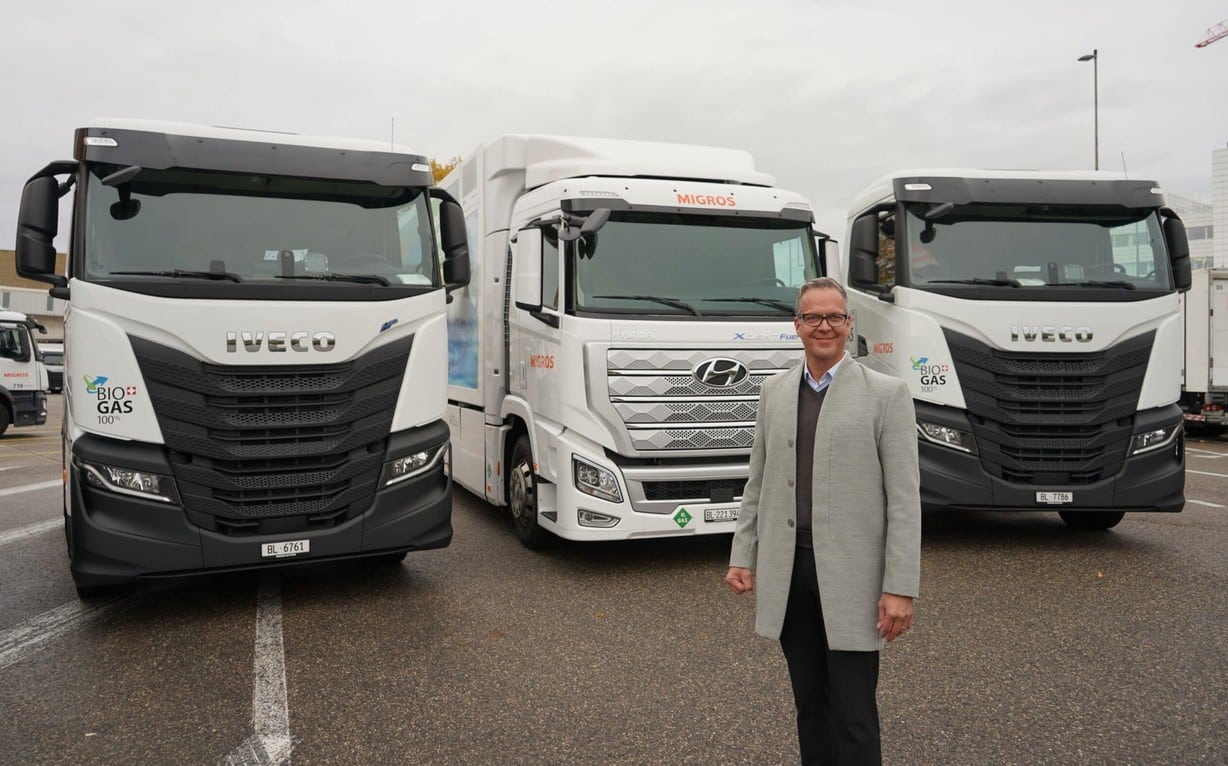
Migros Basel opens its own biogas filling station and will be even more sustainable in the future. The planned fleet renewal by 2030 will cost 17 million francs. It aims to bring the orange giant at the Basel Rhine knee a significant step closer to a circular economy and CO2-neutral transport, thanks in part to biogas trucks.
Die Genossenschaft Migros Basel verabschiedete bereits 2017 eine neue Mobilitätsstrategie, um ihre täglichen Transporte klimaschonender gestalten zu können. Ziel: Bis 2030 den CO2-Ausstoss der Migros-LKW um 80 Prozent zu reduzieren. Neben der Optimierung der Transportrouten und Fahrzeugauslastung solle dies auch durch eine Flottenerneuerung der über 30 bis dahin mit Diesel betriebenen Fahrzeuge erfolgen. Neben einem Elektro- und seit kurzem auch einem Wasserstoff-LKW setzt der zweitgrösste Detailhändler der Schweiz dazu aktuell auch auf fünf Biogas-LKW und einen Biogas-Lieferwagen.
In addition to biogas, hydrogen and electric vehicles
“The primary goal is to make as few trips as necessary, and if we do, then with as little CO2 emissions as possible. That’s why we will continuously renew our truck fleet in the coming years,” says Pierre Müller, head of logistics at Migros Basel, whose vehicles typically serve for eleven years. The expert makes it clear: “The application defines the respective drive technology. To postulate a single drive technology as the panacea would be wrong!” It is clear that for shorter, urban routes of 10 to 200 kilometers per day, they tend to rely more on electric drive, but for longer trips, the CNG trucks powered by biogas offer an ideal option. Therefore, the fleet renewal, which costs around 17 million francs, currently also plans for 5 hydrogen, 12 electric, and 12 biogas trucks by 2030.
Additional costs compared to diesel trucks are manageable
“The additional costs compared to a diesel truck are absolutely manageable, especially for the biogas vehicles. The electric trucks are clearly more expensive, and the hydrogen trucks are currently only available in a pay-per-use model,” says Müller. With biogas, the Migros logistician even has another advantage. On the one hand, he now has his own biogas filling station directly on the premises of the operational headquarters in Münchenstein BL, and on the other hand, he can even close cycles with it in the future. The trick with sustainable biogas: It is produced through the fermentation of biogenic residual materials such as green and meat waste and is also to be produced from unsold products from Migros stores in the future.
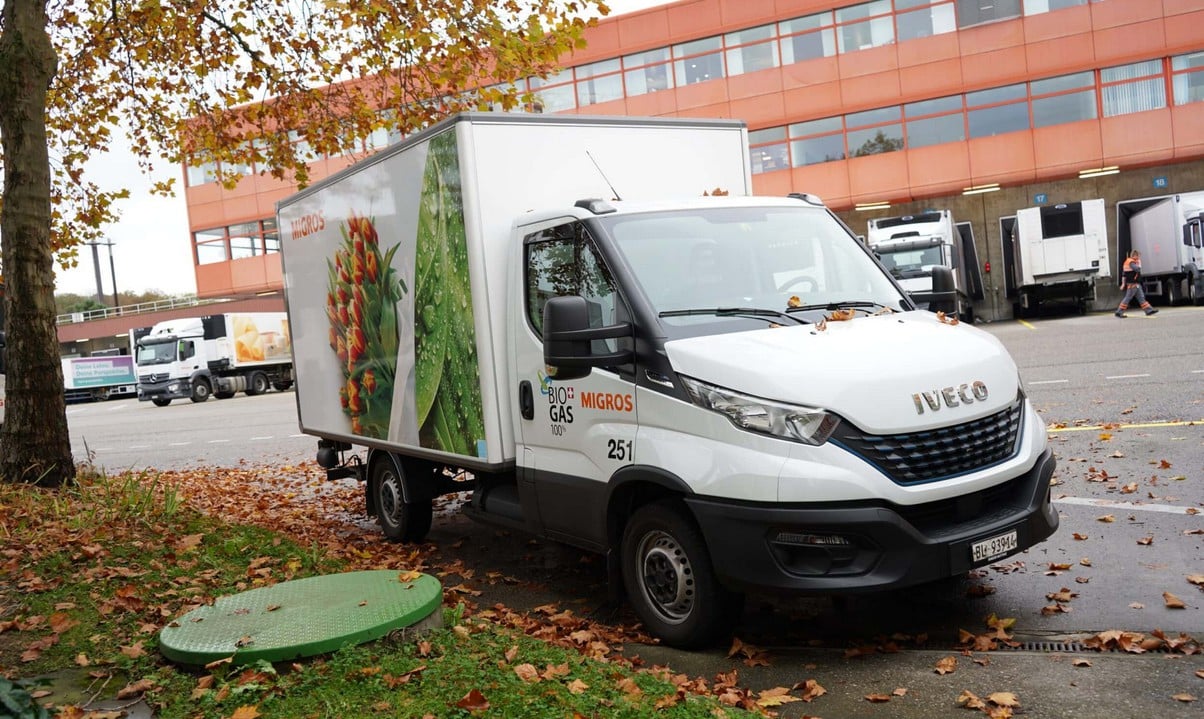
“Products that we cannot give to charitable organizations will be put to another meaningful use and used to power our gas-operated trucks,” says Pierre Müller with satisfaction. This way, around 2000 tons of biomass from the Genossenschaft Migros Basel can be put to meaningful use each year. This reduces waste volume, saves disposal costs, and brings biomass into the circular economy instead of unnecessarily burning it in a waste incineration plant – an absolute win-win situation!
Biogas trucks are also well received by drivers
The biogas trucks are not only good for the budget and the environment, but they are also well received by the drivers. Migros driver Fabrice is naturally pleased that he can now refuel at the newly opened biogas filling station on the premises. “Great, this makes route planning even easier. The biogas trucks are also very pleasant to drive and have a nice, constant pulling power. Moreover, they are clearly quieter than the diesel ones, which is noticeable on our tours.”
Title photo: CNG-Mobility.ch / Caption: Pierre Müller, head of logistics at Migros Basel, relies on biogas trucks for truck transport and advocates for technological openness. Source: CNG-Mobility.chOriginal source text: www.CNG-Mobility.ch