Scandlines orders emission-free ferry for the Puttgarden-Rødby route
8. November 2021
City of Meersburg Partners with QUANTRON for a Greener Future
8. November 2021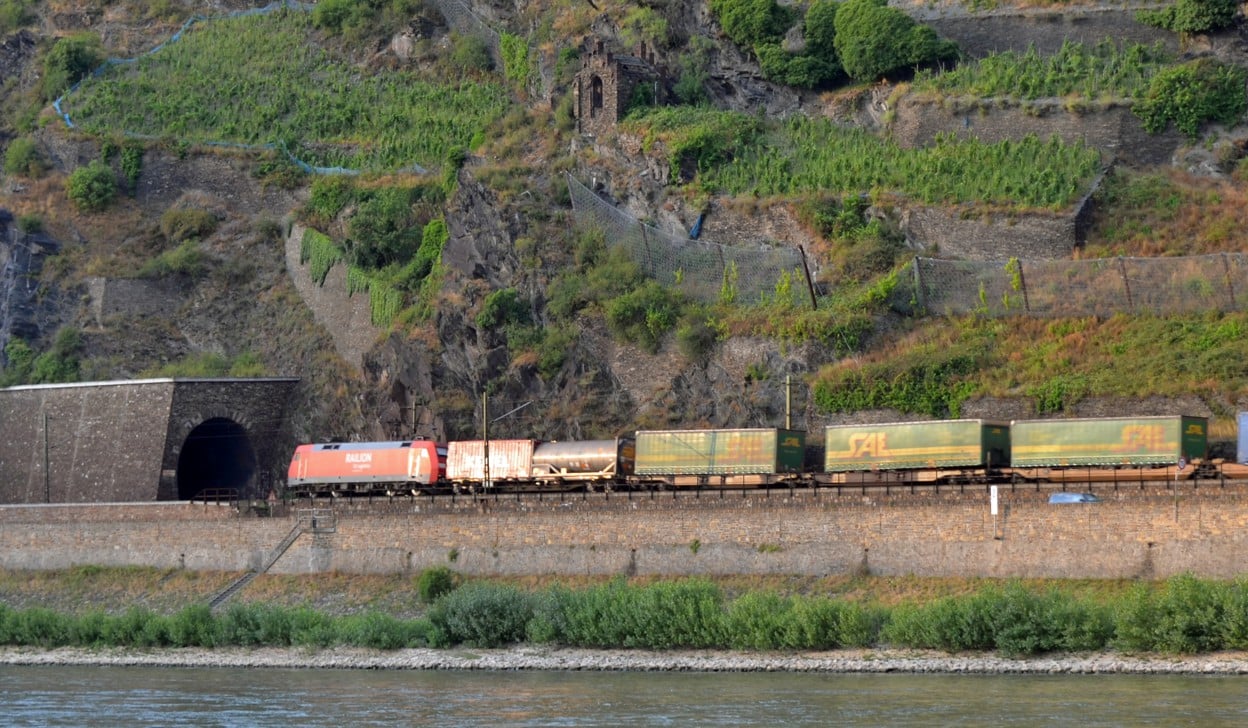
Rail traffic has been growing for years – but the rail network has not. The German railway network is becoming increasingly congested because the length of the rail lines has stagnated for about a decade. Before that, the track length even decreased significantly due to closures. In 2021, only 4.2 kilometers of new track were added!
(Berlin) In 2021, nearly 2,400 times as many kilometers of roads were put into operation in Germany as railway lines. According to data from the Network of European Railways (NEE), only 4.2 kilometers (= 0.01 percent) of new construction is being added this year to the approximately 33,300 kilometers of federal rail network.
Specifically, it concerns:
- a 3.1-kilometer-long second track on the northeastern outskirts of Berlin (near Karower Kreuz)
- an 800-meter-long second track and a bridge structure at “Homburger Damm” in Frankfurt am Main
- the extension of an overtaking track in Kindsbach (near Kaiserslautern).
NEE Managing Director Peter Westenberger: “The DB Netz, commissioned by the federal government, has only put 67 kilometers of additional tracks into operation throughout the entire 19th legislative period. If you were to line up all the press releases and documents in which the government announced a strengthening of rail and invoked climate goals, it would probably add up to a barely shorter distance.” The new government must, according to the wishes of the freight railways, initiate a thorough review of the processes through an external audit and a rapid action program for quickly effective capacity increases at DB Netz. Missteps such as DB equity increases for infrastructure expansions and the obligation of DB Netz AG to co-finance expansions from track usage revenues – disguised as “own funds” – must be ended as part of a Railway Reform II to accelerate expansion.
Already 21 sections overloaded
The future of rail freight transport depends on an expanded infrastructure that can accommodate the planned increase in its market share by the BMVI from currently 18 to 25 percent by 2030. Additionally, there is the Germany timetable announced by the government, which is to be realized in the coming years and will bring additional trains onto the tracks. On many routes, traffic is running at capacity limits, and 21 sections are already considered overloaded. “The question of rail capacity is not about a few cosmetic repairs, but about preventing a collapse and creating the foundations for achieving climate protection goals,” says Westenberger. “Reducing transport time, higher reliability of the transport route, and thus better planning are, alongside price, decisive factors for customers to transport their goods by train instead of by truck.”
With the three mini-routes, the outgoing federal government has only put a total of 67 kilometers into operation from the end of 2018 to today (2018: 59.7 km, 2019: 0.6 km, and 2020: 2.5 km). From the railway reform of 1994 to today, the Federal Republic has newly or significantly expanded a total of 1,717 kilometers of track – an average of 61 kilometers. In comparison: The annual addition of roads in Germany is around 10,000 kilometers according to information from the BMVI. The years of neglect of such an important part of the infrastructure is partly responsible for the fact that transport is the climate’s problem child.
“We must state that the rhetoric of the federal government, that it wants to upgrade the rail, is not true and that the legal mandate of the Bundestag for the expansion of the rail network is not being implemented consistently. With increasing traffic, it is becoming tighter and tighter on the network, delays and the renunciation of new transport offers that the market actually provides are the consequences,” summarizes Westenberger.
Federal government ultimately responsible for the misery
He identifies a lack of personnel as the main cause, to quickly carry out planning, court, and tendering procedures. The government must think about changes in the further road expansion area, which is not in line with climate goals anyway. Furthermore, there is a focus on high-speed projects that bring more prestige than the daily hard work of all rail traffic, but plan past the problem. Additionally, there has been a consistently insufficient provision of funds for expansion and new construction by the federal government for years, to which DB Netz AG had adapted its planning capacity a few years ago. Westenberger: “In summary, a management failure that points to the weak significance of rail in the federal government’s policy.” As the owner of DB Netz AG, the federal government is ultimately responsible for the misery. Protests from residents and lawsuits from environmentalists cannot provide an adequate justification for such a delay over decades.
NEE has been monitoring the expansion of the rail network since 2018.
Photo: © Loginfo24 / Image caption: Freight train in the Middle Rhine Valley near Oberwesel (right bank) heading towards Koblenz