Böhls & Behncke relies on Weber Data for data exchange
16. November 2021
Hamburg Port Achieves Positive Results in the First Nine Months
16. November 2021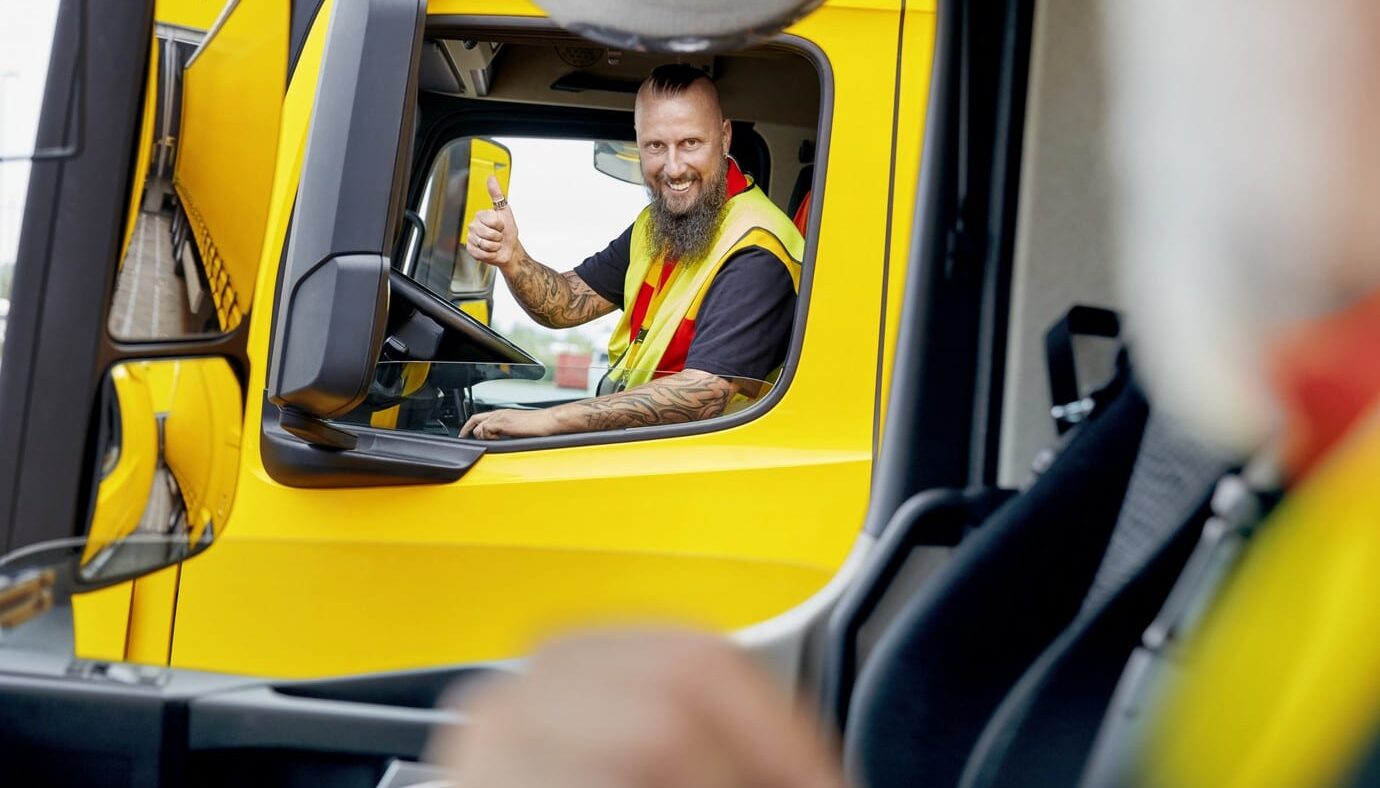
Since June 2021, DHL Freight has been testing the use of Bio-LNG (bio-liquefied natural gas from sustainable biomass) in three trucks for the customer Grundfos, in collaboration with Shell, to sustainably reduce its CO2 emissions. In the first five months of the pilot project, a total of 87 tons of CO2e were avoided by switching to Bio-LNG. This corresponds to the emissions of a diesel truck over a distance of more than 89,900 kilometers and represents a CO2 saving of 85 percent compared to a traditional diesel engine.
(Bonn) “The logistics industry is currently responsible for around eleven percent of global CO2 emissions. To combat climate change, the transport sector needs real decarbonization. For us at DHL Freight, sustainable fuel solutions are an important lever to change the fuel mix and reduce carbon emissions in road transport,” says Uwe Brinks, CEO of DHL Freight. “By investing in sustainable fuels, as well as in fleet renewal, engine retrofitting, and efficiency projects, we are reducing the negative environmental impacts of the logistics supply chain. We are pleased to work with partners who share our vision and are on the path to a sustainable future with us.”
By using the alternative fuel, the transports between Grundfos’s production sites in Bjerringbro, Denmark, and Longeville-Les-Saint-Avold, France, are to be made more sustainable. With the offer of green alternatives, the company is taking another step towards cleaner road transport in line with the Deutsche Post DHL Group’s Sustainability Roadmap 2030.
“Our commitment to sustainability and our ambitions in this regard are embedded throughout our entire value chain, and we work closely and collaboratively with our suppliers and logistics partners to achieve our sustainability goals. We aim to reduce our CO2 emissions by 50 percent by 2025. Therefore, we see the sustainable fuel solution proposed by DHL Freight as a significant step in the right direction to reduce CO2 emissions from road transport,” says Stéphane Simonetta, Group Executive Vice President and COO at Grundfos.
Bio-Gas from Agricultural Waste
The bio-liquefied gas used by Shell in this pilot project is produced from agricultural waste. It meets the criteria of the Renewable Energy Directive (RED II) of the European Union and is a product of a sustainable circular economy. The pilot project has been ongoing for more than five months and will continue for about another year. The emission reductions will be attributed to the customer accordingly. In this way, customers can successfully decarbonize their supply chains.
Fabian Ziegler, Managing Director of Shell Germany, says: “For us, conducting pilot projects like this with customers like DHL not only represents an outstanding opportunity to test innovative approaches and gain experience but also to jointly advance the decarbonization of the industry when new concepts prove themselves and make a positive contribution to climate goals in an economically viable way. The initial results of the pilot project indicate that Bio-LNG can already reduce CO2 emissions today, thus contributing to the reduction of greenhouse gases necessary to achieve the EU climate goals for 2030. This is very promising and good news for the industry.”
Further Expanding Bio-LNG Offerings
In the meantime, Shell is further expanding its Bio-LNG offerings to enable additional emission reductions up to full CO2 neutrality. Starting in early 2022, all Dutch Shell gas stations will offer Bio-LNG blends. This will give all customers the opportunity to further reduce their CO2 emissions. From 2023, Shell plans to offer Bio-LNG from a new gas liquefaction plant in the Shell Energy and Chemical Park Rheinland at all its German gas stations. Subject to timely approval of the necessary permits, the company will begin construction of the liquefaction plant later this year. With the annual production of the plant of 100,000 tons of Bio-LNG, the road transport sector could reduce its CO2 footprint by up to one million tons of CO2 per year.
Biofuels are Part of the Sustainability Strategy
The use of sustainable biofuels in road transport is part of the sustainability strategy of Deutsche Post DHL Group. According to the recently published sustainability roadmap of the group, seven billion euros will flow into climate-neutral logistics solutions by 2030. Furthermore, by 2030, at least 30 percent of the fuel needs in air freight and road transport will be covered by sustainable fuels. For Deutsche Post DHL Group, biofuels are currently crucial for the decarbonization of transport; however, in the long term, hydrogen as a power-based sustainable fuel represents a promising alternative.
Photos: © DHL