BGL Secures AdBlue® Basic Supply for Its Members
15. November 2021
DPD Takes Over Free Distribution of the “Stumbling Stones”
16. November 2021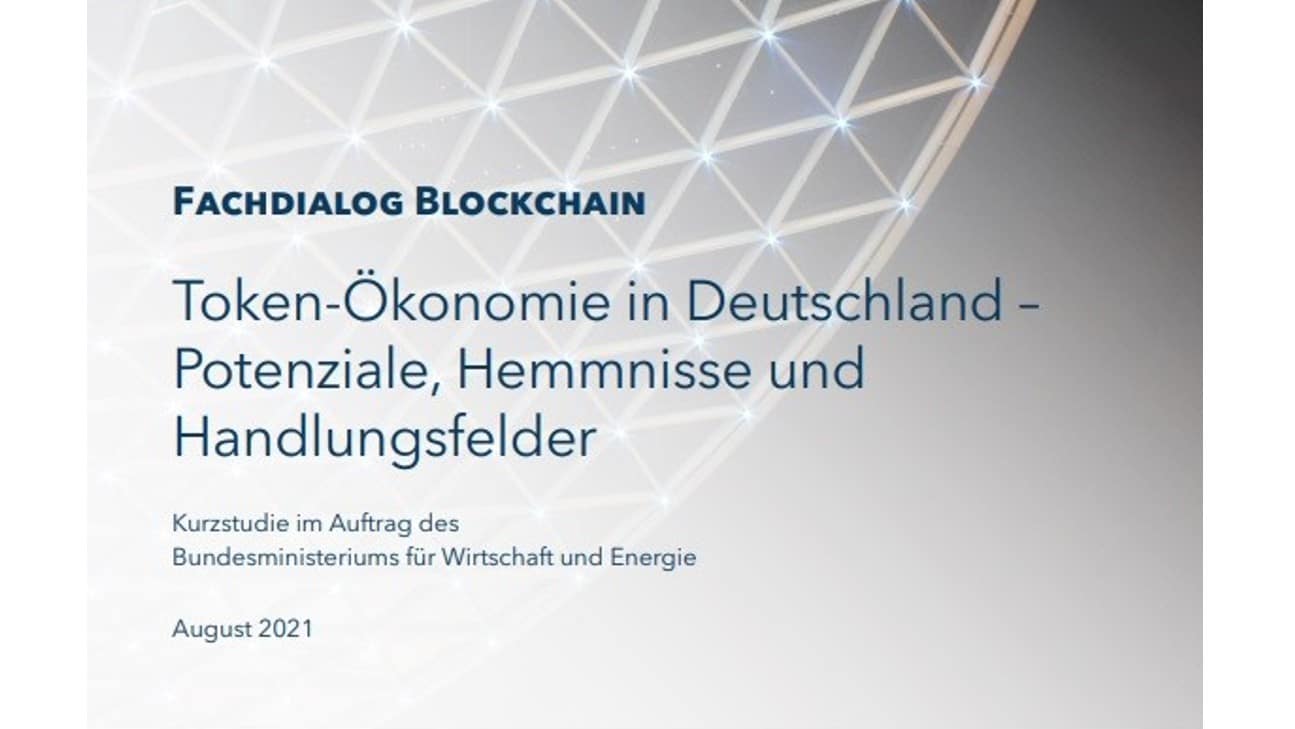
As part of the “Expert Dialogue Blockchain” of the Federal Ministry for Economic Affairs and Energy (BMWi), researchers from the Fraunhofer Institute for Material Flow and Logistics IML, together with an interdisciplinary research consortium led by WIK Consult, have created a study that examines the implementation of a token economy. Further investigations into blockchain technology regarding sustainability and small and medium-sized enterprises are already underway.
(Dortmund) So-called tokens have the potential to make economic processes more efficient and transparent: Instead of paper-based contracts, invoices, or certificates, tokens can represent values and rights of any kind in the digital space. The foundation is the blockchain technology, which allows information to be stored, processed, and transmitted in a decentralized and tamper-proof manner. This creates a new form of economy: the token economy.
In 2019, the federal government set the goal of promoting the token economy with the “Blockchain Strategy.” To investigate the opportunities and challenges that arise for the technology in practice, the involved scientists surveyed more than 35 representatives from academia, associations, companies, and startups as part of the “Expert Dialogue Blockchain.”
The experts identified the main opportunity as Germany being able to transform its digital economy into a proactive, (partially) autonomous economy. Industry and administration could benefit from digitized processes. This creates new forms of value creation that can strengthen corresponding economic growth in Germany and Europe. Additionally, new business models emerge in a token economy: “Projects like the Silicon Economy already show that companies can benefit from a platform economy based on blockchain and tokens. With the developed open-source components, it is possible to fully digitize process and supply chains. In the course of establishing the European Blockchain Institute in NRW, we at Fraunhofer IML are developing the building blocks to enable secure, transparent, and automated supply chains using blockchain,” emphasizes Prof. Michael Henke, head of the Fraunhofer IML.
Corresponding Projects Underrepresented in Germany
Projects like the Silicon Economy and the establishment of the European Blockchain Institute, in which Fraunhofer IML and its project partners develop freely accessible open-source components for all, are still underrepresented in Germany, as digital platforms are often not equated with collaborative ecosystems. However, understanding network economies is necessary, as the participation of all supply chain partners in a blockchain-based network is crucial for successful implementation. As a recommendation for action, the experts therefore suggest strengthening understanding and promoting best practice examples.
Another obstacle, according to the respondents, is the lack of knowledge about the token economy. Often, companies have to build their expertise themselves. This is particularly challenging for small and medium-sized enterprises. Legal uncertainties also pose a challenge. As a result, there are only a few companies that have already integrated blockchain technology into their processes. The experts’ recommendation is to promote existing blockchain startups in Germany, create incentives for further startups, and close knowledge gaps through educational offerings at colleges and universities. The integration of small and medium-sized supply chain partners could be supported with open-source software. Furthermore, the legal framework conditions should be expanded in an application-oriented manner to clarify issues such as liability or data protection.
How Blockchain Can Contribute to Sustainable Economy
The findings of the study are followed by further modules of the “Expert Dialogue Blockchain” that will be published in the coming months: In the second module “Sustainability,” the researchers will demonstrate how blockchain technology can contribute to a more sustainable economy and resource-conscious business practices. The third module “SMEs” will subsequently show what potentials arise for small and medium-sized enterprises and how these can be utilized.
The complete study on the token economy is available for download here:
https://www.bmwi.de/Redaktion/DE/Publikationen/Digitale-Welt/blockchain-kurzstudie.html
Graphic: © Fraunhofer IML