25 Years of Development History of the Freight Transport Center Region Augsburg
1. December 2021
Rhenus aims to operate all LCL sea freight products in a climate-neutral manner by 2030
1. December 2021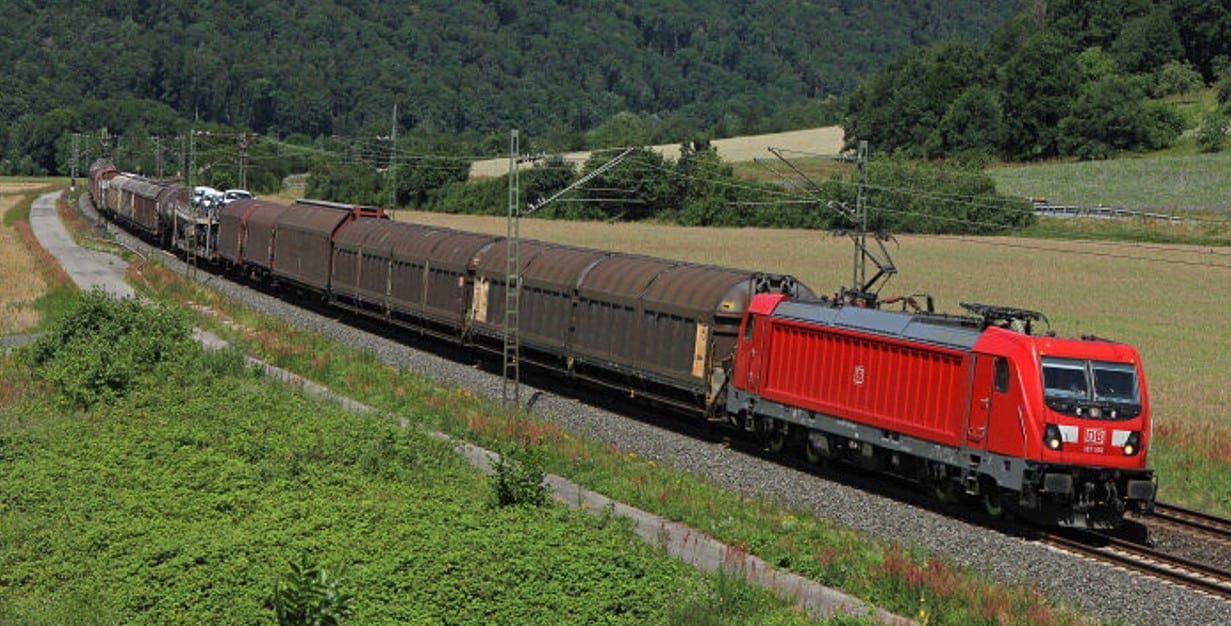
In May of this year, the Association of German Transport Companies and twelve of the approximately 150 freight railways organized within the VDV founded the “Future Network for Single Wagon Traffic”. The aim of this alliance is to strengthen single wagon traffic in rail freight transport to contribute to increasing the market share of freight railways overall. The alliance now counts 29 freight railways, with more expressing interest. Initial joint services are being successfully implemented.
(Berlin/Mainz) “If we want to shift significantly more goods to rail by 2030 to achieve the climate protection goals in the transport sector, we can only do this together and in collaboration with as many stakeholders as possible,” explains Joachim Berends, VDV Vice President and Board Member of Bentheimer Eisenbahn. “That’s why this network comes at the right time, and the strong interest from companies shows that we have given the right impulse to the industry with the idea of cooperation.”
Dr. Sigrid Nikutta, Chairwoman of DB Cargo: “We are bringing climate protection to the forefront! If we transport goods entirely by rail throughout their entire supply chain, that is maximum climate protection – and that’s why it’s good that single wagon traffic is explicitly focused on in the coalition agreement of the new federal government. If we, as an industry, are working together, it primarily benefits our customers. With our alliance, we can truly meet every customer need at any location in this country. And we can jointly make it clear to politics and local municipalities what decisions need to be made for the important single wagon traffic now. Goods belong on the rail. Not on the local thoroughfare or the right lane of the highway.”
Berends, Nikutta, and other partners are particularly pleased about the first three concrete projects that have already been implemented within the framework of the Future Network for Single Wagon Traffic:
The Kreisbahn Siegen-Wittgenstein and DB Cargo are closely collaborating on intermodal beverage transports for Trinks GmbH. Trinks GmbH, one of Germany’s leading beverage dealers, transports products from Krombacher by train from Kreuztal to Berlin. Once a week, two wagons with four containers leave the Southwestphalia Container Terminal of the Kreisbahn Siegen-Wittgenstein (KSW) bound for Großbeeren on the southern outskirts of the German capital. “This single wagon traffic was only made possible through intensive collaboration between KSW, DB Cargo, the customer Trinks, and Krombacher Brewery,” says Christian Betchen, Managing Director of the Kreisbahn.
Supply in Grafschaft Bentheim
Another success story is the supply of the steel industry in the region of Grafschaft Bentheim, Emsland, and Osnabrück with products from U.S. Steel through DB Cargo and Bentheimer Eisenbahn. Customers in the region are supplied “just in time” via the Railport in Nordhorn. The railways’ transshipment warehouse serves as a consignment warehouse, benefiting both supplier and customers.
A shunting cooperation on the “last mile” has been initiated by Regionalverkehr Ruhr-Lippe GmbH (RLG) and DB Cargo. The company Stahlform Schulte operates a steel warehouse in Arnsberg along the RLG line. In collaboration with the Steel Logistic Center Hagen of DB Cargo AG, certain quantities of steel are transported to the warehouse in Arnsberg, located outside the steel site in Hagen. The collaboration of the involved railways, incorporating a secure fallback option, leads to increased planning and supply security for the customer. Shunting capacities are already scarce in many regions today. Optimizations through shunting cooperations, especially in the local area, can increase capacities. Strong and flexible partners on-site are required to successfully accompany the transport transition,” explains Detlef Berndt, Head of Rail at RLG.
Collaboration also in three sub-working groups
In addition to the joint services that have already been implemented, the network partners are also working closely together institutionally and on organizational issues. In the three sub-working groups “Operations”, “Sales”, and “Strategy”, experts from the freight railways represented in the network regularly exchange ideas and implement joint projects. There are also initial positive results to report, from which all network partners benefit, such as the development of a joint product logo for single wagon traffic, a common backup solution in case of operational disruptions, or the digitization of operational collaboration.
Photo: © DB Cargo