
DB Schenker Acquires Two Logistics Companies in Spain
Dec 6, 2021 at 8:36 PM
Panattoni leases large area in Verden to BLG Logistics
Dec 7, 2021 at 5:59 PM
Since Corona, the topic of home office has come to the forefront. Currently, politicians and health experts recommend working from home, and in some places, it is even mandatory. But what happens after the pandemic? Will employees return to the offices? According to a study by Kantar commissioned by the collaboration platform Slick, 73 percent of employees do not want to return to office life and want to work from home at least two days a week. But is this an advantage for the employees or perhaps more for the employer? And how could this affect the logistics service industry? A few thoughts from Andreas Müller
(Basel) Home office is once again one of the top topics in the Western world. Due to rising Corona infection rates, politicians and health experts recommend or demand working from home wherever possible.
Many employees are pleased. Longer sleep, casual clothing at work, no commute in congested public transport or on crowded roads, and a work-life balance are the main arguments of the employees. Most want to work from home at least two days a week, namely 73 percent. This is stated in a study by the polling institute Kantar1, commissioned by the instant messaging service Slack1, a platform for internal corporate communication. However, almost no one wants to work exclusively from home.
Of course, there are also disadvantages. Often, the many screen meetings are annoying, and concentration can suffer when, for example, the whole family is at home at the same time. Both partners working from home and children in homeschooling can also be the basis for a strained household peace. At least it seems that the topic of home schooling has been accepted by politicians, and they want to avoid it with the now-called “fourth wave” at all costs.
Is Home Office Only an Advantage for Employees?
But how do employers actually see this? Even before Corona, large corporations exploited the fact that not 100 percent of employees are present at the same time. Illness or vacation, business trips, or other reasons for absences led to office spaces being made available only according to a precisely calculated attendance key. The fixed personal workstation was a thing of the past. From then on, it was “first come, first served,” meaning that whoever arrives at the office at seven can choose their spot, while those arriving at nine must see where there is still space available. Employers accept that this tears teams, groups, or departments apart.
Home office can further intensify this. Where it may have been 80 percent before, suddenly only 50 percent of the spaces may be available. Employers can thus significantly reduce fixed costs, even if perhaps more is invested in the quality of the remaining workspaces. Less office space is needed, which will also have a significant impact on life in city centers. Working on desired days may remain just that, a wish. As an employee, one cannot have everything at the same time.
However, something else is newly added. When employees work from home, they also disappear from the sight of managers, so to speak, “Out of sight, out of mind.” No “Teams meeting” or “Zoom conference” can help with that. The visibility of people is lost, even if performance may even increase. Ultimately, management can only be conducted through digital statistics, even if one occasionally sees each other in person. Perhaps the boss is working from home on the day when employees might wish for a personal conversation, or there is no time for it during a short presence.
 Work-life balance is a plus for many employees in the home office. But is that also good for performance?
But there is another new phenomenon. As a recent report from the “Basler Zeitung”2 (including a relevant interview3) shows, employers notice something else. When employees work from home, it makes no difference whether they live 10 or 1,000 kilometers away. In the mentioned example of the Swiss pharmaceutical giant Novartis, a Swiss commercial clerk with a monthly salary of around CHF 8,000 (approximately 7,680 EURO) is currently training his successor in Slovenia, who will then perform the same job for 2,500 EURO. It is also mentioned regarding office spaces that rooms in the elaborately built Novartis campus are now being rented out to third parties. Until recently, this was unthinkable. Novartis is mentioned in this example, but this model can be replicated by companies worldwide.
Home Office in the Logistics Service Providers
The dispatcher sits in Poland, the IT supporter in India, the billing department in Romania, the controlling is automated, and the finance department is in Ukraine. Tender management is controlled from Slovenia, and the management and company headquarters are in a tax-friendly country like Switzerland. Wherever the corporate language is English, this can easily be the case or implemented. It does not have to be the listed countries; it can be anywhere where wages are low and performance is still high.
Since English is now taken for granted by young people and is as much a part of their lives as the right sneakers or smartphone, this will be even less of a problem in the future. This is also true for customers. Topics such as AI (artificial intelligence) or real-time tracking, booking platforms, or similar tools contribute to making it completely irrelevant where an employee is located.
Currently, however, intralogistics seems to be unaffected. The purely virtual warehouse still seems unfeasible, but is it really? At the moment, AI or topics such as ergonomics (keyword: exoskeletons) are seen as help and support for employees. But is it really unthinkable that a warehouse could be operated solely by robots?
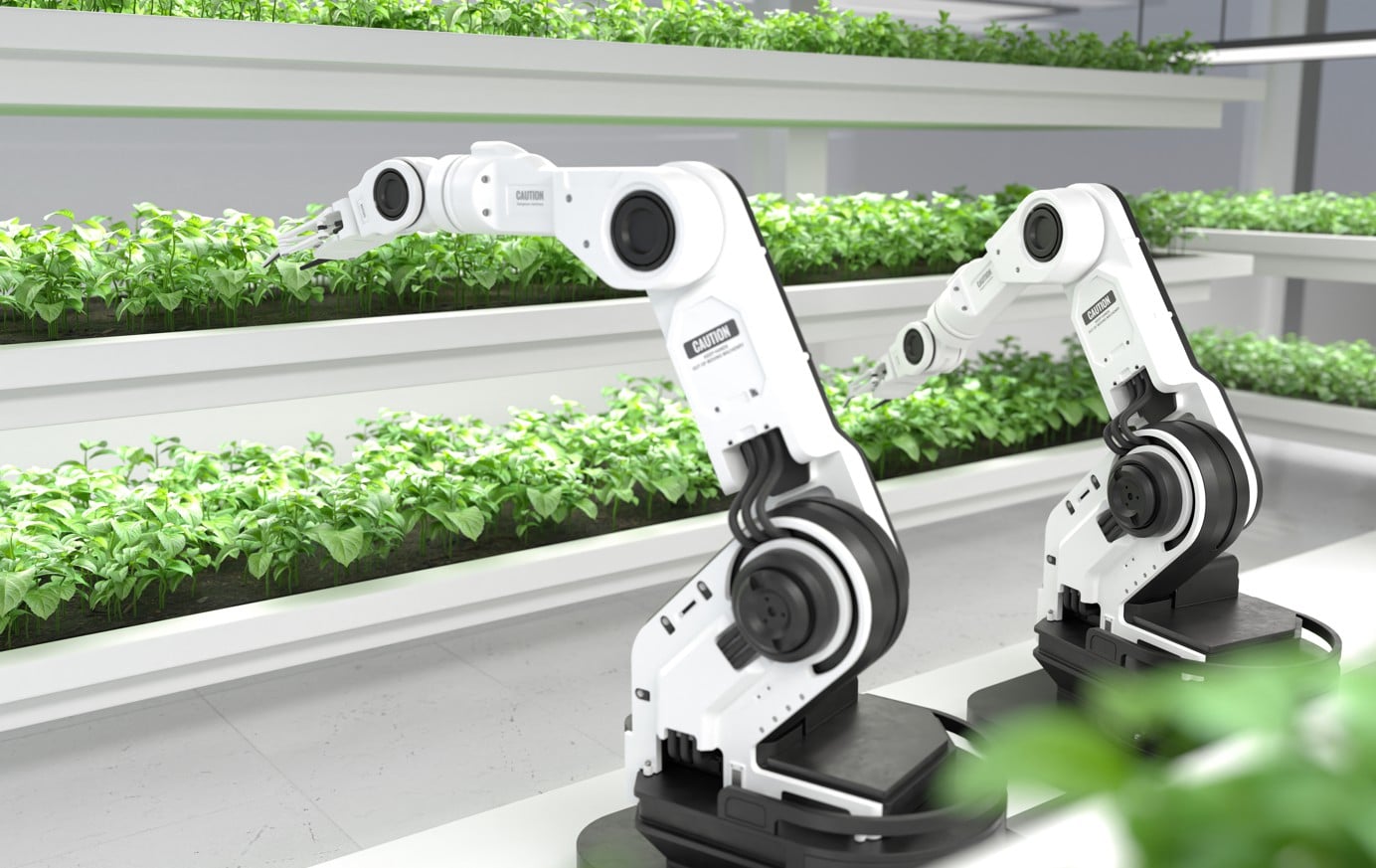 Without humans? – Is this what the future of intralogistics looks like?
What Are the Insights?
However, there are also other aspects from the perspective of employers that may come to employees. Does a company even need permanent employees if they are scattered all over the world anyway? Or is it sufficient to permanently hire a small stock of workers (key people) and for the rest, rely on freelancers? Will millions of “I-Entrepreneurs” emerge who must market themselves and no longer seek jobs but work? What sounds heretical at first is meant seriously. Paid vacations, sick pay, and many other options will then fall away and become the responsibility of the employee. Now, this is not new. Freelancers have existed for a long time, such as “freelance journalists.” But what is new is that this can now be applied to almost all jobs in a company. More and more!
Regardless of the industry, whether it will ever be like it was before Corona can definitely be answered with no. It seems certain that employees may have far less influence on events than they previously thought. The push for home office could become a boomerang. The high demand for labor could extend worldwide, or digitalization and automation, combined with artificial intelligence, require fewer and fewer people, meaning fewer workers.
Can an employer resist such trends and continue to rely on local people? Yes, they can, if they are willing to achieve lower returns and their customers are willing to pay more for it. The market will show this. Where products are sold or delivered, the situation is different than where pure services are offered.
But does anyone know what tomorrow holds? Will the future “smartphone junkie” ever leave their house or apartment if everything, really everything, is delivered to their doorstep? Today it seems unimaginable, but what will it be like in 50 years?
The entire article mixes facts with fiction and is meant to provoke thought. These are personal reflections based on existing facts. How things will come to be and how the world will develop can perhaps be imagined, but no one really knows.
References
1 Kantar/Slack Study:
https://www.kantar.com/de/inspiration/d21/d21-digital-index-2020-2021-deutlicher-corona-effekt-beim-digitalen-arbeiten
2 Report “Basler Zeitung”:
https://www.bazonline.ch/entlassene-muessen-ihre-nachfolger-in-slowenien-einarbeiten-637443499368
3 Interview “Basler Zeitung”:
https://www.bazonline.ch/jobverlagerung-wird-nun-bei-viel-mehr-firmen-ein-thema-443132225792