DHL Route Planning Tool Greenplan Goes for Management Buyout
12. January 2022
EUROGATE subsidiary Floyd is now called EUROGATE Rail Hungary
12. January 2022
The European Cargo Alliance of International Forwarders AG (ELVIS) and the ELVIS Partial Load System GmbH can now refer to a balanced CO2 balance. Since it is currently not technically possible to completely avoid carbon dioxide emissions, the two companies have opted for compensation. This has been carried out since the end of 2019 according to the recognized Gold Standard. Last year, ELVIS offset nearly 800 tons of greenhouse gases through investments in climate protection projects.
(Alzenau) “Sustainability is undoubtedly one of the most important issues of our time. And even though politics is still undecided on how to concretely respond to the climate crisis, it is clear: there can be no ‘business as usual’,” says Nikolja Grabowski, CEO of ELVIS AG. “One does not need to be a prophet to foresee that any environmental damage will be priced higher in the future. Therefore, we believe it is necessary from a business perspective to act voluntarily today.”
In this context, the logistics alliance from Alzenau and the partial load system based in Knüllwald decided back in 2019 to compensate for their CO2 emissions. For the implementation, ELVIS relied on the expertise of the climate protection agency Climate Extender from Gehrden in Lower Saxony. As part of a multi-stage process, they first created current climate balances for both companies and then examined where emissions could be reduced through technical and/or organizational measures. Subsequently, the amount of compensation was calculated based on international standards. This took into account all unavoidable emissions arising from normal daily operations, from employee commuting to the operation of the logistics hub in Knüllwald.
The alliance now offsets these emissions by investing in recognized environmental protection certificates. Through these, climate protection projects in emerging and developing countries are financed, which demonstrably bind carbon dioxide or avoid further emissions, thereby reducing the burden on the environment. In this way, ELVIS compensated for almost 800 tons of CO2 last year, which is roughly equivalent to the emissions caused by 1,000 fully loaded trucks on the route from Frankfurt to Hamburg.
However, the alliance does not want to stop there. In addition to the administration in Alzenau and the operation of the hub in Knüllwald, the system transports commissioned by ELVIS itself will also be compensated step by step from now on. “Since there is currently no technology for CO2-free transport, offsetting emissions is the only viable way for us,” explains Grabowski.
The Alliance Supports Its Partners
“We are convinced that the aspect of sustainability is essential for the future viability of a company. However, small and medium-sized enterprises, especially in our industry, often lack the resources to give this issue the necessary attention,” says Grabowski. Therefore, the alliance has now taken on this task for its partners. Recently, the affiliated forwarders and freight carriers can easily and directly offset individual transports through ELVIS.
The extent and thus the costs of the compensation are calculated by the alliance based on the respective shipment weight as well as the permissible total weight of the truck, the vehicle type (trailer/semi-trailer truck, solo truck, refrigerated truck), the truck’s load considering additional loads, the distance traveled, and the share of empty runs. The compensation itself is also carried out through the purchase of certificates from the Swiss Gold Standard Foundation.
Approaching the Shippers
Grabowski: “This allows our partners to approach shippers with a concept that is clearly defined and transparently calculated. This is good for the environment on one hand, and on the other hand, it gives our partners momentum in public discussions and strengthens their negotiating position.”
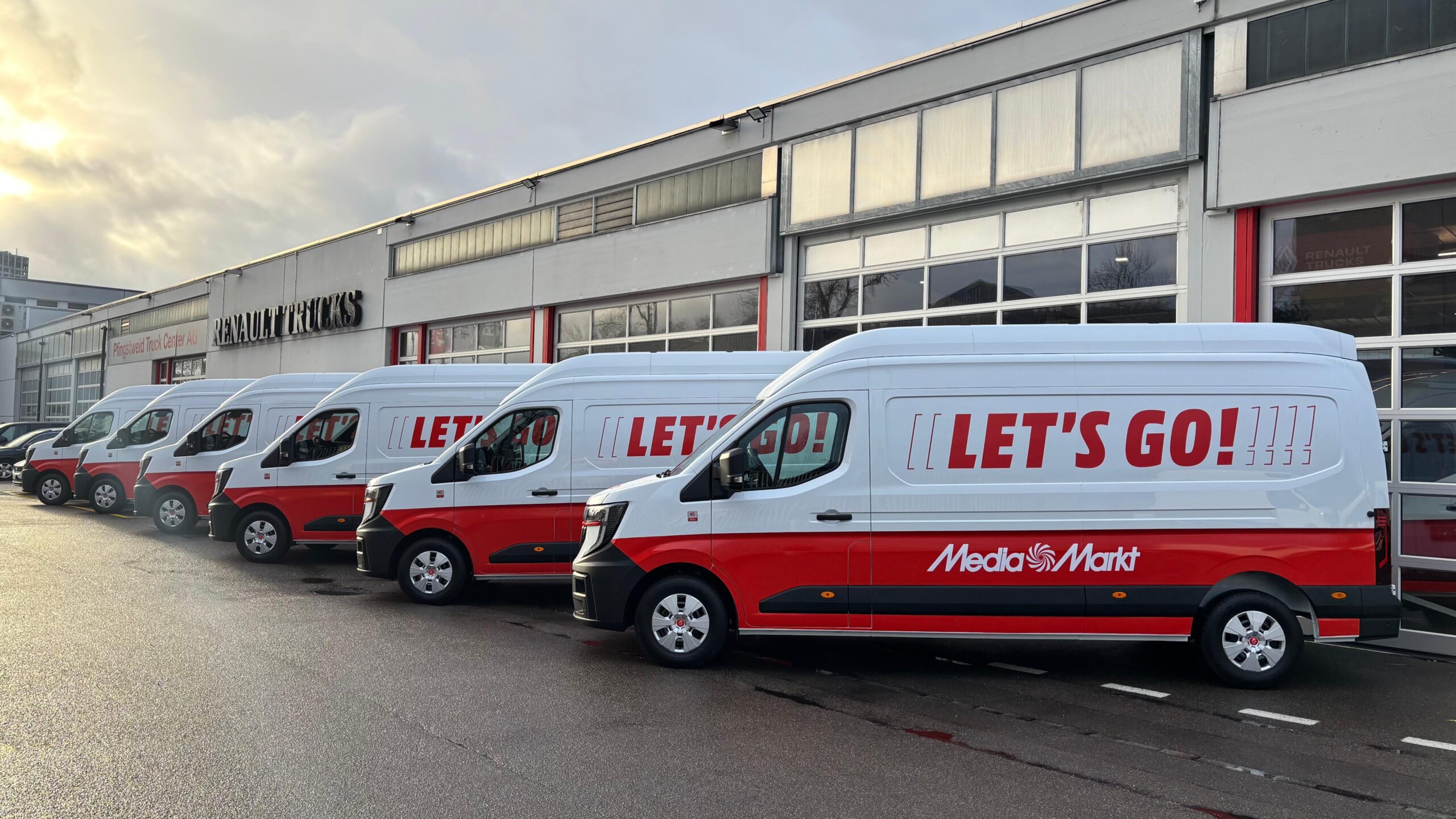
Photo: © ELVIS