ECO Containertrans Celebrates 10 Years and Expands to Moers
10. February 2022
Gebrüder Weiss opens new branch in El Paso/Texas
11. February 2022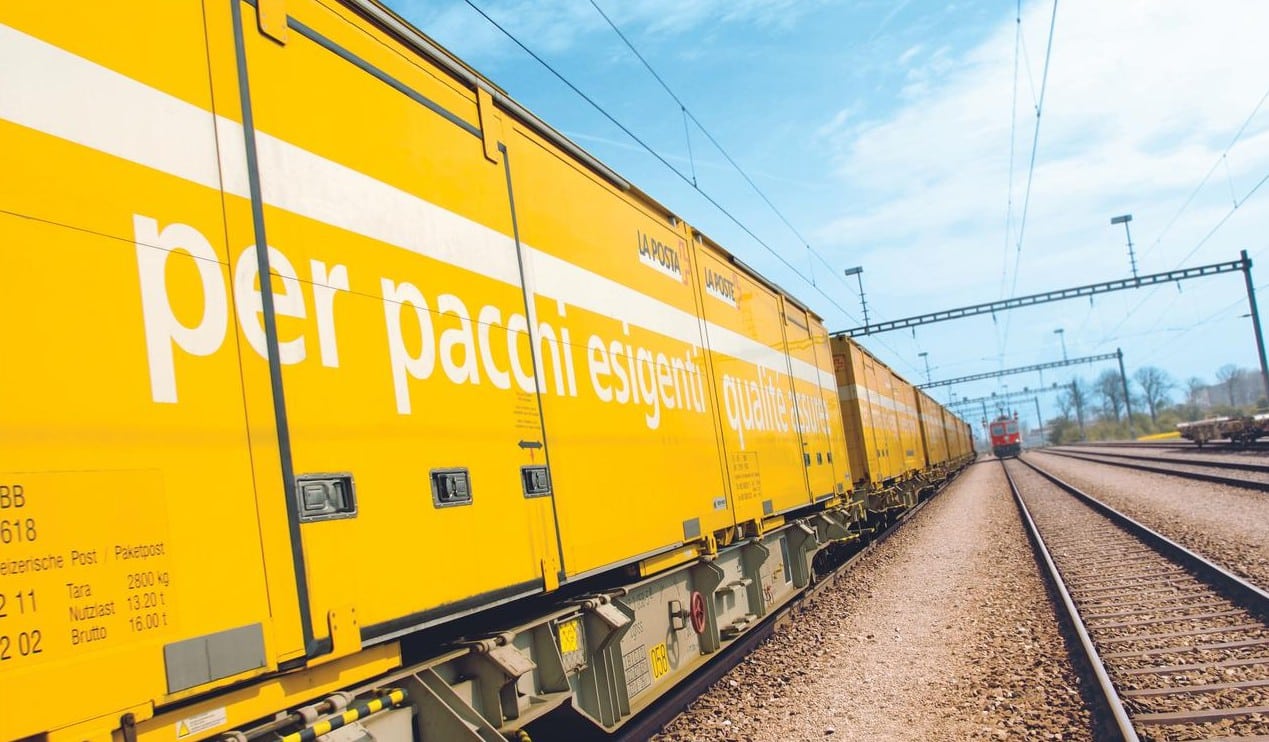
SBB Cargo will continue to transport packages, letters, and newspapers on behalf of Swiss Post in the future. The main share lies in the traffic between the hubs. The Post has extended the contract with its long-standing partner for the years 2023 to 2026. The collaboration dates back to the early days of the railway.
(Bern) The Post has always transported letters, newspapers, and packages by train. This is confirmed by Cornelia Heizmann. Together with a colleague, she leads the department at the Post that deals with the question of “Rail or Road?” She smiles: “I once heard that letters were already being transported by train just one month after the opening of the Spanish Roll Railway between Zurich and Baden in 1847.” Undoubtedly, the railway has been important for postal traffic from the very beginning. But what does it look like today? “We handle a large part of the internal transports by train,” says Cornelia Heizmann. This means: between the sorting centers. The Post focuses on the main axes East-West and North-South.
On the East-West axis of the railway are the large letter and package sorting centers in Daillens and Eclépens, Härkingen, Zurich-Mülligen, and Frauenfeld. At loading terminals, containers loaded with packages are hoisted onto the railway cars with cranes. Trains that exclusively transport letters go directly into the interior of the letter centers so that the postal employees can load and unload them. Afterwards, the yellow postal trains take the packages, newspapers, and letters to distribution centers such as Landquart, Chur, and Geneva. On the North-South axis, the trains serve distribution centers including Basel, Cadenazzo, and Visp.
New package centers are not always located near tracks
But what about the new regional package centers of the Post, such as Untervaz and Vétroz? In fact, the Post is investing heavily in the construction of new package centers to handle the steadily increasing volume of packages. However, the available spaces for new package centers are scarce and not always located near railway tracks. Cornelia Heizmann states: “About 50 percent of all letters and packages today cover at least part of their journey by train. With the construction of the new regional package centers, the Post will be able to sort much more directly in the regions in the future, so that packages can reach many doorsteps even faster. On the railway axes between the large sorting centers, we will therefore transport relatively less. But with the overall increase in package volumes, this balances out. The railway will remain the backbone of postal transport in the future and the first choice when deciding on the mode of transport.”
Trains set the pace
SBB Cargo operates 45 package trains and 15 letter trains for the Post daily, with a total of around 470 cars traveling through Switzerland. This happens day and night, with about 60 percent of the “yellow” trips falling between 7 PM and 7 AM. The Post must always order these trips one year in advance. “At the beginning of April 2022, for example, we order our trains for 2023 so that SBB Cargo can schedule them in the annual timetable,” explains Cornelia Heizmann. In railway jargon, this is referred to as track ordering, similar to slots in air traffic. Therefore, the number of train trips cannot be changed arbitrarily by the Post. The postal trains operate according to a predetermined schedule and are synchronized with the postal rhythm. Because the employees in the letter and package centers organize their work and the capacity of the sorting machines based on the arrival of the trains. If a train arrives late, it can also delay the delivery of a package or letter for many recipients.
Road and rail complement each other
“Especially for regions like Valais, Ticino, or Graubünden, we rely on punctual trains so that we can deliver A-Post letters within a day,” says Cornelia Heizmann. For these regions, the train is the faster option than trucks. Conversely, for other regions, generally over shorter distances, the road is the better option. The Post continuously examines which transport routes it prefers, whether by road or rail. It opts for the train when it can serve households punctually, when it is economically and ecologically sensible, and when it is logistically feasible. Because online shopping is booming, and customers want to receive their goods faster after clicking.
Whether asphalt or railway, the choice of the right mode of transport always depends on the number of packages and letters, the timing, the availability of tracks on the railway, the accessibility of destination locations, and the costs.
Photo: © Swiss Post