Arvato Financial Invests in Swiss TradeTech Nexxiot
16. February 2022
Hapag-Lloyd Launches New China Service with Dachan Bay
16. February 2022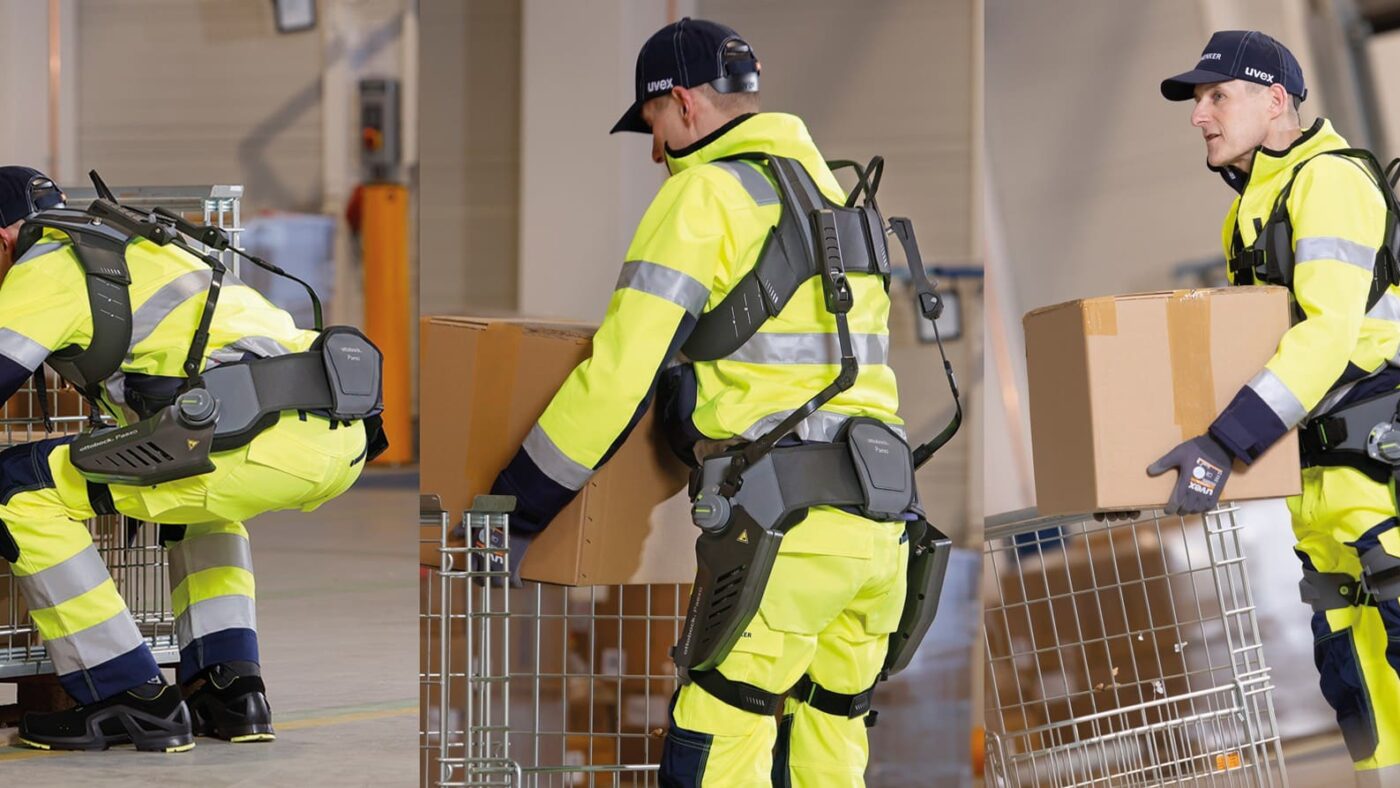
After completing a scientifically monitored testing phase, DB Schenker is using exoskeletons in regular operations in warehouses and cargo handling in Germany for the first time. Ottobock Bionic Exoskeletons, with models from the Paexo series, has been included as the first manufacturer in the portfolio of approved operating resources for safety and health protection. Additional variants from other providers are expected to follow.
(Frankfurt/Main) For DB Schenker, the preventive health protection aspect is paramount when using exoskeletons. Frank Stehn, works council member and responsible for health management at the logistics service provider in Germany, states: “Musculoskeletal disorders are one of the most common causes of incapacity for work and reduced employability both in Germany and internationally. They are primarily caused by physical overload at work. Given the high physical demands of manual material handling, employers in logistics have a special responsibility in this regard. The use of exoskeletons represents a valuable approach to improving the ergonomic conditions of workplaces. This is also because exoskeletons excellently support the flexibility required for typical tasks in logistics.”
Decision Based on Extensive Tests and Studies
Since 2019, DB Schenker has been systematically testing the use of exoskeletons. Most recently, in the summer of 2021, practical test series were conducted over a period of four weeks at various locations in contract logistics, air and sea freight, as well as land transport. The focus was cross-departmentally on packing and order picking. Ottobock provided so-called “Experience Packages” for these tests, which included exoskeletons, intensive on-site training, and extensive multimedia training materials. In previous test series, DB Schenker and Ottobock had already collaborated very successfully.
The tests were conducted in close coordination with the works council, and selected processes were data-captured by the company MotionMiners using sensors. The sensor-based comparative measurements confirmed the significant reduction of ergonomically unhealthy movement patterns through the use of exoskeletons. In addition to this relief, their use demonstrably leads to improved posture during material handling. This represents an important contribution to health prevention. Based on this, selected exoskeletons are now approved for company-wide use at DB Schenker.
Productivity and Quality Improvement
Following the promising results of the conducted tests, DB Schenker anticipates further positive effects from the use of exoskeletons: Reduced fatigue leads to increased productivity and a decrease in quality errors throughout the shift. Furthermore, DB Schenker sees additional opportunities for the inclusion of people with physical disabilities in the work process with the support of exoskeletons.
The test results at DB Schenker align with Ottobock’s experiences from previous studies and applications: “The introduction of our exoskeletons at DB Schenker confirms the positive feedback we have received for years from warehouses and logistics centers regarding working with exoskeletons. The combination of health preservation and productivity increase is clearly evidenced in this case,” says Dr. Sönke Rössing, Head of Ottobock Bionic Exoskeletons.
Diverse Applications of Exoskeletons
DB Schenker aims to offer its operational units a wide-ranging portfolio of different types of exoskeletons. Gerald Müller, Vice President Industrial Engineering at DB Schenker, adds: “One learning from our previous experiences is that there is not one exoskeleton that fits all applications. Depending on the requirements, different types are suitable. Even though the health-promoting objective remains the same.” DB Schenker has created a system to match application cases with the appropriate exoskeleton model.
Photo: © DB Schenker