


Cargo Trans Logistik (CTL) with Successful 2021
28. April 2022
First DPD Store Opens Nationwide in Berlin-Friedrichshain
28. April 2022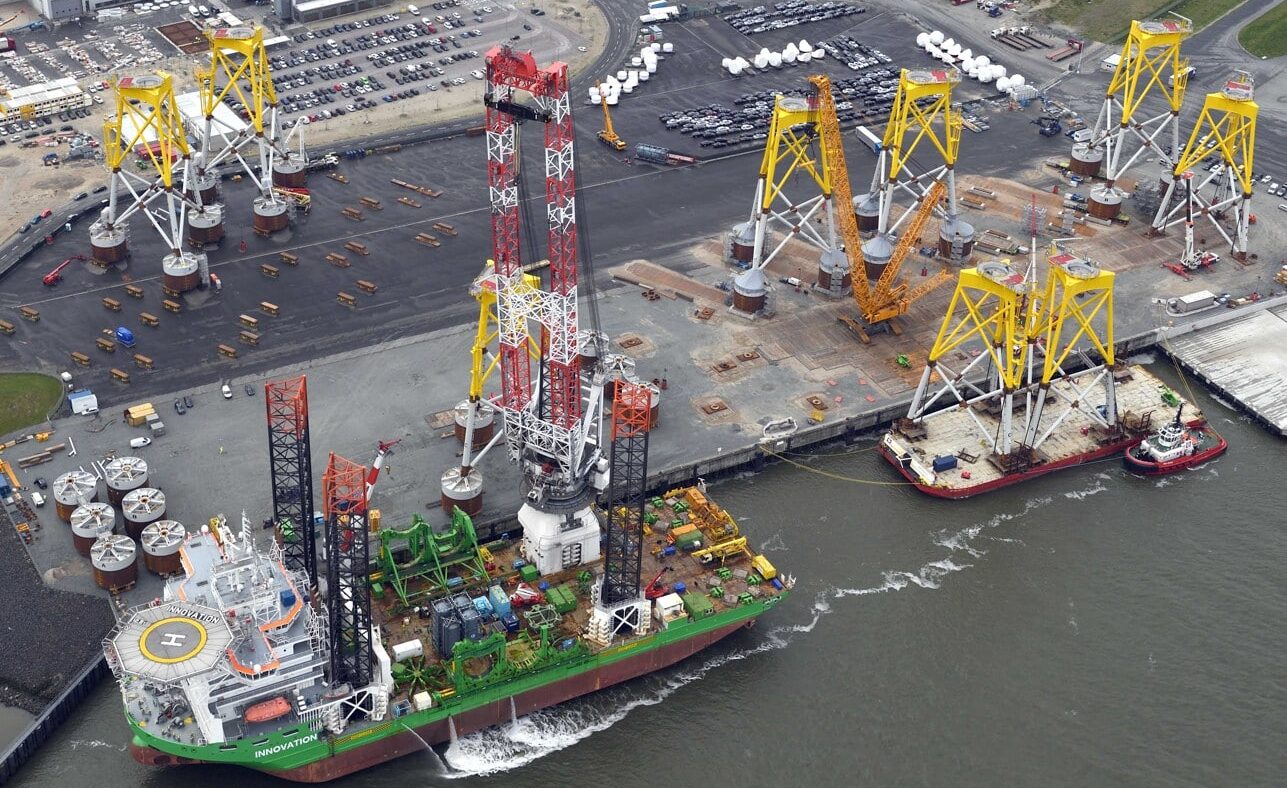
Additional port infrastructure for onshore and offshore wind energy is needed for the energy transition. Peter Zint, chairman of the Cuxhaven Port Community (HWG), sees Cuxhaven as capable of alleviating bottlenecks in this regard. Three berths could be created there within a useful timeframe. This also requires support from politics.
(Cuxhaven) “Without additional port infrastructure for onshore and offshore wind energy, the federal government’s ambitious energy transition cannot succeed. By 2024/25 at the latest, delays in implementing the ambitious expansion targets will occur due to a lack of suitable handling and storage options,” predicts Hans-Peter Zint, chairman of the Cuxhaven Port Economic Community (HWG). Cuxhaven would be able to alleviate this bottleneck. Three berths could be created immediately.
The federal government’s expansion targets are clearly defined: Offshore wind energy is to increase from the current 8 GW to 30 GW by 2030, while onshore wind energy aims to double to 115 GW by 2030. Once the accelerated expansion begins, this will have a significant impact on seaport handling. “For onshore parks, we expect a massive increase in imports within about two years at the latest; offshore projects will typically have a slightly longer lead time,” Zint anticipates. However, even today, there are hardly enough available capacities in German ports for such projects. So far, the construction of wind farms in the North Sea has mostly been handled through ports in Denmark and the Netherlands.
Three new berths in Cuxhaven possible by 2025
HWG members are convinced that the government must not become dependent on neighboring countries in the logistical implementation of the energy transition, but must invest in the establishment of its own suitable port capacities in a timely manner. In Cuxhaven, three new berths for offshore and onshore wind energy could theoretically be operational within two and a half to three years. Zint specifies: “We have had a completed planning approval since February 2020 and could implement it immediately.” The German Offshore Industry Center Cuxhaven (DOIZ) is already one of the largest offshore ports in Europe today.
Federal financial participation demanded
“Renewable energies are in the public interest and serve public safety in the future,” emphasized Federal Minister of Economics Robert Habeck on the occasion of the publication of the Easter package. “A holistic approach to the energy transition also means that the federal government must participate in the port financing for onshore and offshore terminals,” demands Zint. Currently, the government has only committed to promoting LNG and later hydrogen terminals. At the same time, the creation of port infrastructure for the expansion of wind energy at sea and on land is necessary to enable the required electricity generation for the production of green hydrogen, which is to replace fossil LNG as quickly as possible. According to Zint, swift and decisive action by the government is needed to turn the nearly tangible opportunities in Cuxhaven into usable berths.
Solution-oriented appeal
“For a successful energy transition, gas and offshore terminals must be thought of hand in hand. The port economy is ready to implement the approved, quickly realizable expansion project here in Cuxhaven together with the state and federal government,” assures Zint.
Photo: © HWG