

Hapag-Lloyd Celebrates 175 Years
24. May 2022
Fiege commissions photovoltaic system at its location in Zülpich
29. May 2022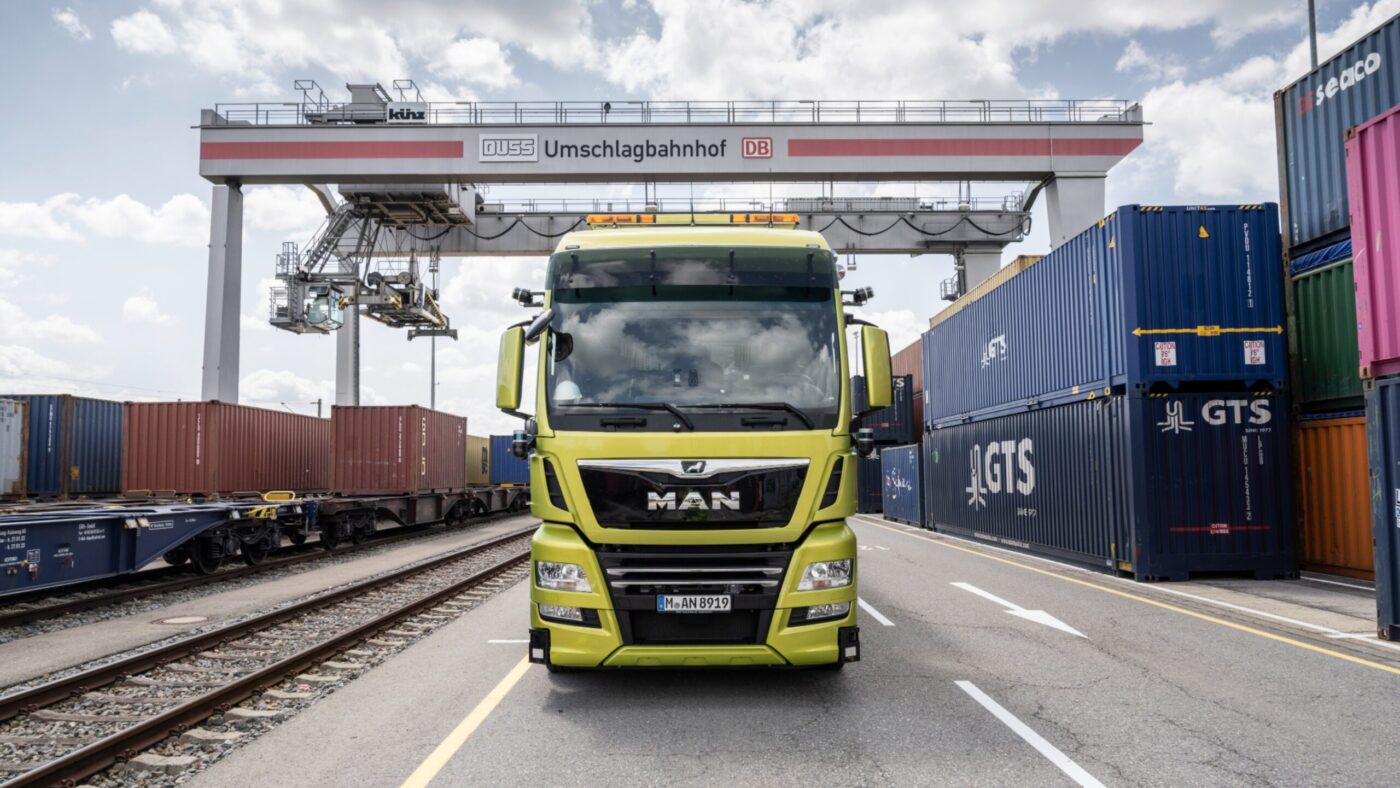
MAN Truck & Bus, Deutsche Bahn, Hochschule Fresenius, and Götting KG draw a positive mid-term balance in the joint automation project ANITA (Autonomous Innovation in Terminal Operations). With the first public drive of the autonomous truck driving system on the MAN test track in Munich, the partners presented what has been achieved so far and announced the next step: intensive practical and development drives at the container depot of DB Intermodal Services and the DUSS terminal (Deutsche Umschlaggesellschaft Schiene-Straße mbH) in Ulm Dornstadt.
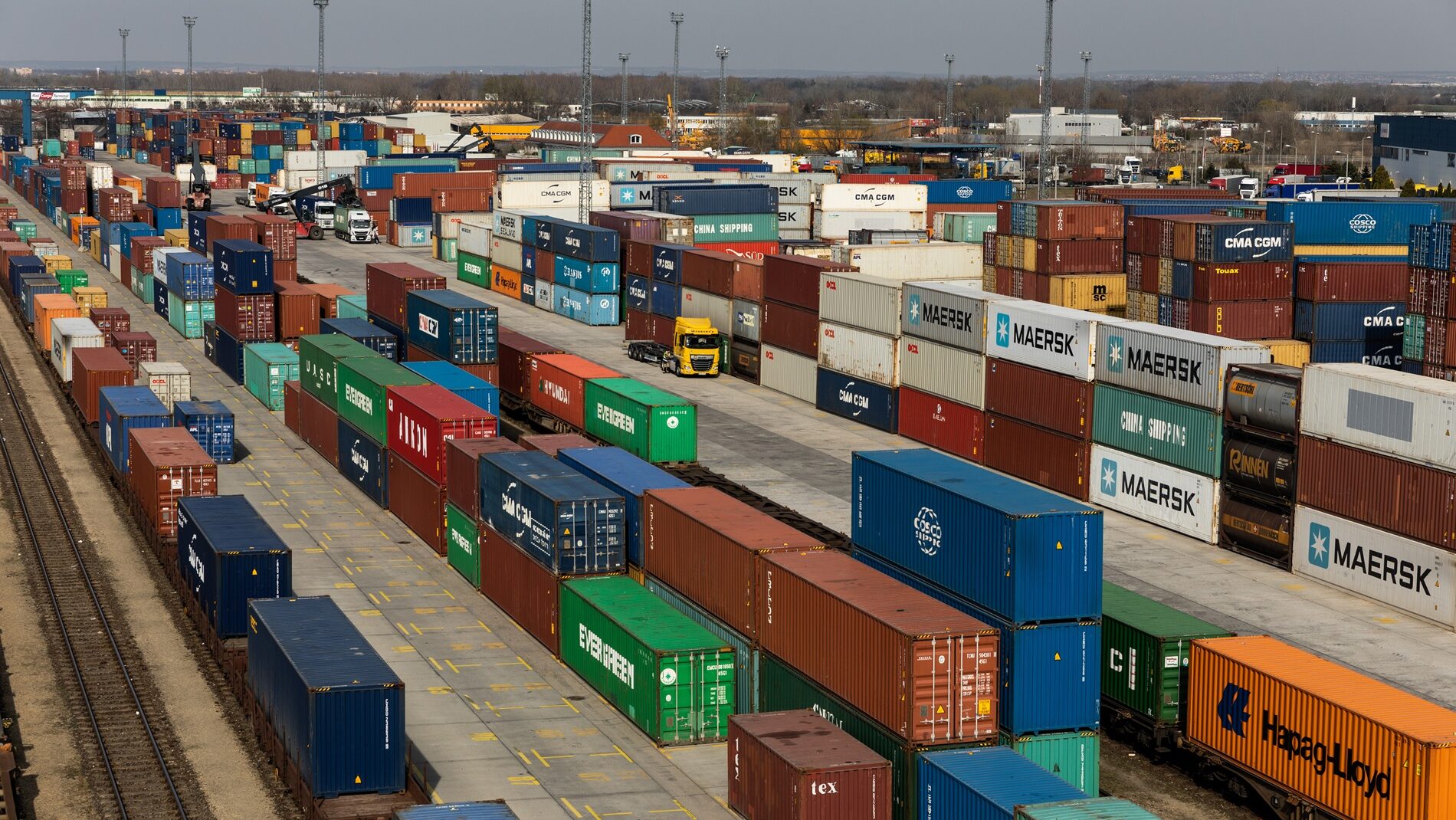
(Munich) The goal of ANITA is to stabilize the container handling process from road to rail with autonomous trucks, making it more efficient, predictable, and flexible. In the future, more goods can be transported in an environmentally friendly combined transport system. To achieve this, MAN will sharpen the electronic senses of the autonomous truck in real operational environments over the coming months, allowing it to perceive, react, and plan like a real driver.
“The fundamental automation technology for ANITA is ready. For fine-tuning, we are now directly aligning with practice to further develop the system with a focus on operational safety and added value for future users,” said Dr. Frederik Zohm, Board Member for Research and Development at MAN Truck & Bus, during the inaugural drive. “We are pursuing this approach consistently to offer autonomous trucks in terminal operations as series technology by the end of the decade. Committed partners like Deutsche Bahn, Götting KG, and Hochschule Fresenius are essential in this process.”
New Technologies for the Future
The partners are planning a whole year for test drives to confront the autonomous prototype with reality as often as possible along the gradual development and optimization process. A safety driver, who can intervene if necessary, is always on board. The intensive test drives not only benefit the further development of the autonomous truck but also prepare the terminals for the integration of the new technology: “Combining rail and road – that is the environmentally friendly solution for the logistics of the future. We are working together to ensure that these intermodal transports grow. Digitalization and automation help us to make the interfaces to freight trains and the processes in the terminals simple and quick,” says Dr. Sigrid Nikutta, Board Member for Freight Transport at Deutsche Bahn AG and Chairwoman of DB Cargo AG.
For the autonomous truck to fulfill its transport task in container handling, it must be able to communicate with the infrastructure of DBIS Depot and DUSS Terminal. For this purpose, the researchers at Hochschule Fresenius analyzed the existing processes, workflows, and behaviors of people and machines on-site in the first project phase and transferred them into a digital set of rules. The Contract Specification Language (CSL) from Deon Digital serves as a common language for clear and complete communication among all involved systems. This has resulted in a complete mission planning that connects both the vehicle and the IT systems of DBIS Depot and DUSS Terminal.
“We are pleased to see how our preliminary work can be successfully utilized in conjunction with the truck in the further course of the ANITA project,” emphasizes Prof. Dr. Christian T. Haas from Hochschule Fresenius. The mission planning of the researchers will transmit tasks to the automated truck in the upcoming practical drives and accompany it through the container handling process.
“In the practical tests at the terminal, we will learn something new every day,” says MAN project manager Amelie Jacquemart-Purson. “It requires high engineering skills – to combine, interpret, and implement the camera, Lidar, and radar data correctly.”
Software Development with AI
This concretely means a lot of software development: During the test drives, MAN will analyze the behavior of the vehicle. These insights will then be gradually implemented through software updates. All decisions that a driver makes today based on their sensory impressions must also be covered by the autonomous system – it is about nothing less than replacing human perceptions and actions.
The project “Autonomous Innovation in Terminal Operations” (ANITA) started on July 1, 2020, with the aim of automating the transfer between transport modes and thus making it more flexible and efficient. It is funded with 5.5 million euros from the “New Vehicle and System Technologies” program of the Federal Ministry for Economic Affairs and Climate Action. The duration is 39 months. More about the ANITA project: https://www.anita.digital/de/
Photo: © MAN