Future Solutions for the Brenner Corridor
31. May 2022
Rhenus Continues Growth Path with Expansion to Denmark
1. June 2022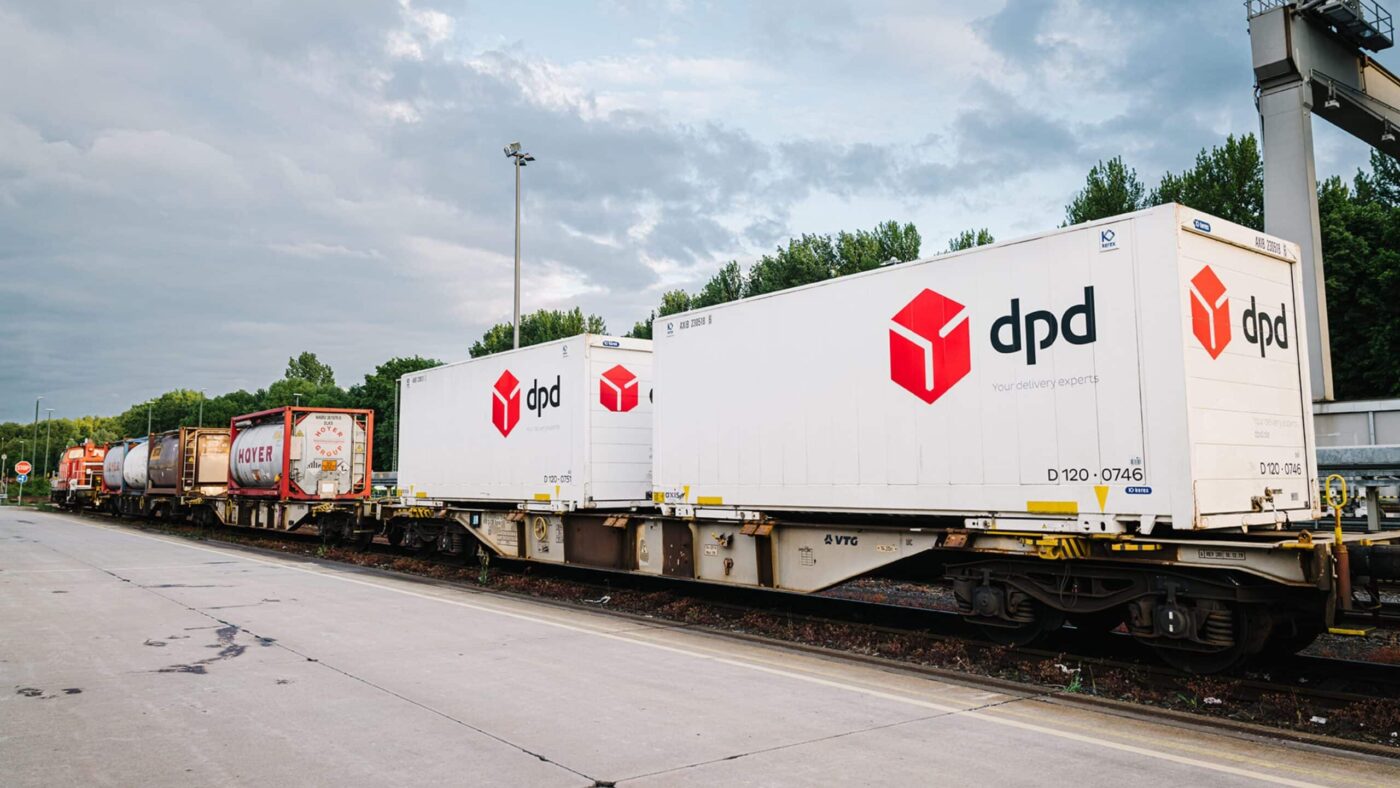
DPD packages will also be transported by train in the future: Starting May 30, 2022, freight trains will run daily between Hamburg and Duisburg, transporting shipments from DPD. As part of this intensively prepared pilot project, the company will gather valuable experience and gradually shift more of its long-distance transport to rail. This significant contribution to sustainability will greatly improve the climate balance of the transported packages. First interim goal: By next year, around 5 percent of the national DPD freight traffic is to be handled by rail.
(Aschaffenburg) “Our long-term goal is climate-neutral logistics,” says Anke Förster, Chief Network Planning and Optimisation Officer at DPD Germany. “In addition to numerous measures we are already implementing in local transport and on the last mile, our focus is on long-distance transport. Here, alternative drive technologies on the road play just as important a role as rail.” The partner for implementation is the provider Kombiverkehr. Behind the Frankfurt-based company are more than 230 freight forwarders and DB Cargo AG as limited partners. Anke Förster: “Thanks to Kombiverkehr, we do not have to fill an entire train, but can book onto existing routes with individual swap bodies.”
“Each swap body loaded with DPD shipments will emit around one ton less CO2 in the round trip between Hamburg and Duisburg compared to pure road transport. This corresponds to a saving of more than 80 percent,” emphasizes Björn Saschenbrecker from the sales department at Kombiverkehr. “Intermodal transport will bring DPD significantly closer to achieving its own climate goals.”
Gathering Valuable Experience
Every evening, freight trains loaded with DPD swap bodies depart almost simultaneously from Hamburg and Duisburg in opposite directions. “The route is optimal for us, as our depots at both locations are immediately close to the rail cargo terminals,” says Anke Förster. Nevertheless, the transition entails extensive changes in internal processes. Anke Förster: “This is exactly the area where we want to gather experience: An additional mode of transport means more complexity, and at the same time, we want to ensure that we meet our service promises.” It is helpful that DPD has already dealt intensively with rail transport in the past and can now apply this knowledge. According to Anke Förster, it is also a great opportunity to integrate the specific characteristics of rail transport into customer-friendly offers: “In the long term, customers will certainly have the choice of whether to receive their goods via the fastest possible transport on the road or with the greatest possible sustainability by rail.”
With the project now launched, DPD is also responding to the political desire to shift freight transport from road to rail. Anke Förster: “We are happy to offer ourselves as a discussion partner with the experiences gained. However, we can already say this much: It is advisable to specifically inquire about the wishes and interests of the economy and derive customer-friendly offers from them. We would very much like to quickly shift a much larger share of our freight traffic to rail.”
Photo: © DPD