

Jungheinrich’s Container Compact Storage PowerCube Celebrates World Premiere
31. May 2022
DPD Launches Rail Transport for Better Climate Balance
31. May 2022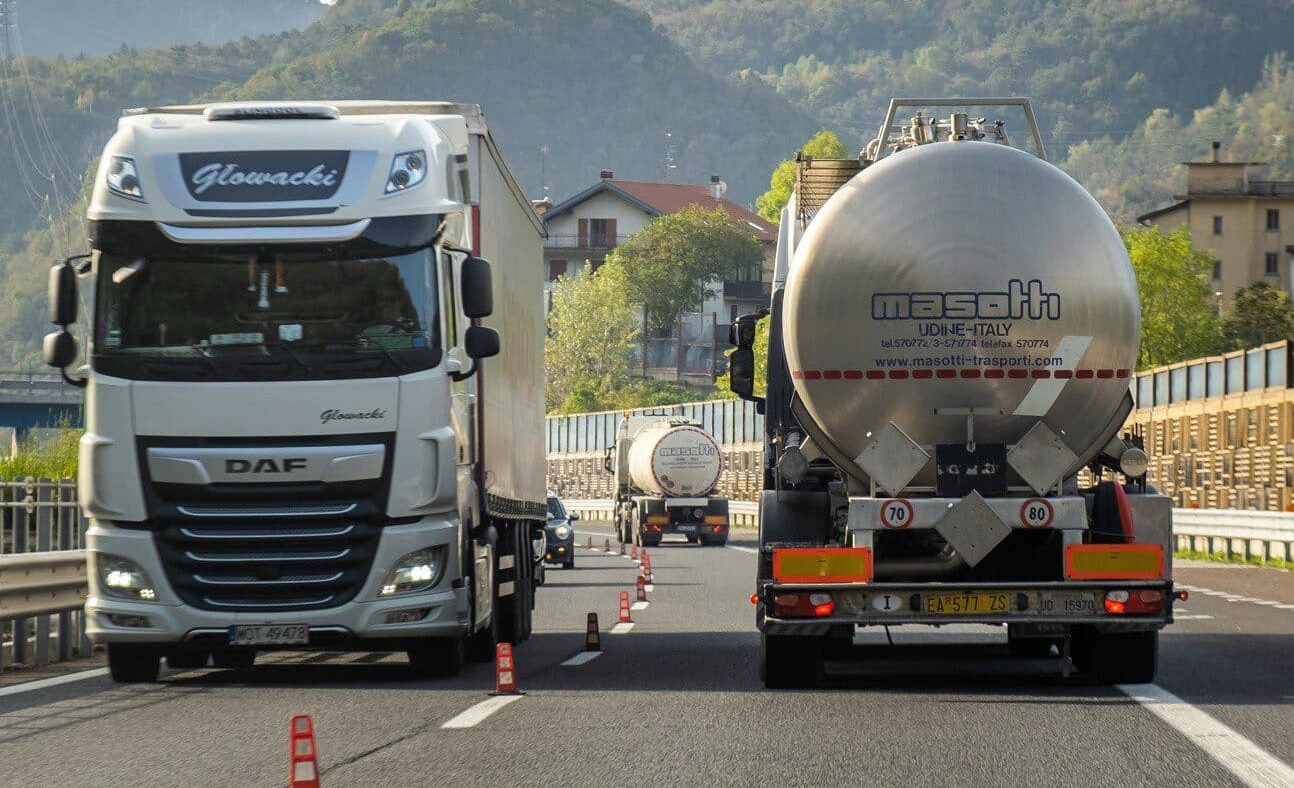
What requirements do shippers have for freight transport along the Brenner axis? In a project by the Association of Bavarian Industry in collaboration with the Logistics Competence Center (LKZ) Prien, ways are to be shown on how freight transport along the Brenner Corridor can be handled more efficiently and environmentally friendly.
(Prien am Chiemsee) Freight transport along the Brenner Corridor is in a strong tension field. With around 2.34 million trucks in 2020, Brenner transit records a high volume of truck traffic. Logistics and transport companies face major challenges in road freight transport due to the shortage of truck drivers, European and national climate goals, political regulations such as block handling at the Bavarian/Tyrolean border, and infrastructure bottlenecks. The smooth freight transport of the future requires new innovative solutions. The protection of the sensitive Alpine region at Brenner and the residents along the corridor between Munich and Verona is also of great importance.
Bavaria continues its efforts to manage Brenner transit. Christian Bernreiter, Minister of State in the Bavarian State Ministry for Housing, Construction and Transport, demands: “The increasing traffic on our roads is a central challenge of our transport policy. We need sustainable and efficient solutions to significantly reduce CO2 emissions. In order to make a decisive contribution to the European Green Deal and to manage future traffic, the Bavarian State Government will continue to do everything possible to shift transport to more environmentally friendly modes of transport such as rail.”
Additional Shift to Rail
Bertram Brossardt, Managing Director of vbw – Association of Bavarian Industry e. V., says: “Brenner transit has been a concern for us for years. Political problems are piling up there, and as a result, so are the trucks. This is unbearable, as the Brenner route is a lifeline of the European economy. The free exchange of goods in Europe is also an extremely valuable and worthy asset in an ideal sense. Therefore, we need solutions that all parties can live with. Solutions in which all stakeholders participate.”
Against this background, the Association of Bavarian Industry has set itself the goal with its project for climate-friendly Brenner transit to identify requirements and possibilities for rail transport so that the existing potentials can be optimally utilized now and the intended shift of additional freight traffic to rail can be prepared. In the project funded by the Bavarian State Ministry for Housing, Construction and Transport, the requirements of the shipping industry and trade companies will be analyzed in cooperation with the Logistics Competence Center Prien (LKZ), taking into account the current challenges along the Brenner Corridor, and solutions for climate-friendly and sustainable freight transport at Brenner will be developed.
“Every company that has sustainable business practices firmly anchored in its strategy should ask itself how freight transport can be handled more efficiently and environmentally friendly. Therefore, we are currently starting a survey aimed at shippers who have freight traffic between Bavaria, Tyrol, and South Tyrol,” explains Dr. Petra Seebauer, Managing Director of LKZ Prien GmbH. “With this project, we want to ensure that industry and trade become much more familiar with the shift to rail than before and thus bring more goods onto the rail,” states Minister Bernreiter, outlining the direction.
“Furthermore, we want to generally reflect the mood, especially from the middle class, regarding what reservations and obstacles exist towards entering combined transport,” says Seebauer. The goal of the project is to develop informational materials and short films based on the needs of shippers.
Significant Influence of Industry as a Client
The possibilities for innovative and environmentally friendly solutions for shifting goods from road to rail are great but can only be tackled collectively: politics, associations, shippers, transporters, freight forwarders, railway companies, terminal and infrastructure operators, trailer and wagon manufacturers. “They all belong at a round table with the common goal of ensuring the same quality in price and performance promises as with continuous road transport,” explains Dr. Petra Seebauer, Managing Director of LKZ Prien GmbH.
“Industry, as a client of logistics service providers, has a significant influence through its decisions. They are essential drivers when it comes to changes in logistics and transport routes. Only through close cooperation can the shifting potentials to rail be better exploited and the climate balance of the transport chain improved,” says Bertram Brossardt.
The first official appearance for this project took place on May 25, 2022, as part of the 12th Symposium LOGISTIK INNOVATIV, organized by the Logistics Competence Center (LKZ) in Prien. In a prominently staffed discussion round, representatives from Geiger Logistik GmbH & Co. KG, Krones AG, Wacker-Chemie AG, DB Netz AG, as well as representatives from vbw – Association of Bavarian Industry e.V. and the Bavarian State Ministry for Housing, Construction and Transport discussed fields of action and necessary measures to solve the diverse challenges in Brenner transit.
Photo: © Loginfo24/Adobe Stock / Image caption: Brenner Highway in Tyrol