Deutsche Post DHL Launches Mega Parcel Center in Ludwigsfelde
1. June 2022
Caja Robotics and HÖRMANN Logistik Announce Collaboration
2. June 2022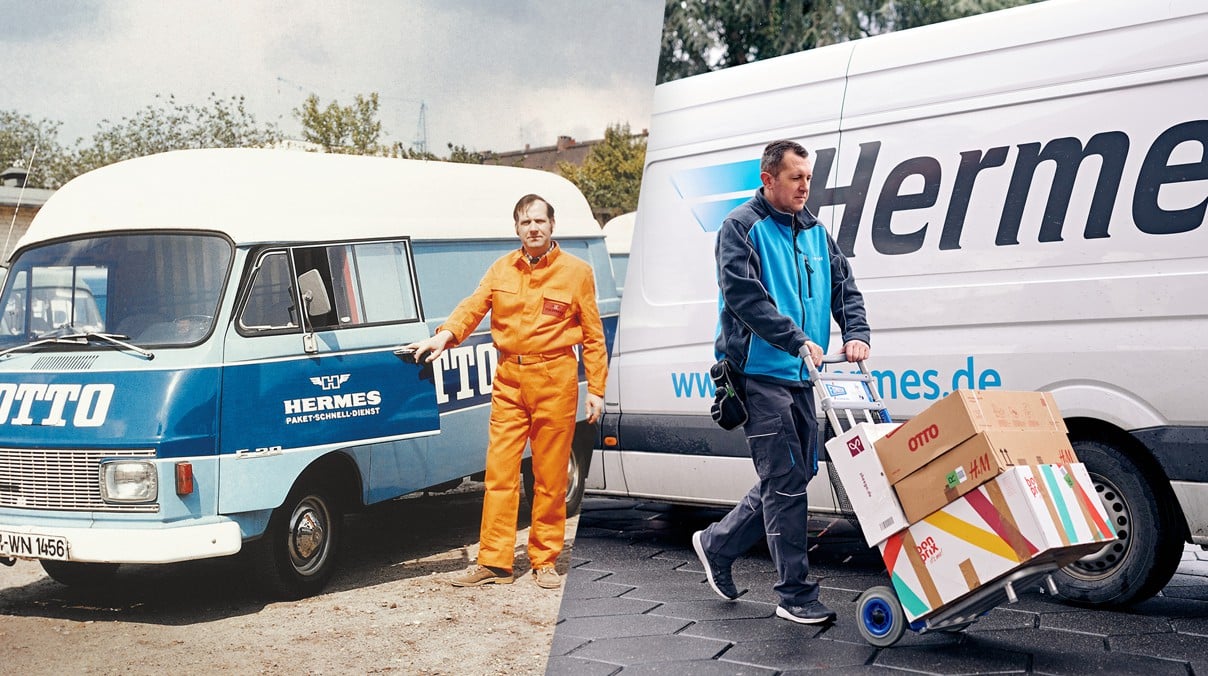
In 1972, the Hamburg-based mail order company OTTO founded the Hermes Parcel Express Service to deliver its goods in a more service-oriented manner and independently of the then German Federal Post. Since then, the Hermes brand has undergone rapid development and is active in various business areas and subsidiaries, even beyond Germany’s borders.
(Hamburg) “We have grown enormously in recent years. We will continue to pursue this course in the future to drive logistics forward decisively and sustainably,” reports Schabirosky, CEO of Hermes Germany. “Our focus is clearly on adapting our services even more to the wishes and needs of our customers. To this end, we continue to rely on the consistent digitalization of our business. In addition, sustainability and climate protection have been strategically placed even more at the center of our actions and are declared corporate goals. We know that success and growth are only possible with determined action in terms of climate and environmental protection. Furthermore, we also want to contribute to a livable future.”
New Solutions for Climate and Environmental Protection
Hermes Germany is currently intensively working on new solutions for tomorrow’s parcel and city logistics, especially to make the last mile increasingly sustainable. The logistics provider relies on a diverse mix of measures, with electric mobility playing an important role. After launching Green Delivery Berlin last year as a blueprint for sustainable city logistics in the capital, the model has already been followed by Magdeburg, Dresden, and Mainz. More cities are planned for 2022.
Overall, Hermes pursues a holistic approach to climate and environmental protection: In addition to activities on the last mile, the logistics provider relies on green electricity, renewable energies, and highly efficient systems at its logistics locations to save CO2 emissions. While the latest logistics centers have all been awarded the Gold Certificate from the German Sustainable Building Council (DGNB), older locations are also continuously being energetically optimized or renovated. The top priority is always the reduction and avoidance of CO2 emissions. Where technological solutions are currently not available or economically feasible, emissions are partially offset through climate protection projects that meet the highest standards. Another example of the logistics provider’s commitment: Together with the Otto Group, Hermes Germany supports the climate and nature conservation project “toMOORow,” which advocates for the rewetting of peatlands.
Optimistic Despite Challenging Times
The parcel logistics provider is not discouraged by the currently challenging framework and market conditions: “In recent years, we have taken a successful path at Hermes Germany: We have grown sustainably, significantly expanded our customer portfolio, and improved services. In the past fiscal year, almost 97 percent of shipments were delivered on the first attempt, and at a peak speed: 93 percent of standard shipments were delivered directly the day after they were handed over to us at the front door. This is a top-notch operational performance that is delivered here every day. Our network has proven to be resilient and capable during the pandemic. Overall, we have created a solid foundation for the future in recent times,” explains Schabirosky.
In Five Decades to the Largest Post-Independent KEP Logistics Provider
On June 1, 1972, the Hermes Parcel Express Service launched the in-house post-independent parcel distribution system of OTTO Versand. Already in the Christmas season of 1973, the parcel service delivered its millionth shipment for OTTO. Three years after its founding, the company, now renamed Hermes Versand Service, was present throughout Germany and managed the entire shipment volume of OTTO Versand with around 560 employees. For comparison: Today, Hermes Germany transports over two million shipments on peak days and is a reliable partner for both large and small e-commerce companies (B2C) as well as for private parcel shipping (C2C). Customers can send their parcels and packages with Hermes to over 150 countries worldwide. More than 6,000 employees from over 90 nations work for the parcel logistics provider.
Business continued to gain momentum when the German-German borders opened in November 1989. The first deliveries to the then GDR took place during the Christmas season. After the currency reform on July 1, 1990, Hermes was the first parcel service to deliver to customers throughout the GDR.
A significant milestone was also the opening of the first Hermes ParcelShop in February 1999. Today, 23 years later, the ParcelShop network is not only a central component of Hermes’ logistics network but has also established itself as an important alternative delivery option across the industry. In over 16,500 ParcelShops nationwide, Hermes customers can securely send, conveniently receive, or simply return packages – often outside of peak hours thanks to long opening times. Additionally, the ParcelShop is also a good alternative in terms of CO2 footprint: Consolidated delivery to a ParcelShop causes, on average, 25 percent less CO2 than delivery to a private front door.
In the 1990s, a new IT era also began at Hermes, and processes became increasingly digital in the following years. Today, numerous digital tools (e.g., digital route planning) facilitate the daily work of logistics employees and delivery personnel. At the same time, increasingly tailored digital services cater to the wishes and needs of customers. For example, recipients actively guide the delivery process by redirecting shipments to a ParcelShop shortly before delivery or rerouting to a neighbor. Overall, the agile and digital collaboration within the company has made a significant leap forward due to the cultural change initiated in recent times and lived throughout the Otto Group – and due to the COVID-19 pandemic.
The logistics network has also been massively expanded in recent years through a large-scale infrastructure program worth 300 million euros, adding more modern and sustainable locations. With 13 logistics centers nationwide and more than 275 own and partner locations, Hermes Germany has a stable and flexible network, ensuring that the parcel service provider with Hanseatic roots is well-prepared for the coming years.
Photo: © Hermes