100 Years of Czech Inland Shipping
13. June 2022
Stack-X Enables Stacking of Trailers and Containers
13. June 2022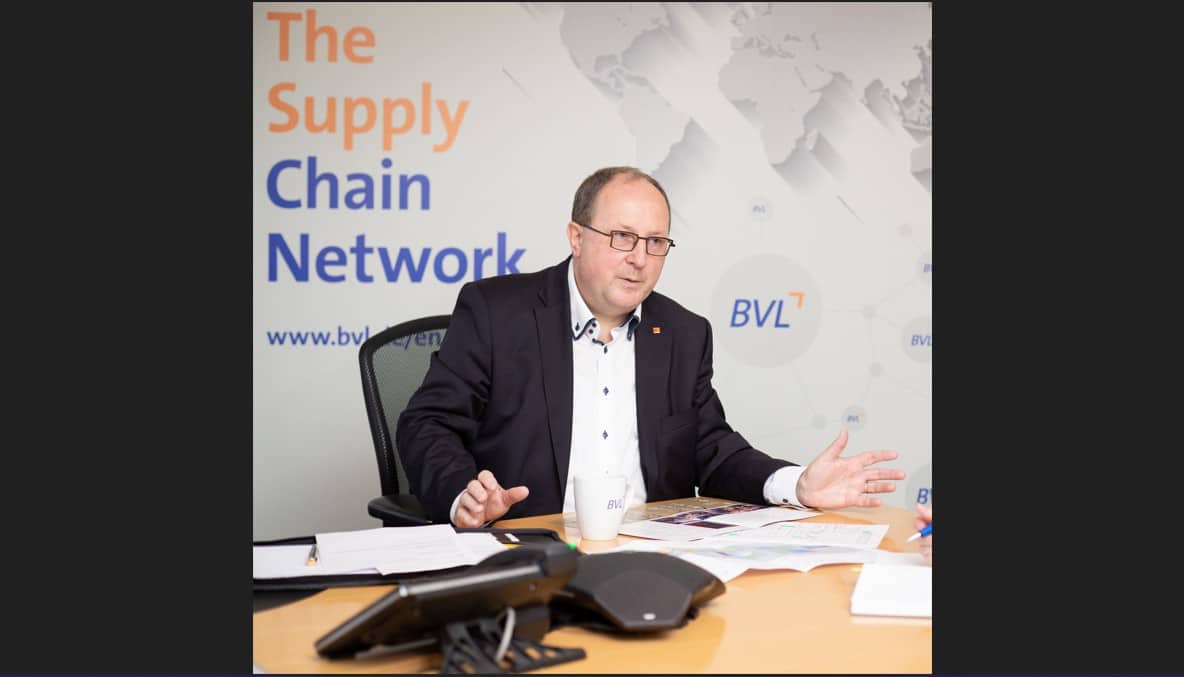
The mood in the German logistics industry has turned negative, with the business climate index receiving another setback, now recording a value of only 90.9. This is evident from the monthly surveys on the logistics indicator conducted by the ifo Institute on behalf of the Federal Association of Logistics e.V. (BVL) as part of its economic surveys. This decline can be attributed to significantly more pessimistic business expectations. The current business situation was also assessed as favorable less frequently than before.
(Bremen) Concerns about the future have spread significantly among logistics service providers, causing the business climate indicator to slip into negative territory. However, companies still frequently rated their ongoing business positively, as dynamic demand continued to increase the order backlog. In terms of pricing policy, companies are broadly considering price increases.
Companies in trade and industry are also increasingly worried about business development in the coming half-year. Satisfaction with ongoing business has decreased somewhat, leading to significant losses in the climate indicator – the figure has fallen into negative territory. The already high prices are expected to be raised again in the coming quarter.
The recent wave of COVID-19 left only minor traces in the German economy during the past winter half-year. After economic output declined by 0.3 percent at the end of 2021, a positive growth was recorded at the beginning of 2022. In the first quarter of 2022, the gross domestic product – adjusted for price, season, and calendar – increased by 0.2% compared to the fourth quarter of 2021. The economic development was primarily supported by the service sector, which benefited from the waning of the COVID-19 wave. The construction industry also started the new year strongly, not least due to favorable weather conditions.
However, since the end of February, the economic development has increasingly been burdened by the war in Ukraine and the weeks-long lockdown in China. Although there has been no change in the positive assessment of the economic situation by German companies in recent months, a tightening of supply bottlenecks, new sanctions against Russia, and sharp increases in energy and food prices have caused companies’ expectations to collapse, leading to significant increases in both producer and consumer prices. While supply bottlenecks and sanctions hinder production and sales in the manufacturing and construction sectors, high prices primarily dampen demand. For several months, incoming orders in the industry have been weakening, and order cancellations in the construction sector are increasing. Retail sales have also recently declined sharply after the inflation rate rose above 7% for the first time since 1981 in April. Additionally, high costs are likely to burden profits and thus the investment activity of companies. In the April survey conducted by the ifo Institute, industrial companies reported that they could only pass on just over 50 percent of the increased costs to their customers. For construction companies and service providers, the pass-through rate is only about 25 percent. Finally, the companies’ pessimistic outlook is likely also due to a significant increase in overall uncertainty. As the further course of the war and the associated economic and geopolitical decisions are difficult to assess, companies find it hard to predict the future course of business.
Overall, the economic outlook has darkened. While overall economic growth this year is expected to be lower than initially anticipated at the beginning of the year, the driving forces associated with the waning of the COVID-19 wave are likely to prevent the economy from sliding into a recession. This is also supported by the declining short-time work and only minor existential fears among companies. Inflation rates are expected to remain high throughout the year. A significant majority of companies surveyed by the ifo Institute also plan to continue raising prices in the coming months.
Commentary on the Logistics Indicator for the 2nd Quarter of 2022
by Prof. Dr.-Ing. Thomas Wimmer, Chairman of the Board of BVL
A montage of four photos of the brilliant actor Jack Nicholson is circulating online: from confused to baring teeth and raging to resigned. Subtitle: “Supply Chain Manager 2019 to 2022.” How true: The economic consequences of a pandemic, the Ukraine war, or even both events together have significantly lowered logistics managers’ business expectations for the next six months. However, it is worth looking at the current business situation: it still records above the normal value – albeit only narrowly.
How bleak is the future really? Geopolitical shifts are changing the foundations of the European economy. We are experiencing a turning point towards a new world order and value system. A possible bloc formation (USA, Europe, China) poses risks in the global exchange of goods and services. A sharp delineation of political systems has serious consequences, especially regarding critical dependencies in global value chains. Persistent supply bottlenecks will lead to and exacerbate a recession.
In the economic sectors of purchasing, production, and logistics, new guiding principles are emerging: “Flexibility comes before cost” and “Availability is the new currency.” What was once considered uneconomical is now seen as economically sensible. In some industries, every product must be available at least in dual sourcing – and at every location. This is a strong cost driver. The disruptions in supply chains also seem to be of a non-temporary nature. Thus, the best possible preparation for future uncertainties in value creation processes lies in making globally connected supply chains more resilient to negative future scenarios.
In the short term, no relaxation is in sight. The congestion and delays in container shipping have now also reached the North Sea and the ports in Germany, the Netherlands, and Belgium. “Currently, nearly two percent of global freight capacity is stuck here and cannot be loaded or unloaded,” states the Kiel Institute for the World Economy (IfW). According to them, about a dozen large container ships with a capacity of around 150,000 standard containers are waiting in the German Bight to dock in Hamburg or Bremerhaven. The situation is even more dramatic in front of the ports of Rotterdam and Antwerp.
This not only leads to delays but also to a shortage of containers, which are currently as scarce as pallets and cardboard boxes. While industry and trade are waiting for raw materials and intermediate products or can hardly ship their finished goods, logistics service providers cannot increase their capacities, partly due to a massive shortage of personnel. These imbalances are expected to last for several months – well into 2023. Additionally, price increases in all areas, which can mostly only be partially passed on to customers, are compounding the situation. The answer to the question of whether Europe will lose competitiveness due to high energy prices and labor costs will be exciting.
So, are the prospects bad everywhere? Not necessarily. Many companies are now preparing for the future, becoming more resilient and sustainable. As is often the case, there are losers in a crisis, but also faster innovation cycles. Europeans are traditionally well positioned in this regard – it is quite possible that we will emerge from this strengthened in the end. Supply Chains Matter! So please stay courageous and shape the future actively and agilely.
Photo: © BVL