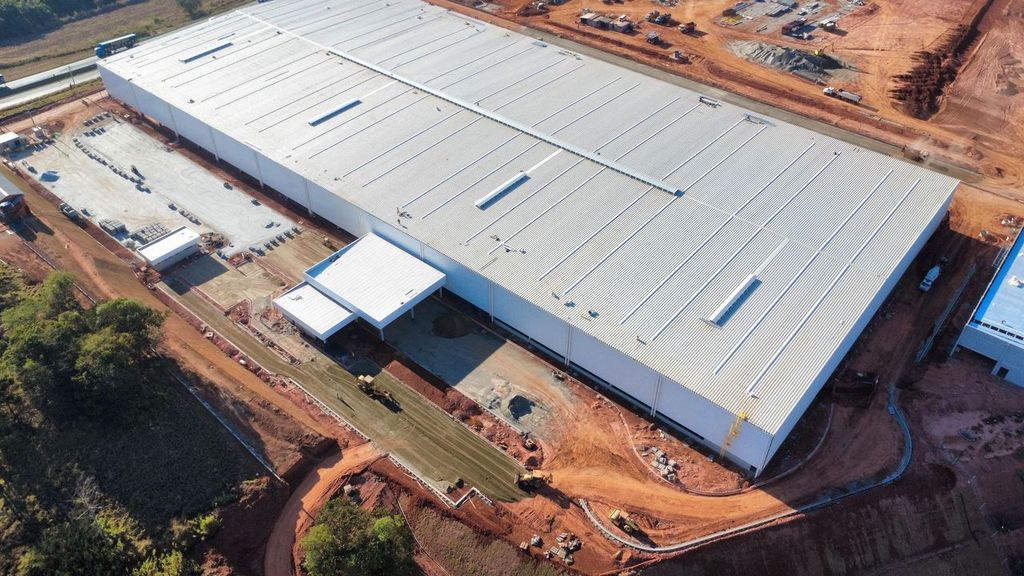
Fraport Constructs Freight Hall for DHL in CargoCity South
23. June 2022
German North Sea Ports – Together Towards the Future
23. June 2022
In the fiscal year 2021, Kombiverkehr KG shifted a total of 937,959 (1.88 million TEU) truck consignments to the climate-friendly rail, achieving a gain of 9.3 percent and thus marking a turnaround in volume development. The company informed its limited partners during today’s shareholders’ meeting.
(Frankfurt/Main) Significant gains were achieved in the fields of national and international transport. Contributing factors included new traffic on the corridor Germany/Benelux – Italy via Switzerland, as well as new routing options through the fast transshipment facility MegaHub Hannover Lehrte. The most important area of action for the company is currently performance quality in close cooperation with the railway companies, in order to continue offering combined transport as the most climate-friendly transport solution for logistics companies, industry, and trade in Germany and Europe. Additionally, an electricity cost brake is intended to cushion the increasing financial burden on intermodal users and provide financial compensation for customers due to quality-related issues affecting supply chains. The company generated revenue of 421.9 million euros last year. From autumn 2022, a new customer portal is set to simplify access to combined transport and the handling of intermodal transports, making it even more transparent.
3,700 Trucks Shifted to Rail Each Night
The operator recorded strong growth in total tonnage and transport performance. The transport volume carried on Kombiverkehr trains increased by 9.2 percent to a total of 22.16 million gross tons. With an average transport distance of 833 km, transport performance improved by 10.2 percent to 18.46 billion ton-kilometers. By choosing the intermodal transport solution with the main leg by rail for their goods, Kombiverkehr’s customers reduced carbon dioxide emissions by 1.1 million tons last year, making a valuable and sustainable contribution to environmental protection. The consignments delivered to the more than 110 terminals included in the network relieved German and European highways by 781 million vehicle kilometers, which corresponds to an average daily shift effect of 3,700 truck trips over 251 traffic days.
More Consignments
In 2021, Kombiverkehr transported nearly 80,000 additional consignments, with more than 25,000 truck units distributed across the national network de.NETdirekt+ and 55,000 consignments across the international network eu.NETdirekt+. The share of domestic traffic in the company’s total volume has thus increased to 20 percent. A total of 190,521 intermodal units were transported within Germany. This represents a gain of 15.4 percent compared to the previous year. The volume in cross-border traffic increased by 7.9 percent from 693,021 consignments in 2020 to 747,438 consignments in 2021.
The international business areas developed differently. While the Eastern and Western Europe sectors recorded a significant increase in volume, the consignment volumes in traffic to and from Northern Europe slightly decreased by 2.3 percent. In the Southern Europe market area, minor losses from the previous year were compensated. The newly established sales area Benelux-Italy recorded more than 34,000 consignments by the end of the year. “The demand for intermodal logistics services rose sharply between March and June compared to the previous year and then stabilized from summer onwards with growth rates in the low single digits. The impacts of the Corona pandemic were much less pronounced in 2021 than in 2020. Additionally, there was an economic recovery across Germany and Europe, although less pronounced than originally forecasted,” comments Managing Director Alexander Ochs on the annual results. “However, it should be noted that last year, due to disruptions in train operations, more than 3,000 Kombiverkehr trains were canceled. Nearly 90,000 truck consignments could therefore not be transported efficiently and sustainably by Kombiverkehr on the rail.” In the first months from January to May 2022, the positive consignment development at the Frankfurt company continued. Also, against the backdrop of global economic developments, the impacts of disrupted supply chains due to lockdowns in Asia, and the consequences of the war in Ukraine, the challenges on the road side, such as driver shortages and climate protection, currently do not diminish the demand for intermodal transports: Over 418,000 truck consignments were transported, representing an increase of about 8.0 percent.
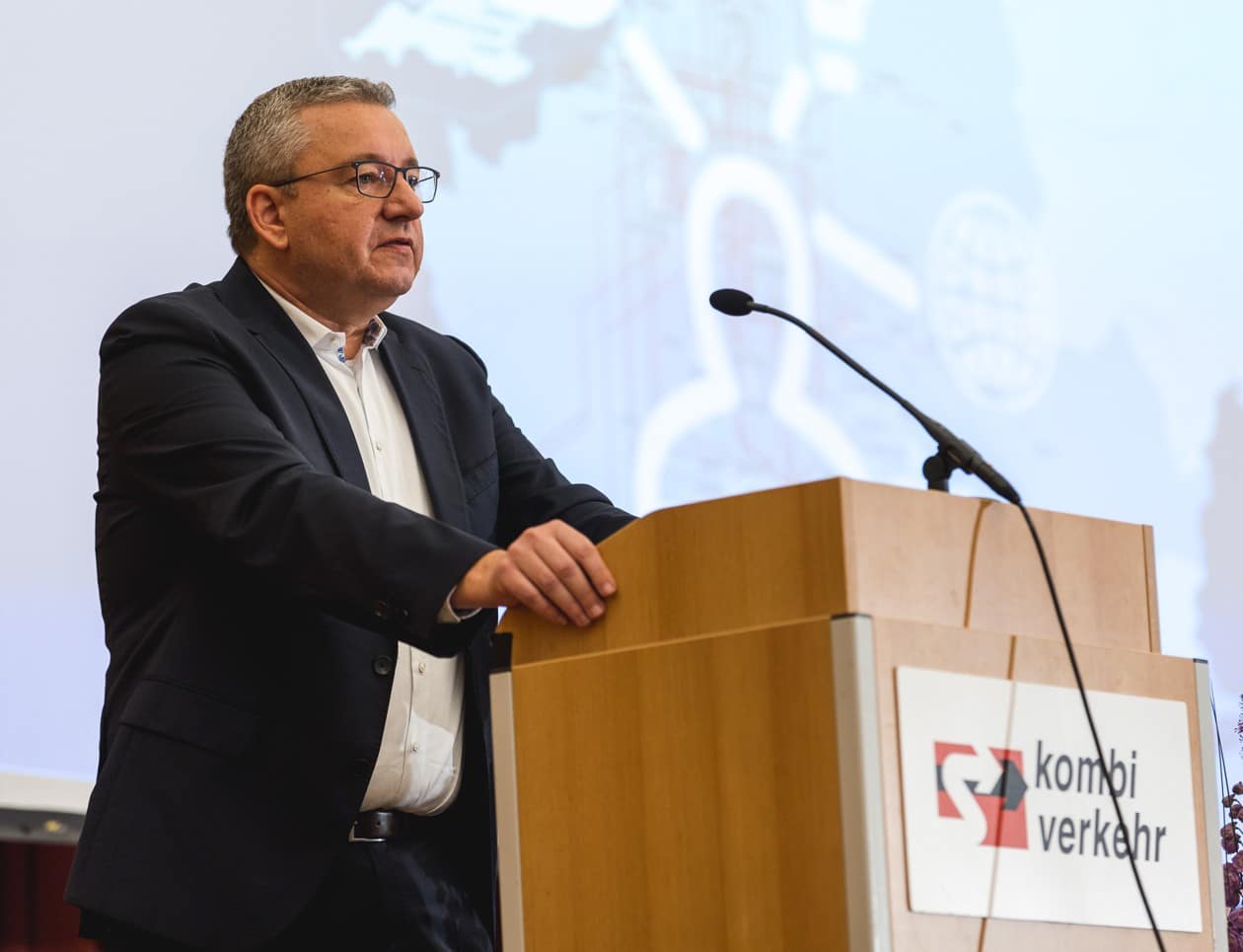 Alexander Ochs, Managing Director of Kombiverkehr KG
MegaHub Lehrte with 36,000 Truck Consignments
With the commissioning of the fast transshipment facility MegaHub Lehrte in April last year, Kombiverkehr has added an important component to its intermodal network. “In a challenging operational time, we succeeded in establishing Hannover as an important hub in just a few months. Today, we route numerous consignments in the gateway system to other economic centers in Germany and neighboring European countries. Additionally, the Hannover region now has comprehensive access to international combined transport, and locations with non-full-load transport volumes can also be connected to the intermodal network through the bundling of loading units on dedicated trains at the MegaHub,” summarizes Ochs the current status quo and looks ahead. “We see Hannover Lehrte as a great opportunity for capacity expansions. After already connecting several national terminals, we are also linking international locations such as Verona, Rotterdam, and Lovosice in the Czech Republic, and we are currently working intensively on further connections to complement the MegaHub offering.” More than 36,000 truck consignments were handled through the Lower Saxony hub from April to December 2021.
Optimizing International Construction Site Management
For the forwarding customers of the operator, performance quality is one of the most important decision criteria for shifting their transports from road to rail. In recent months and even today, the rail infrastructure and terminal capacities have been the bottleneck in rail freight transport. The increased construction activities on the rail network are responsible for an disproportionately high number of train delays and cancellations, which in turn affects personnel deployment planning, terminal slots, and wagon cycles. “What we are currently experiencing unfortunately does not meet the expectations of rail performance at all. This must be stopped as soon as possible,” states Managing Director colleague Armin Riedl. “While we welcome the record-high financial resources for the modernization, maintenance, and new construction of the rail network, we simultaneously demand from the federal government that the implementation of infrastructure measures be massively improved in terms of operationally friendly expansion. We appeal to all stakeholders, especially the network operators, that the infrastructure cannot be managed as it has been in the past. Especially in light of the agreed climate goals, combined transport is a very important key. Therefore, we must do everything we can to ensure that it can succeed and be expanded,” Riedl continues. This includes, among other things, improved communication of construction measures and their impacts, which must be based on coordinated and targeted construction site management. Furthermore, corridors and alternative routes must be kept as open as possible on both sides of the national border on international routes during construction operations to ensure the fluidity of construction traffic. On the terminal side, replacement investments must be made. Accordingly, the operator is advocating for the guideline for the promotion of transshipment facilities for combined transport not owned by the federal government to be submitted for notification to the EU Commission as soon as possible. “To avoid a funding vacuum, the Commission recently agreed, at the request of the federal government, to extend the validity of the old regulation without substantive changes, but only until September 30, 2022. The uncertain legal situation unfortunately delays urgently needed investments in renovation work and prevents the functionality of the track and facility technology in the terminals from being ensured in the coming years,” Riedl clarifies.
Equalizing Downtime Costs and Introducing Electricity Cost Brake
In light of the quality-related impacts on the daily operations of freight forwarders, Riedl called for a cost compensation for users of intermodal transport during the meeting. “If freight forwarders are to continue to maintain rail as an essential component in transport chains and invest in the combined transport system in the long term with regard to the Green Deal, it is high time to compensate for the high downtime costs and also high replacement investments. It must not be that the current problems of the network and railway companies fundamentally question the use of intermodal transport and jeopardize the future viability of the entire system.” At the same time, Riedl also pointed to the energy costs of the railway companies, which are reflected in the price offers of the operators and ultimately have to be paid by freight forwarders. According to Riedl, energy costs have tripled in the last two years, which, in light of the Ukraine war, cannot be reversed quickly. “The rail sector currently pays the highest levies for energy taxes, surcharges, and fees in freight transport. That is 8.33 cents per kilowatt-hour according to the Alliance pro Schiene, 2.68 cents more than diesel trucks and 6.39 cents more than LNG trucks. This price trend can only be stopped by an electricity price brake that must be prepared and implemented by the federal government as soon as possible.”
New Customer Portal from Autumn 2022
For forwarding customers who do not exchange their order data via a B2B interface, Kombiverkehr KG is expanding its range of digital applications in the completely revised and access-protected customer portal meinKombiverkehr, which will be available to customers from autumn 2022. In addition to a modern online timetable information system, the new portal includes a central order overview with all detailed information on the respective transport status. Each order can be edited, and transport runs will be displayed through a new tracking & tracing function, including estimated time of pick-up. Today’s online booking will be integrated into the portal and simplified. Dispatchers will also find all information related to intermodal order processing. “With the new customer portal, we will elevate our service to a new level. Booking, monitoring, and managing transports with Kombiverkehr will become even easier, and the transparency of information will be increased manifold,” says Ochs about the added value of the new applications. “In addition to our existing customers, particularly new customers who are shifting their goods from road to rail for the first time will benefit from this, as they may need quick web-based support in one way or another.”
 Herman Lanfer; Chairman of the Supervisory Board of Kombiverkehr KG
DX Intermodal Starts Marketing the Data Hub from KV 4.0
After three years of project duration and another year of preparation, the former research project “Digitalization of Intermodal Supply Chains – KV 4.0” has now finally made the transition into practice. With the new company DX Intermodal GmbH – a joint venture of the six shareholders, Hoyer Group, Hupac Intermodal, Kombiterminal Ludwigshafen, Lokomotion, Paneuropa Transport, and Kombiverkehr – the marketing of the data hub is set to start shortly. “Our new investment company will now actively approach all companies that are eligible for technical connection to the data hub. This includes freight forwarders, terminals, railway companies, and also operators,” Riedl announces to the attending limited partners. The advantages of the new data hub include a uniform data format via EDIGES, a Europe-wide unique consignment identification, and above all the fact that users gain access to all information from all actors in the intermodal transport chain through the commissioning of just one data interface.
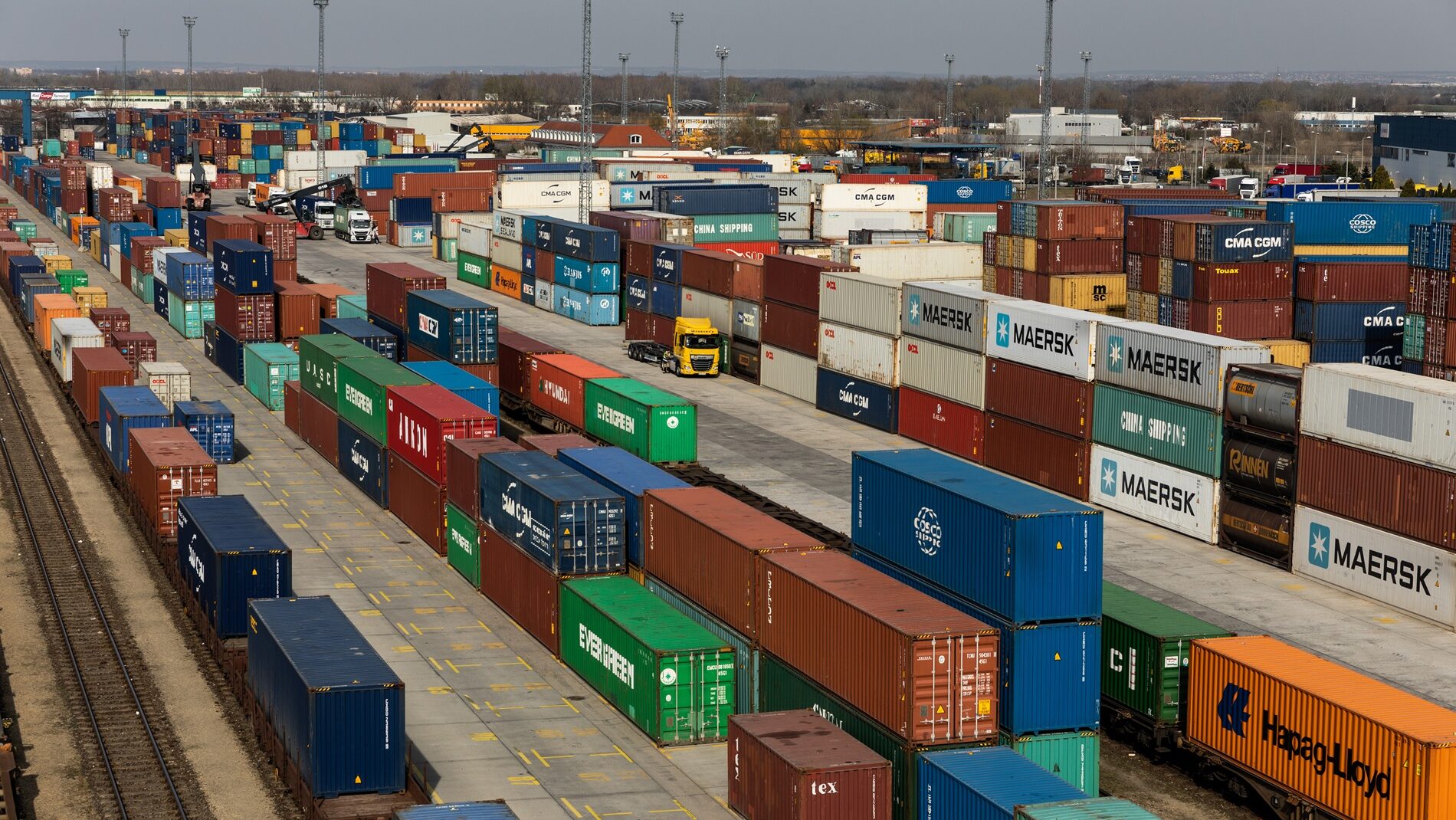
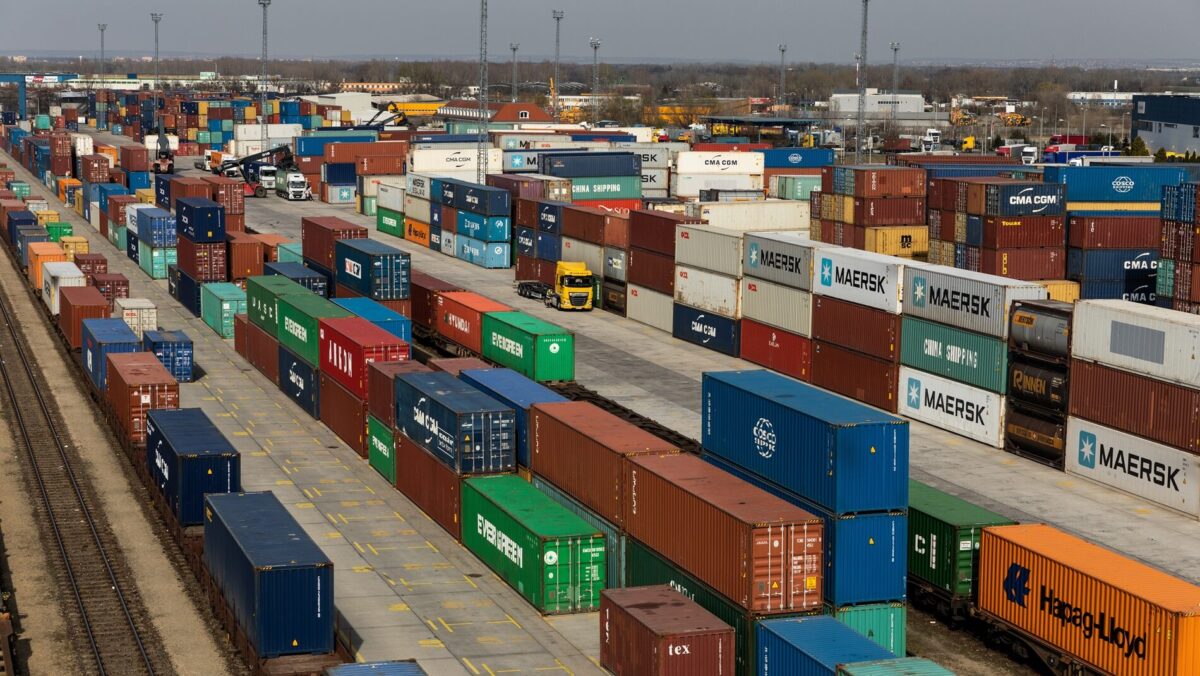
Title photo: © Kombiverkehr / Image caption: The fast transshipment facility MegaHub Hannover Lehrte