






Andreas Fritsch Takes on New Executive Position at Dachser
27. September 2022
Element Logic Introduces Cloud-Based Data Platform
27. September 2022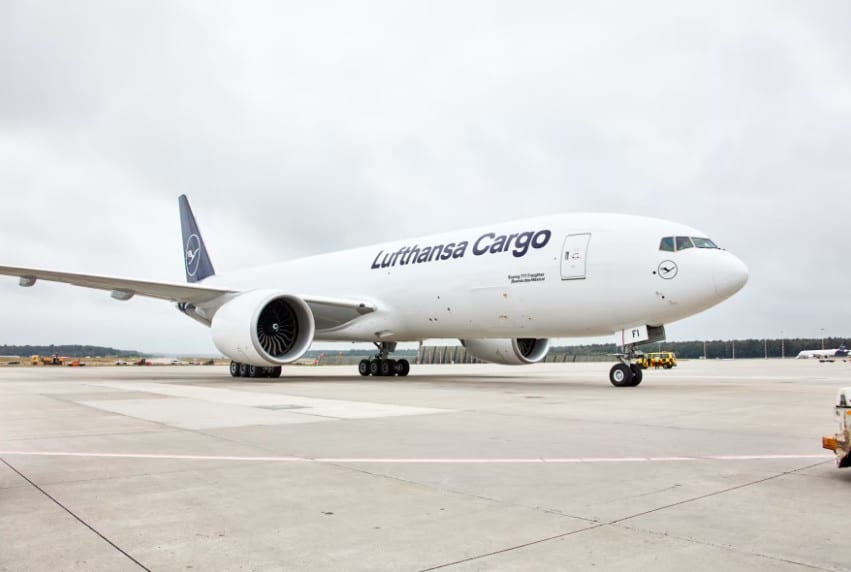
Kintetsu World Express will reduce around five percent of its total CO2 footprint from air freight transported with Lufthansa Cargo for one year. Kintetsu World Express has committed to using sustainable aviation fuel from October 2022 to September 2023. Furthermore, the company has decided to offset the so-called Well-to-Tank emissions that arise during the production and supply of Sustainable Aviation Fuel through certified climate protection projects.
“Climate change is becoming increasingly evident and devastating around the world. As an asset-light forwarder, reducing our Scope 3 greenhouse gas emissions is key to success in the fight against global warming. Moreover, SAF is a rising star. Recently, in our first response to the recommendations of the ‘Task Force on Climate-related Financial Disclosures’ (TCFD), we expressed our intention to actively participate in the SAF programs of our partner airlines. I am pleased and proud to work together with our long-standing partner Lufthansa Cargo towards a sustainable future for the air freight industry,” says Nobutoshi Torii, President & Chief Executive Officer of Kintetsu World Express.
“ We are very proud that we have been able to convince Kintetsu World Express, one of our most important customers, to transport its freight with us in a CO2-neutral manner,” says Dorothea von Boxberg, Chairwoman of the Executive Board of Lufthansa Cargo AG. “Sustainable Aviation Fuel already offers the opportunity to save around 80 percent of emissions in air freight transport. Therefore, every customer who takes advantage of this opportunity makes a crucial contribution to advancing decarbonization in logistics. Thanks to the commitment of Kintetsu World Express and our other customers who have opted for Sustainable Aviation Fuel, we can already replace around two percent of our annual fossil fuel needs with Sustainable Aviation Fuel in 2022.”
More Climate-Friendly Flights with SAF
The umbrella term for sustainable, biogenic, or synthetic kerosene is “Sustainable Aviation Fuel” (SAF). SAF is considered the first real alternative to fossil jet fuel. Currently, it is primarily produced from biomass. In the future, there will also be non-biogenic fuels; the most well-known example is the so-called Power-to-Liquid (PtL) concept, which is based on renewable electricity, water, and CO2. SAF enables a nearly closed CO2 cycle: While fossil fuels release bound CO2 accumulated over millions of years and the current CO2 content in the atmosphere increases, the use of SAF in the combustion process only releases as much CO2 as was bound immediately before in the production process.
Sustainable Aviation Fuel is the key to CO2-neutral air traffic and can be integrated into regular flight operations without infrastructure adjustments. There are various production methods and different raw materials for SAF. The SAF currently used by Lufthansa Cargo is produced using the HEFA process (Hydroprocessed Esters & Fatty Acids) from biogenic residues, such as used cooking fats. It does not conflict with food production, as only forestry, agricultural, or gastronomic waste is used. Lufthansa Cargo offers SAF through the Lufthansa Group from the world’s leading SAF manufacturers. Since September 2021, all customers of Lufthansa Cargo can have their freight transported CO₂-neutrally by opting for the add-on service Sustainable Choice.
Additional Compensation through myclimate Projects Enables Complete CO2 Neutrality
In addition to using Sustainable Aviation Fuel, Kintetsu World Express focuses on the additional compensation of greenhouse gases that arise during the provision of SAF. Lufthansa Cargo offers its customers a selection of ten climate protection projects curated by the Lufthansa Group from the non-profit organization myclimate, which applies the strictest independent quality standards such as Gold Standard and Plan Vivo in the selection and design of climate protection projects. With the help of high-quality compensation projects, fossil energy sources are replaced by renewable energies or energy-efficient technologies. Another option is the protection of endangered forests, whose trees absorb CO2 from the atmosphere over their lifetime, convert it, and store it as carbon. The amount of emissions saved through the projects is calculated and can be passed on to companies in the form of emission reduction credits – so-called certificates – in demand-driven quantities. Based on the certified CO2 savings or reductions, it is thus possible to offset CO2 emissions that arise, for example, in the context of freight transport. Another advantage is that the compensation mechanism through high-quality projects not only includes climate protection measures that demonstrably save CO2, but the projects also always bring a local benefit to the population and the environment. Jobs are created, infrastructures are improved, or health risks are reduced, biodiversity is protected, or educational opportunities are improved.
Photo: © Lufthansa Cargo


