DPD Tests Swarm Robots for the “Depot of the Future”
6. October 2022
Daimler Truck Establishes New Location in Stuttgart-Feuerbach
9. October 2022
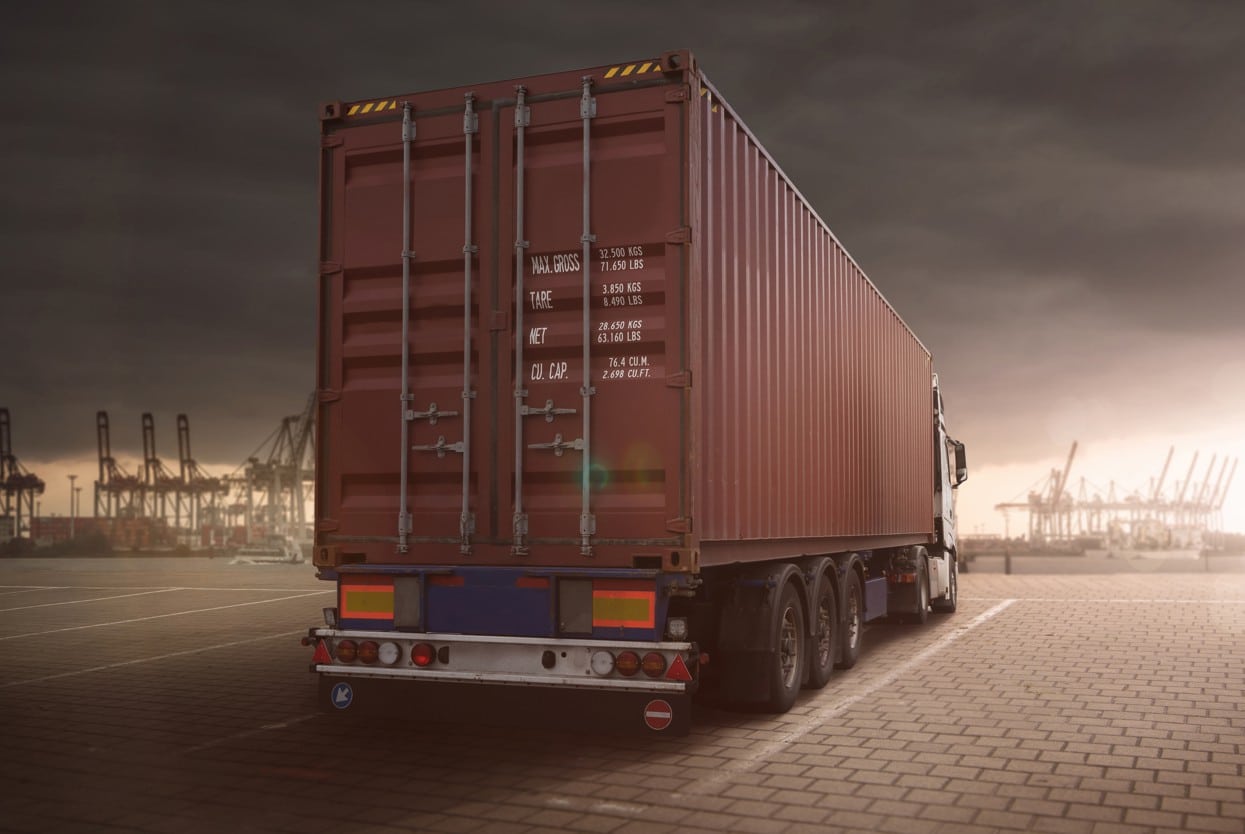
The unstable supply chains have particularly affected sea freight and consequently also the providers of hinterland transport, whether they are inland shipping companies or operators of intermodal rail transport. Once a container from the Far East finally arrives at a European port, there is urgency, even if the goods were delayed for weeks or even months beforehand. Therefore, a high degree of flexibility is required from inland shipping companies and railways. They also play a role in future sustainability strategies.
Von Andreas Müller
(Basel/Rorschach) Essentially, since the first day of the Corona pandemic in China at the end of 2019/beginning of 2020, supply chains have come to a standstill. The strict zero-Covid strategy of the Chinese had devastating consequences for sea freight for the first time from March to May 2020. The ports in China were closed, and other countries in the Far East followed suit. Finally, when the ports reopened and ships resumed sailing, container ships were backed up in front of and in European ports. Some ships encountered lockdowns in Europe, which led to significant delays again.
Container ships became scarce, and sea freight rates skyrocketed due to persistent demand. Before Corona, the cost for the route from China to Europe was around USD 1,500 for a container, but prices reached up to USD 15,000 for the same service. Golden times began for overseas shipping companies. Admittedly, they had to endure a years-long drought, which resulted in a contraction of the industry.
“The Last Will Be Bitten by the Dogs”
Once a ship has finally unloaded in a European port and the corresponding containers are ready, the intermodal operators come into play. Suddenly, there is urgency; every day counts after the goods arrived in Europe weeks or even months late.
This was also a topic at the Supply Chain Innovation Day in Rorschach, Switzerland, last week. Initially, Nils Haupt (Senior Director Corporate Communications Hapag-Lloyd) shed light on the above issue from the perspective of an affected shipping company.
Two sessions followed, each moderated by Prof. Dr. Wolfgang Stölzle (Director Institute for Supply Chain Management at the University of St. Gallen), addressing the topic of hinterland transport with the titles:
Focus Point Seaport-Hinterland Transport – Emphasis on Inland Shipping
Discussion participants: Thomas Knopf (CEO Ultra-Brag), Florian Röthlingshöfer (Director Swiss Rhine Ports), Andreas Stöckli (CEO Rhenus/Contargo Switzerland), Joachim Zimmermann (Managing Director Bayerhafen)
Focus Point Seaport-Hinterland Transport – Emphasis on Rail Freight Transport
Discussion participants: Désirée Bär (CEO SBB Cargo), Dr. Dirk Stahl (CEO BLS Cargo), Michail Stahlhut (CEO Hupag Intermodal)
Both modes of transport have been suffering from similar issues since the turbulent supply chains. Primarily, there is a complicated pickup of containers in the seaports, leading to difficulties in planning. Employees have been under constant pressure since 2020 and are working at full capacity to provide the best possible service to customers despite the challenging conditions.
Inland shipping has also had to contend with low water levels in the last two years during the summer, especially this year, which meant even less cargo could be taken on. Switching to rail was difficult, as every available railcar has been planned months in advance since 2020.
 First Signs Indicate a Calm in 2023
Nils Haupt also pointed out in his presentation that while normalization may not be on the horizon for 2023, a calming trend in sea freight is emerging. This would automatically signal a phase of normalization for the organizers of hinterland transport. This normalization is especially significant for the railways, as they will face several challenges in the coming years, even without supply chain difficulties. The rail infrastructure, particularly in Germany, leaves much to be desired, and numerous construction sites await.
The Rail is the Hope for Sustainable Logistics
Intermodal operators, and thus the railways, are not only central to the supply chain issue but also hold hope for sustainable logistics. Politics in Europe is calling for a shift to rail. Regardless of the fact that the road is also responding more agilely and a departure from combustion engines is being made at a rapid pace.
To make rail transport more attractive, more infrastructure is needed, especially to separate freight transport from passenger transport. However, knowing how long it takes to build and make operational even a single kilometer of new track, it is foreseeable that road traffic will be emissions-free before rail traffic.

What Can Railways and Customers Do in the Short Term?
Recently, many start-ups have emerged that help simplify access to intermodal transport through platform solutions, i.e., digitalization. They enable a clearly structured order processing, integration of partner networks and interfaces for networking, and make processes transparent.
These modern platforms connect shippers, freight forwarders, railways, operators, truckers, and terminals. All participants, if connected, are continuously informed in real-time about every operation and every step along an intermodal transport process.
Photos: © Loginfo24