Dachser Equips Swap Bodies with Smart Tracking Devices
8. November 2022
The ASTAG with Successful Event AS-TAG
8. November 2022
Many companies currently use private standards as a central tool to meet their responsibilities for human rights and the environment in raw material extraction. However, a recent study by the environmental and development organization Germanwatch shows that these industry standards are not suitable for effectively implementing the requirements of relevant human rights and environmental standards.
(Munich) The results in the area of transparency are particularly striking. According to Germanwatch, hardly any standard provides sufficient information for companies to fulfill their due diligence obligations. Some do not even seem to verify whether the requirements are actually being implemented. There is a risk that superficial solutions will undermine the EU Supply Chain Act.
To know and regularly check the working conditions of its suppliers, one must keep an eye on all of them. This is best achieved by digitizing all processes along the supply and value chain. This way, companies can effectively implement the supply chain laws from Germany, the EU, and Switzerland. In early 2023, the German Supply Chain Act, or Supply Chain Due Diligence Act (LkSG), will come into force for companies with over 3,000 employees. Companies that are not adequately prepared face legal and financial consequences, as well as reputational damage and liability. Additionally, the German government wants to support the supply chain law proposed by the EU Commission, which goes beyond the German law and provides stricter rules for companies and their suppliers to protect human rights and the environment. A lot is at stake, and companies should equip themselves with the right IT and processes to be well-prepared for the new requirements.
B2B Marketplaces: A Connected Ecosystem

Mikel Hippe Brun, co-founder of Tradeshift
“When it comes to transparency, connectivity, flexibility, and even data, companies have a lot of catching up to do in their supply chains. Procurement must evolve: away from fragile, individual business relationships towards more organic, dynamic, and resilient networks. The best example of these new networks are B2B marketplaces that connect global buyers and suppliers into a holistic ecosystem,” says Mikkel Hippe Brun, co-founder and General Manager Payment Automation at Tradeshift.
According to KPMG, comprehensive transparency is a crucial prerequisite for meeting ESG criteria. Companies need a complete overview of their entire supply chain. This includes all suppliers involved in value creation, especially regarding whether they comply with all environmental and social standards. The challenges are particularly high for globally operating companies due to complex production conditions and globally intertwined economic activities.
A good B2B marketplace platform should provide buyers with real transparency and competitive offers while giving suppliers a broad base of potential customers at low customer acquisition costs. A more efficient, resilient, and flexible supply chain will only be possible if all parties—from suppliers to carriers, from banks to buyers—are connected in the same digital network. In this network, companies can set up their own marketplace, invite trusted business partners, and take advantage of industry-specific group purchasing or create a new, vertically integrated supply chain.
The Wrong Signal: Withdrawal from Developing and Emerging Countries
According to a recent study by the Institute of the German Economy (IW), 18 percent of the companies surveyed by IW only want to source intermediate products from countries that adequately adhere to human rights and environmental protection standards. About twelve percent of companies plan to withdraw from countries with weak governance structures—primarily affecting developing and emerging countries. If companies withdraw from emerging and developing countries with weak legal oversight due to high costs associated with implementing supply chain controls, it would have devastating consequences for the jobs they have created there, the established production standards, and the capital already invested.
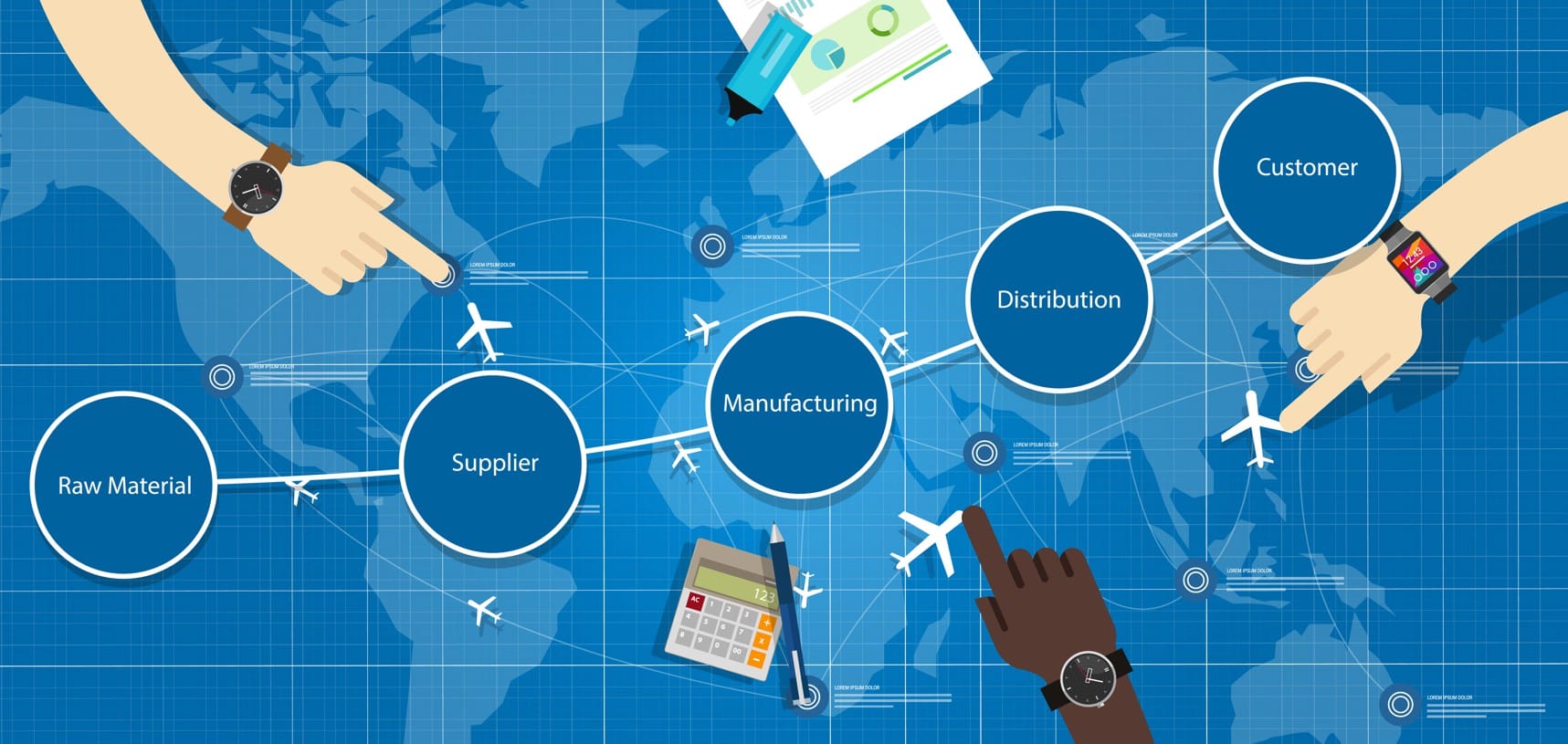 Globally operating B2B marketplaces accelerate procurement by providing access to a wide range of products, suppliers, and prices that are digitally connected with buyers and suppliers from around the world. They improve process efficiency thanks to a shared, standardized infrastructure that enables fast, precise, and increasingly automated transactions on cloud-native platforms. They reduce risk and increase transparency by pre-screening each participant to ensure they meet the required product standards and digital processes. And they bring the transparency that companies still lack today to continue working legally with suppliers from developing and emerging countries.
References:
- https://www.tagesschau.de/inland/lieferkettengesetz-koalition-einigung-101.html
- https://www.iwkoeln.de/presse/iw-nachrichten/galina-kolev-adriana-neligan-jedes-fuenfte-unternehmen-will-preise-erhoehen.html
- https://www.germanwatch.org/de/87358
- https://home.kpmg/de/de/home/themen/2021/06/lieferkettengesetz-fallstricke-und-handlungsempfehlungen.html
Photos: © Loginfo24