
TX Logistik expands rail services between Cologne and Istanbul
15. November 2022
First Deliveries with the Digital Delivery Note from BVL and GS1
15. November 2022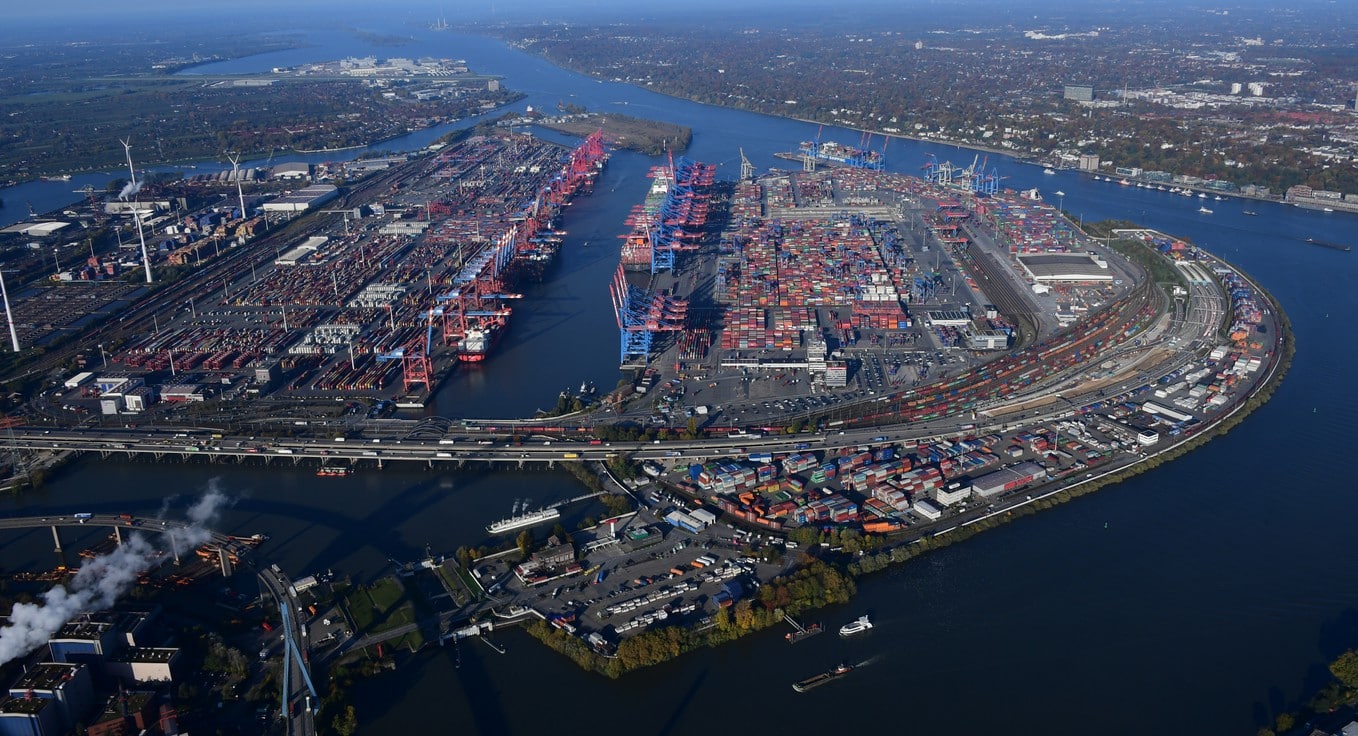
The maritime economy in the Hamburg port handled 91.8 million tons of seaborne goods in the first nine months. This represents a decrease of 4.3 percent compared to the previous year. Bulk cargo handling was particularly affected, with a decline of 7.4 percent to 27.5 million tons. In comparison to other European ports, container handling remains stable.
(Hamburg) With a handling of 6.3 million TEU (20-foot standard containers), the Hamburg port recorded a decrease of 2.7 percent. However, the handling of conventional breakbulk cargo developed positively, with 1.1 million tons passing through the quays in Hamburg, representing an increase of 19.3 percent compared to the previous year.
Several events dampened the development of cargo handling in the Hamburg port in the third quarter. “In particular, disruptions in global supply chains, which also led to long delays in shipping traffic before Hamburg, resulted in lower handling. This trend was already noticeable in other European ports by mid-year. In the third quarter, global developments also reached the Hamburg port, although we are still performing well in comparison to Europe,” explains Axel Mattern, CEO of Port Hamburg Marketing (HHM). Container handling in Rotterdam decreased by 4.4 percent, and Antwerp-Bruges handled 5 percent fewer containers.
Total Handling
Compared to the previous year, breakbulk handling in the first three quarters of 2022 fell into the negative, totaling 64.4 million tons – a decrease of 2.9 percent. The decline in containerized breakbulk was decisive, with a decrease of 3.2 percent. In contrast, conventional breakbulk handling increased significantly, with 1.1 million tons and an increase of 19.3 percent.
Container Handling
A closer look at the container handling segment reveals that both exports at 3.1 million TEU and imports at 3.2 million TEU are equally affected. Both are below the previous year’s level with a decrease of 2.7 percent. Among the handled containers, loaded ones continue to lead. They are also responsible for the overall decline of 2.7 percent. From January to September, 5.6 million loaded TEU (-2.9 percent) passed through the quays, while around 726,000 TEU (-1 percent) were empty containers.
Inland Traffic Remains Nearly Stable
The decline in seaborne cargo handling also affects transshipment and continental handling. The transshipment handling is primarily affected, with a decrease of 6.3 percent to 2.3 million TEU. In contrast, continental handling remains almost constant, losing only 0.6 percent to 4.0 million TEU. The rail share in container hinterland traffic is 50 percent.
Megamax Carriers Increasingly Arrive
In the past nine months, the number of container ships in the Hamburg port has also decreased according to the long-term trend. Overall, there were 7.4 percent fewer than the previous year. However, against this trend, more Megamax ships with capacities between 18,000 and 24,000 TEU were seen in the Hamburg port. With 172 calls, the number increased by 5.5 percent. “The further increase in Megamax carriers clearly shows that we really needed the fairway adjustment. Now it is the responsibility of the federal administration to maintain and uphold it. A reversal of the new depths would be counterproductive for the Hamburg port,” emphasizes Mattern.
Decline in Bulk Cargo Handling
The bulk cargo terminals handled a total of 27.5 million tons from January to September. This corresponds to a decrease of 7.4 percent compared to the previous year. Liquid cargo was particularly affected, with only 7.3 million tons passing through the quays, representing a decrease of 16.1 percent. In contrast, suction and grab cargo remained more stable, each with a decrease of 3.8 percent. Thus, the terminals handled 15.7 million tons of grab cargo and 4.5 million tons of suction cargo.
Poland Sees the Most Increase
The decrease in containers passing through the Hamburg port is also reflected in the volume development in various shipping areas. For instance, 2.8 million TEU were handled with Far East services, which corresponds to a decrease of 2.1 percent. A noticeable decline is also observed in the Baltic Sea region. “Here, the sanctions against Russia are fully effective, although handling with other Baltic Sea neighbors is increasing. However, this is not due to a rerouting of goods,” explains Mattern. Thus, handling with Russia fell by 67.7 percent to only 80,000 TEU. In the same period, seaborne container handling with Poland increased by 38.5 percent to 237,000 TEU. As a result, Poland rises from rank 8 to rank 4 in the list of top 10 partner countries, and Finland also belongs to this list with an increase of 32.7 percent to rank 7. The list is traditionally led by China (1.9 million TEU, -1.2 percent). The United States of America has established itself in second place. The shipping area developed positively for loaded containers (+1.7 percent and 402,000 TEU). However, the number of handled empty containers has decreased, resulting in a total of 442,000 TEU being handled in the port, which is 3.9 percent less.
Further Outlook for 2022
The energy crisis, triggered by the war in Ukraine, has led to high inflation in Germany and many European countries. This will also affect the normally very strong Christmas business. At the same time, while the congestion before the ports is easing, the disruptions in the supply chains have not yet been fully resolved. Thus, the market is expected to remain volatile for the rest of the year. This could impact handling in the Hamburg port.
Photo: © HHM / Hasenpusch productions