Hellmann Establishes Growth Foundation with Three New Industry Solutions
22. November 2022
Lufthansa Cargo Expands Vietnam Offerings with Hanoi Flight
24. November 2022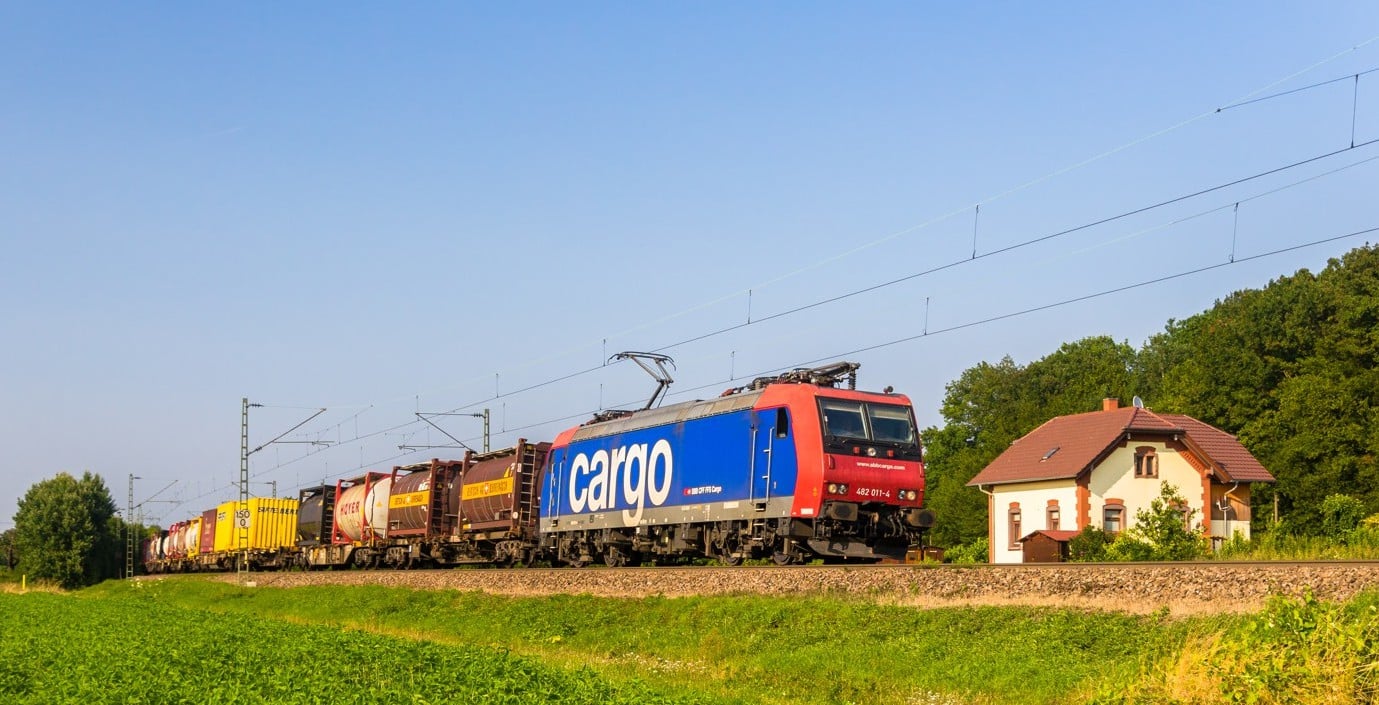
In 2021, transport services in freight transport increased by 2.7% on the road and by 6.2% on the rail, resulting in an overall transport growth of 4.0%. The number of kilometers traveled by heavy road freight vehicles was the highest it has been in the last 20 years. The container transport with Rhine ships and by rail also reached record levels in 2021. This is evident from the freight transport statistics of the Federal Statistical Office (BFS).
(Bern) In 2021, the transport services on the Swiss road and rail network totaled 27.8 billion ton-kilometers, where one ton-kilometer corresponds to the transport of one ton over one kilometer. Compared to the previous year, the total transport services increased by 4.0%. Rail freight transport grew more strongly (+6.2%) than road transport (+2.7%). Also, compared to 2019, the year before the actual onset of the Covid-19 pandemic, both modes of transport increased their transport services (Rail: +3.0%, Road: +1.7%).
New Record in Driving Performance
In 2021, heavy road freight vehicles (more than 3.5 tons gross weight) covered 2,273 million kilometers in Switzerland. This is a new high since the introduction of the performance-related heavy vehicle fee (LSVA) in 2001.
Of the total driving performance of heavy vehicles, about 1,776 million kilometers (78%) were accounted for by domestic vehicles and 497 million (22%) by foreign vehicles. Domestic vehicles also recorded a new record value, while foreign vehicles have recorded higher driving performances in the past (their value has fluctuated between 470 and 509 million kilometers since 2001).
In addition to the driving performance of heavy vehicles, around 4,947 million kilometers were added by light domestic freight vehicles (maximum 3.5 tons gross weight; mainly delivery vans) in 2021. In parallel with the continuously growing fleet of these vehicles, their driving performances are also steadily increasing and were about 67% higher in 2021 than in 2000.
Reduced Emissions Thanks to Technological Progress
Heavy freight vehicles are classified into emission classes (Euro classes) 1 to 6, with Euro class 6 having the strictest limits. Technological progress and the ongoing renewal of the vehicle fleet lead to an increasing number of clean vehicles operating on Swiss roads. This development is also promoted by the political instrument of the performance-related heavy vehicle fee (LSVA), which applies lower fee rates for low-emission vehicles.
The share of Euro-6 vehicles in the driving performance of heavy domestic freight vehicles was 80% in 2021. Euro-5 vehicles peaked in 2013, and since then their share has decreased in favor of Euro-6 vehicles, falling to 17% in 2021. The share of driving performance of older Euro classes (1 to 4) decreased from 50% to 3% between 2010 and 2021.
Combined Freight Transport Continues to Thrive
Combined freight transport (KV) involves various modes of transport (road, rail, water), where it is not the actual cargo that is transshipped, but the transport containers (e.g., containers). The principle is that the majority of the distance traveled is covered by rail or ship (main leg), while the pre- and post-haulage on the road is kept as short as possible.
In 2021, 79,214 containers were transshipped at the Swiss Rhine ports in Basel: 32,386 twenty-foot containers and 46,828 forty-foot containers. Converted into the international standard measurement of TEU (Twenty-foot Equivalent Units), this results in a record transshipment volume of 126,042 units, 10.5% more than the previous year. This peak is particularly noteworthy given that Rhine ships could only operate under limited conditions in 2021 during both summer (due to flooding) and late autumn (due to low water levels). Additionally, global supply chains continued to be affected: on one hand due to the Covid-19 pandemic and on the other hand because of the container ship “Ever Given,” which blocked the Suez Canal for six days in March 2021.
Pre-Pandemic Year 2019 Not Yet Reached
2021 was also a record year for combined freight transport by rail: a total of 1.37 million containers, swap bodies, and semi-trailers were transported by rail, which is 9.7% more than in 2020. The transport of complete trucks and articulated lorries – the so-called “rolling highway” – even increased by 20.4% compared to the previous year. However, in this segment, the decline of 2020, when the operation of the rolling highway was severely restricted due to the Covid-19 pandemic, has not yet been compensated (2019: 86,000 transported vehicles; 2020: 54,000; 2021: 65,000).
Photo: © Loginfo24