Dachser Orders 50 Mercedes-Benz eActros LongHaul
15. December 2022
Rhenus Acquires Steel Specialist Robert Schmitz Spedition
15. December 2022
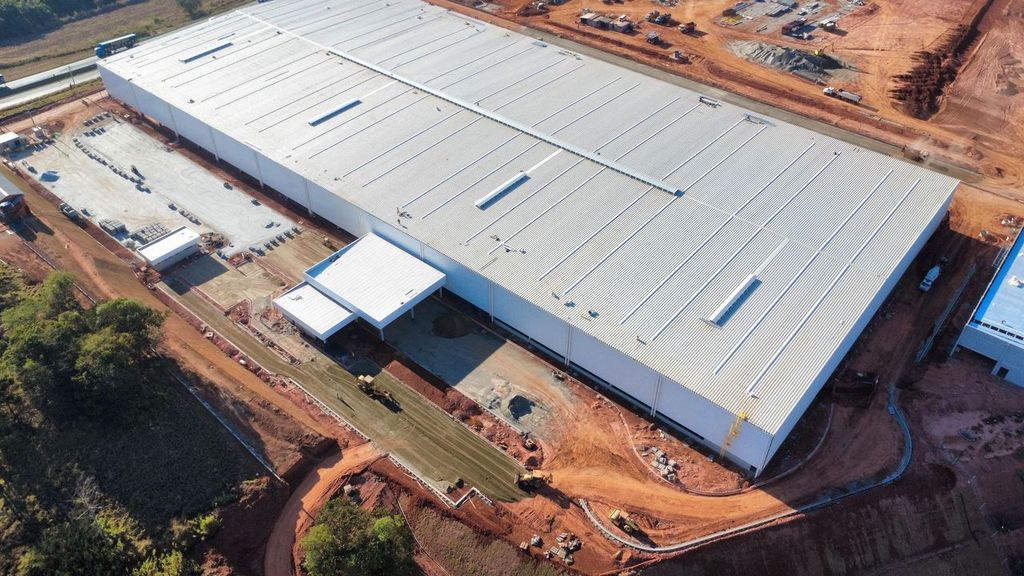
In North Rhine-Westphalia (NRW), the existing stock of logistics properties covers only about one third (34 percent) of the actual demand. Since 2012, requests for space totaling over 9.3 million square meters have been negatively answered by the municipalities. This is evidenced by the joint study by JLL and GARBE Industrial Real Estate on the logistics location NRW.
(Hamburg) To sustainably meet the ongoing enormous demand for space in all locations, existing properties must be revitalized. This is because 96 percent of the approximately 193 million square meters of logistics space are in the existing stock. Additionally, the state offers high potential for brownfield developments with its numerous industrial wastelands.
Tobias Kassner, Head of Research at GARBE Industrial Real Estate and co-author of the study, explains: “Logistics properties remain in high demand, and therefore space is needed in all locations, especially around metropolitan regions like Düsseldorf or Cologne, but also in the cities of the Ruhr area. The fact that so many requests have been negatively answered in recent years must now be corrected with a modern land policy. This includes, for example, improving the image of logistics buildings by communicating more transparently.” Kassner adds: “Many people are not fully aware of the enormous value creation that the logistics industry offers and how many jobs this growing sector generates. Furthermore, logistics properties are now more than just distribution centers: they are increasingly becoming energy producers and storage facilities. This way, they can be an essential part of solving the energy transition in a decentralized energy and infrastructure network.”
Utilizing Numerous Industrial Wastelands
The high demand for space in NRW could also be partially addressed through project developments on brownfields. As a formerly industrially shaped region, the federal state has numerous industrial wastelands that could be repurposed due to structural change. At the same time, twelve of the 40 largest retail companies in Germany are located in North Rhine-Westphalia, including Rewe, Aldi, and Metro. Additionally, the density of consumers is higher in the Ruhr area than in any other region of Germany. All of this is supported by a dense network of inland transport routes.
Combination of New Constructions, Existing Properties, and Brownfield
Helge Scheunemann, Head of Research JLL Germany and co-author of the study, further elaborates: “The analysis shows that a combination of complete new constructions, existing properties, and brownfield developments could sustainably solve the space problem for logistics and production areas, while simultaneously achieving low energy consumption through the use of modern technologies. To achieve this, administrations need to be convinced, and at the same time, new approaches to planning must be introduced from their side.”
Download the Study:
https://www.garbe-industrial.de/nrw-report/
www.jll.de/de/trends-and-insights/research/logistikregion-nrw-future-valley
Photo: © Garbe