






Boris Hueske and Nikola Tadic Take Over Leadership at heyworld
13. January 2023
Port of Kiel Achieves Positive Annual Balance Despite Volume Decline
17. January 2023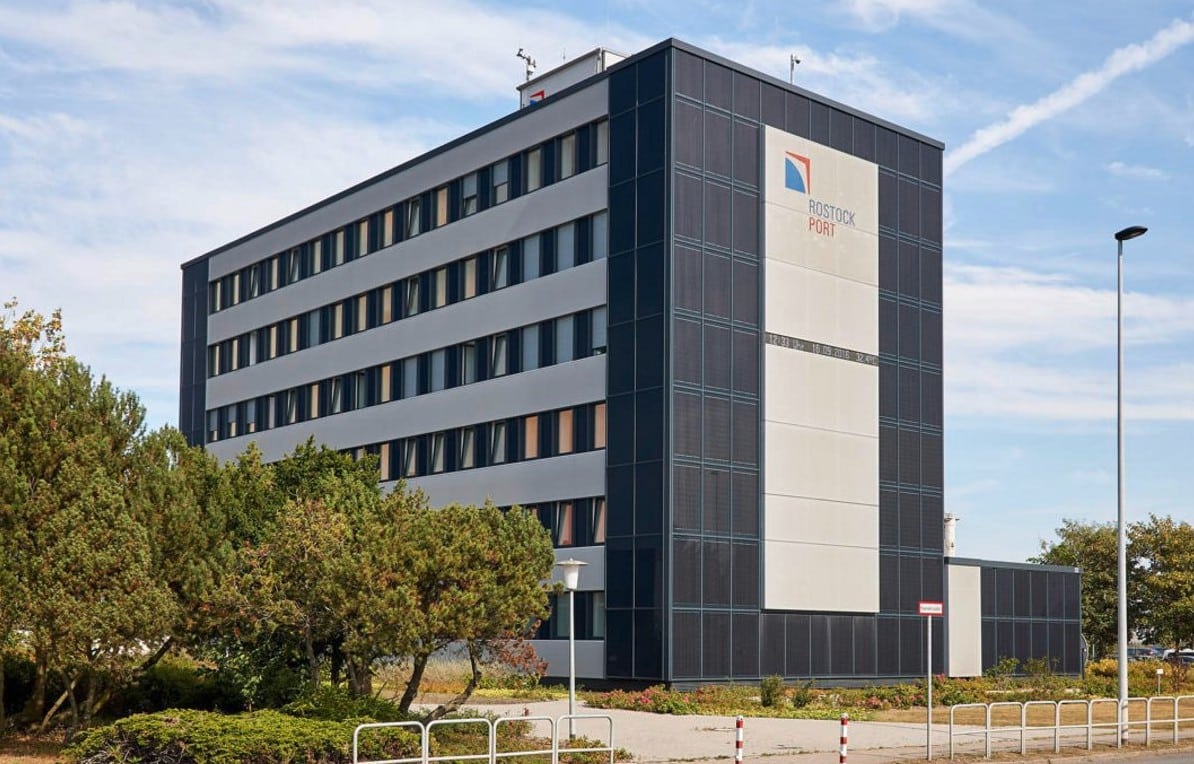
“A total of 30.5 million tons of cargo were handled in the port city of Rostock last year, exactly matching the record result from 2021,” informs the head of the Rostock Port and Seafarers’ Office, Port Captain Falk Zachau. In the overseas port, 29 million tons accounted for the vast majority of Rostock’s goods. This surpassed the previous year’s handling record of the overseas port by 300,000 tons or one percent.
(Rostock) According to the Rostock Port and Seafarers’ Office, an additional 1.5 million tons of goods were handled in other Rostock ports such as the cargo and fishing port and the chemical port in 2022; 300,000 tons less than the previous year.
“Despite various challenges, not only was last year’s record result confirmed, but it was even expanded in the overseas port. With this excellent result, the ports and companies on either side of the Warnow have impressively demonstrated their ability to cope with multiple crises based on their high performance capacity in 2022. In the second half of 2022, the commissioning of the car terminal, the opening of the new highway entrance and exit in the southern port area, and the start of dredging work for the deepening of the shipping channel to 16.50 meters were milestones in port development,” summarizes ROSTOCK PORT Managing Director Dr. Gernot Tesch.
“As a nationally and internationally popular cruise destination, as well as with several ferry lines to and from Denmark and Sweden, Rostock remains the most significant German passenger port,” says Jens Scharner, Managing Director of ROSTOCK PORT GmbH. With 2.5 million passengers on the four ferry connections from Scandlines, Stena Line, TT-Line, and Hansa Destinations, there was a substantial increase of 800,000 compared to 2021. The cruise shipping sector also recovered compared to the two pre-Corona years, but has not yet reached the level of 2019, unlike ferry passenger traffic. In total, 294,000 sea travelers boarded and disembarked from 139 ship calls of 30 cruise ships in Warnemünde. The ongoing war in Ukraine, which began in February 2022, has negatively affected Baltic Sea cruise tourism and thus the call and passenger numbers in several Baltic ports. More than 200 calls were registered for Rostock’s Baltic seaside resort in 2022.
The investment volume in the infrastructure of the overseas port amounted to 27.5 million euros last year. This year, ROSTOCK PORT plans investments of over 40 million euros.
Handling Results in the Overseas Port
In total, there were 7,663 calls of ferry and RoRo, tanker, cargo, and cruise ships at the overseas port of Rostock last year (2021: 7,551). Of these, 5,958 calls were for ferry and RoRo ships (2021: 5,733).
The bulk cargo handling was 7.2 million tons, four percent above the already very high level of the previous year. With an annual result of 3.3 million tons, grain remains the dominant bulk commodity in the overseas port.
The handling of liquid goods was 3.45 million tons, ten percent above the previous year’s result, which is particularly due to the beginning of crude oil imports that will be increasingly carried out in the future.
With 625,000 tons, the handling of value-added general cargo was nine percent below the previous year. While the loading of sheets, slabs, and vehicles increased, the handling of containers and wind turbines decreased.
In rolling cargo, the ferry and RoRo goods, a handling result of 17.7 million tons (-300,000 tons or -2 percent) narrowly missed the previous year’s record result; and this was only due to a prolonged strike situation in the Finnish paper industry at the beginning of 2022. Last year, 378,000 tons of paper, cellulose, and plywood were handled in the overseas port, which is 327,000 tons less than the previous year. The share of rolling freight in the total handling of the overseas port of Rostock was 61 percent last year.
The number of truck units transported on the ferry and RoRo connections to and from Northern Europe increased: from 407,000 in 2021 to 410,000 last year, an increase of one percent. The number of handled trailers rose slightly more: from 161,000 by five percent to nearly 169,000 in the past year.
Ferry travel traffic recovered after the pandemic-related travel restrictions in 2020 and 2021. The number of cars and motorhomes transported between Northern Europe and Rostock was 628,000: an increase of 46 percent. The result of the last pre-crisis year 2019 was even exceeded by 74,000 cars and motorhomes.
The transport of railway wagons to and from Trelleborg decreased from 27,100 units in 2021 to 18,100 last year. The temporary line closure at the beginning of 2021 on the Great Belt in Denmark caused a special effect that increased quantities in the overseas port in the year before last.
Continuous Growth in Combined Transport
The company Rostock Trimodal, terminal operator for the handling of intermodal loading units in the overseas port of Rostock, handled over 130,000 units (+8 percent) in 2022. With the annual timetable change in December, 41 intermodal trains currently run weekly to and from Verona (16) in Italy, to and from Bratislava (6) in Slovakia, to and from Bettembourg (3) in Luxembourg, to and from Curtici (2) in Romania via Dresden (7), to and from Herne (6), and Halle (1) in Germany.
“Combined transport at the Rostock location has increased by about 50 percent over the past five years. The numerous customer inquiries show us an increased interest in environmentally friendly transport chains and the potential of intermodal rail traffic through the Rostock port location. To meet this demand in the future, we see the expansion of further intermodal capacities as a significant contribution to strengthening the ferry and RoRo network. At the same time, this also achieves a CO2 reduction of the traffic running through Rostock port. The great advantage of Rostock is the available track capacities in the port, which also allow for the flexible development of additional handling capacities at short notice,” says Dr. Gernot Tesch.
Photo: © Rostock Port


