2022 Mileage is 1.4% Above the Level of the Last 2 Years
4. March 2023
New Cooperation between FERNRIDE and Terberg
4. March 2023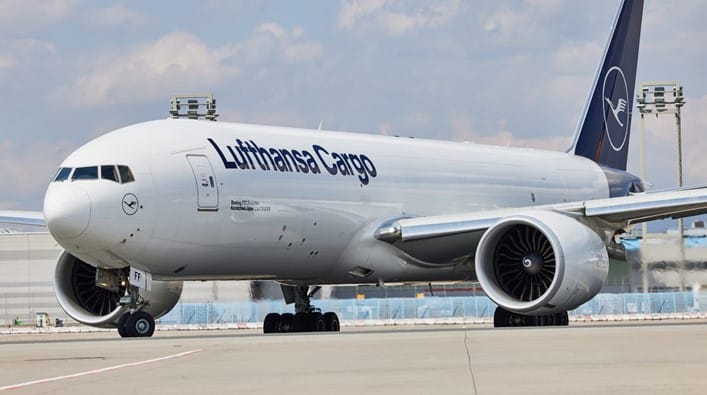
Lufthansa Cargo has once again surpassed its results from the previous year in the fiscal year 2022. Revenue increased by 22 percent to 4.6 billion euros (previous year: 3.8 billion euros), and the adjusted EBIT amounts to 1.6 billion euros (previous year: 1.5 billion euros). Overall, the volume of 7.2 billion freight ton kilometers last year was on par with the previous year 2021 (7.2 billion). The average load factor decreased by 9.9 percentage points compared to the previous year to 61.1 percent, while the capacity offered increased by 17 percent to 11.8 billion available freight ton kilometers.
“In the past fiscal year, we achieved a record result for the third consecutive time. We owe this to the high commitment of our employees and the trust of our customers and partners. Additionally, the growth of long-haul passenger traffic provided us with significantly more capacity in the market. We notice that our customers continue to serve their global supply chains. With more freighters and more bellies, we will continue to be a strong and reliable partner for our customers in the future,” said Dorothea von Boxberg, CEO of Lufthansa Cargo.
During the COVID-19 pandemic, the flight programs of passenger airlines were suspended or maintained only to a limited extent, and numerous freight capacities in the bellies of these aircraft were temporarily unavailable for the transport of goods. With the resumption of numerous passenger flights, both the capacity and route offerings expanded. This strong growth trend in the belly segment continues to this day and now accounts for about half of Lufthansa Cargo’s transport capacities. In the summer flight schedule 2023 alone, freight is regularly transported on over 7,000 weekly flights operated by Lufthansa, Austrian Airlines, Brussels Airlines, Eurowings Discover, and SunExpress.
“We look confidently towards the fiscal year 2023. The environment remains dynamic. However, we are convinced that we are excellently positioned and can respond flexibly and quickly to changes in the market. We are consistently pursuing our successful strategy. We are expanding our digital services and offering our customers more and more sustainable solutions. We will also be successful in 2023,” adds Dorothea von Boxberg.
The fiscal year 2022 for Lufthansa Cargo was marked by groundbreaking investments to expand the freighter fleet. It currently consists of 16 Boeing 777F and two Airbus A321F. To further expand the long-haul fleet, Lufthansa Cargo is relying on Boeing’s efficient twin-engine aircraft and has ordered three B777F of the current technology as well as seven B777-8F of the upcoming Boeing freighter generation. One B777F was already delivered in the past fiscal year, enabling Lufthansa Cargo to increase frequencies to highly demanded intercontinental destinations such as China and India and to open a new freighter station in Hanoi, Vietnam. Alongside North and South America, the Asia-Pacific region is one of the strongest markets for Lufthansa Cargo. With the additional commissioning of two Airbus freighters of the A321F type in 2022, Lufthansa Cargo was able for the first time to offer fast transport solutions for customers from the rapidly growing eCommerce segment on short and medium-haul routes. Two more Airbus freighters will complement the fleet starting in summer 2023, thereby increasing capacities on intra-European routes.
The investments also continuously contribute to Lufthansa Cargo’s sustainability goals: Lufthansa Cargo remains committed to its goal of becoming CO2-neutral by 2050 and aims to halve CO2 emissions by 2030 as an important first milestone on this path. Operating freighter flights with Sustainable Aviation Fuels remains a key focus. The service offering “Sustainable Choice” allows customers to transport their freight CO2-neutrally. Additionally, since autumn 2022, Lufthansa Cargo has been using an environmentally friendly plastic film for the protection of freight during transport. This film is thinner and lighter, thus saving weight and material consumption. Furthermore, aircraft from the fuel-efficient B777 freighter fleet have been gradually equipped since the beginning of 2023 with the innovative surface technology AeroSHARK from BASF and Lufthansa Technik. A special film optimizes the airflow around the fuselage and engine nacelles during flight, which in turn saves fuel and reduces emissions. Since January 2023, lighter yet tear-resistant transport nets for freight pallets have also been in use. They are made from renewable raw materials and weigh over 50 percent less than conventional nets. The associated weight savings thus make another important contribution to the reduction of CO2 emissions on flights.
In the area of digitalization, Lufthansa Cargo succeeded in 2022 in expanding digital sales channels and making handling processes more efficient thanks to improved data quality and utilization. Partners and customers alike benefit from this in the transport chain. With Mobile Digital Handling, digital solutions are increasingly replacing paper-based processes. Furthermore, for the first time last year, 100 percent of all shipments were transported with an electronic air waybill (eAWB).
Photo: © Lufthansa Cargo