Swiss Post Opens New Parcel Center Near Basel
25. March 2023
EVG Strike: Infrastructure Must Not Be a Plaything for Stakeholders
28. March 2023
Supply chains are under pressure worldwide, consumer demand is steadily increasing, delivery speeds are getting faster, and many players in Western countries are facing a massive labor shortage. Many companies are even offering bonuses to attract new employees and keep the supply chain running. Companies are trying to keep all wheels turning and cope with the ongoing e-commerce boom – no change is in sight.
Von: Patrick Molemans
(South Jordan/s’Hertogenbosch) The fight for enough labor is more relevant than ever since the pandemic. The labor shortage is exacerbated by internal pressure to keep operating costs under control – the infamous phrase “More with less” is becoming increasingly common and louder. How can one prove that operating costs are already under control? By demonstrating productivity.
“If it doesn’t work, use a bigger hammer.” This old wisdom is not always the best solution. When it comes to mobile workers, smaller is sometimes better.
Consumers have witnessed the change in the size of mobile phones: from the large car phones of the 1980s to the pocket-sized “brick” phones. Then, smaller flip phones were replaced by larger smartphones, which differ in screen size but still fit in a pocket.
For mobile workers, device sizes remained relatively constant for a long time. The size usually reflected the robustness of the device. A device that could withstand a fall from 2 meters was larger than one that could withstand a fall from 1.2 meters. The form factors could vary: brick or “gun grip”, depending on how intensively users scanned barcodes, but by today’s standards, the device sizes were bulky.
In a survey (Industrial Supply Chain Operations 2022), 46 percent of respondents cited faster deliveries as one of the biggest challenges. Small, portable devices can help mobile workers complete their tasks faster and more efficiently.
Portable Scanning Solutions
Ten or twenty years ago, portable devices were still a rarity. They were used for specific tasks like sorting packages that required a lot of manual labor. And although form factors and use cases varied, the employees using these devices were often connected to the same corporate systems as their colleagues using rugged mobile devices.
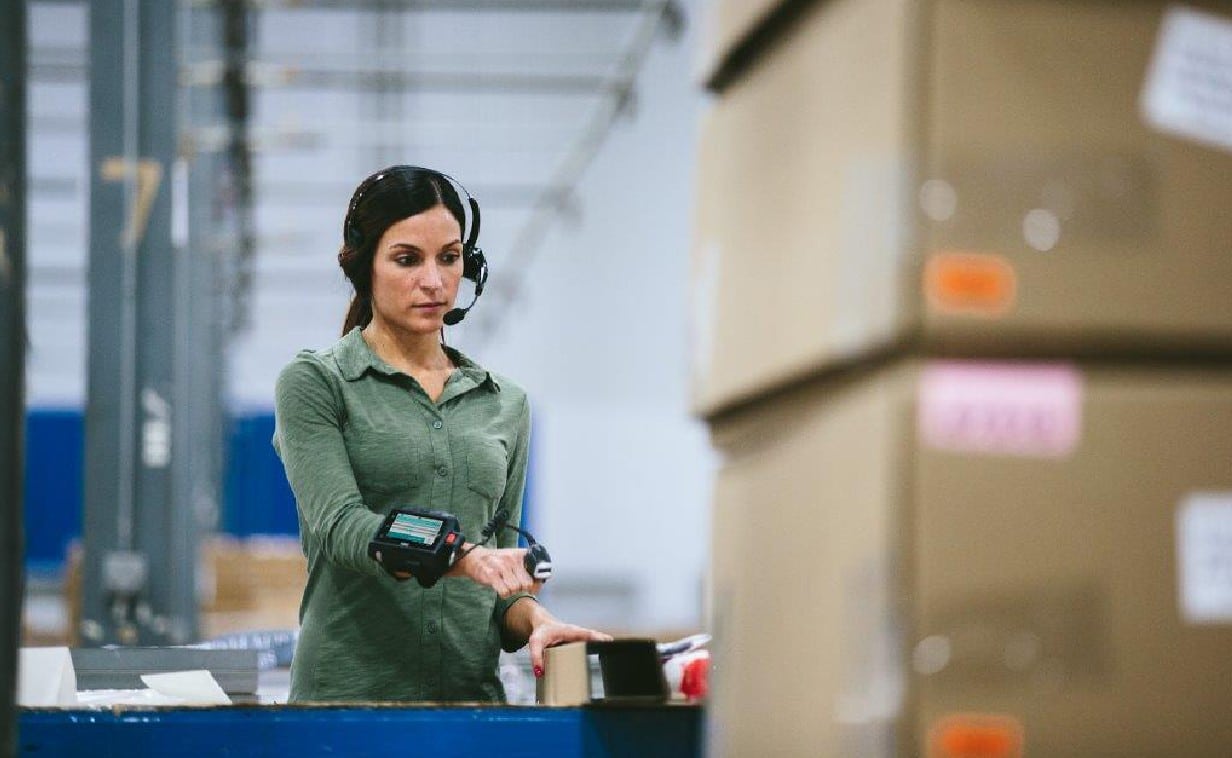 Wearable devices often used the same (or similar) components as traditional rugged devices – sometimes the display was the same part, rotated to landscape mode on the employee’s wrist for better readability.
Applications were also rotated to landscape mode to increase acceptance. But today, many associate the term “wearable” with something different: smartwatches and fitness devices. Zebra Technologies recently expanded its wearable portfolio with the WS50 form factor. This device has its own user experience.
One Size Fits… Small?
With a 2-inch display, interaction on the screen is different from the 4-inch (or larger) displays of other Zebra mobile computers, but the productivity gains are the same. For example, when navigating through a picking process, the user receives precise step-by-step instructions: to the aisle, then to the shelf and container, then to the item group. This additional automation eliminates unnecessary steps.
Smaller wearables like the WS50 have the potential to make a significant contribution to supporting mobile workers. The use of Ivanti Velocity to optimize screens for faster task completion can be complemented by adding voice with Ivanti Speakeasy for Velocity. This wearable easily integrates with a wireless headset, allowing employees to speak while completing their tasks, reducing or even eliminating the need to look at the screen.
Mobile workers thus have both hands free to pick products, complete tasks, and communicate with corporate systems. A device that is light enough to be worn all day gives mobile workers the advantage they need to accomplish more in every shift.
Industrial Internet of Things Brings Connectivity
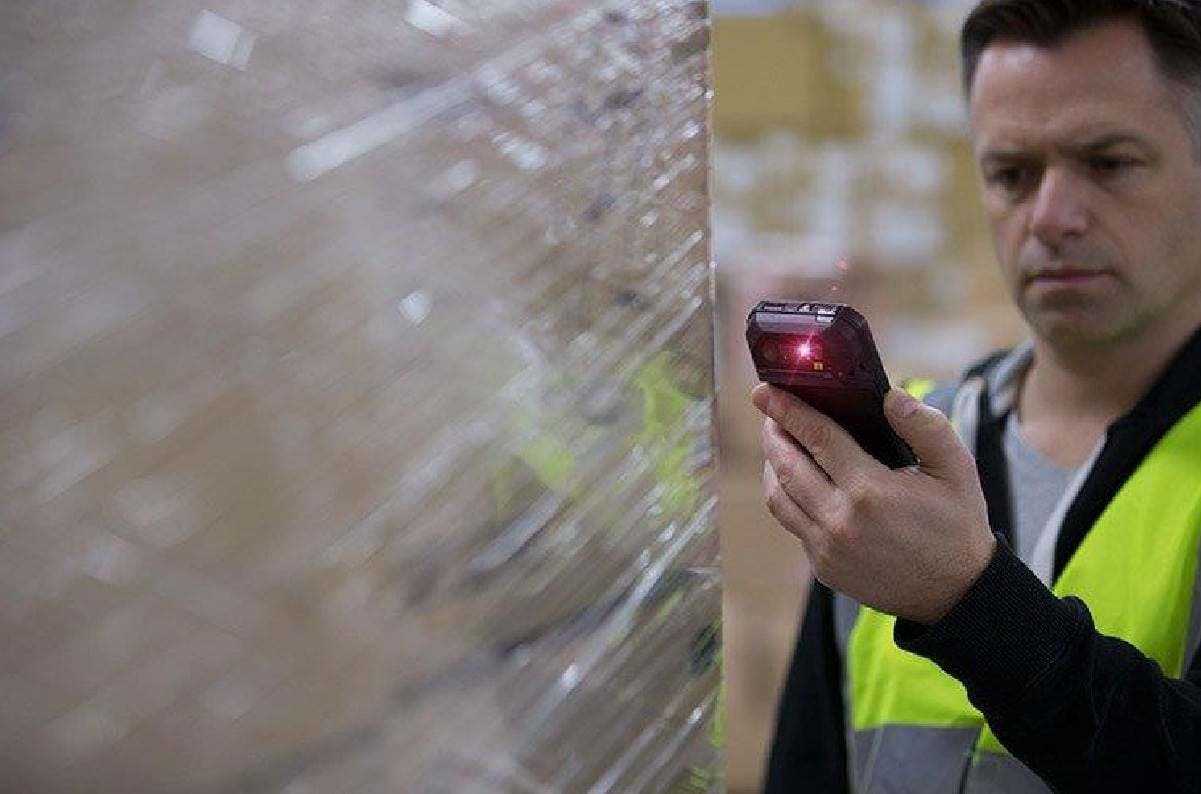 The overarching trend towards more automation, connectivity, and intelligence in industrial environments presents new opportunities in some market segments. For industrial companies, the Industrial Internet of Things (IIoT) offers significant potential to unlock new business models, enhance customer experiences, combat the disruptive effects of downtime, and ultimately achieve greater resilience. Although the specific operational challenges vary significantly from industry to industry, many of the most valuable IIoT use cases are applicable to many operators.
The Industrial Internet of Things (IIoT) can help minimize uncertainties in the supply chain by enabling the automatic collection, analysis, and processing of data from various sources. The connectivity of end devices, products, software systems, and machines is increasing. This is especially true for all acting partners in the supply chain. That products, packages, and pallets are labeled and thus captured and trackable by electronic systems is now completely normal. However, it often goes one or even two steps further: virtually everything is connected in the IIoT. The background is, as usual, process optimization and transparency for all parties involved, down to the end customer, who always knows where their order is located.
The Warehouse of the Future – Everything Connected
What does the warehouse of the future look like? What will be connected in the IIoT in the future? And where do we stand today? Only warehouses with an optimal interplay of people, cobots, computers, algorithms, and the latest small devices, all interconnected, have a successful future ahead.
Author: Patrick Molemans has been the Territory Manager Central Europe at Ivanti Wavelink for over ten years. Ivanti Wavelink is a leading provider of mobile productivity solutions for the supply chain. Molemans has been involved in automatic identification, data capture, and mobile data communication for more than 25 years.
https://www.linkedin.com/in/patrickmolemans
https://www.ivanti.de/solutions/supply-chain