The “transport logistic” awaits with a large supporting program
Mar 31, 2023 at 8:57 PM
Joint Venture GR Logistik Celebrates 10th Anniversary
Apr 5, 2023 at 10:07 AM
The coalition agreement assigns special importance to combined transport for climate-friendly logistics. Competitive offers and innovations are ready. The joint demand from VDV, DIE GÜTERBAHNEN, UIRR, SGKV, and shift2030: Capacities must be rapidly expanded now.
(Berlin) The traffic light coalition has assigned a special role to combined transport (KV) in its agreement “Modernization Package for Climate Protection and Planning Acceleration.” Not without reason: with annual growth rates of 5-8%, KV represents a dynamic and innovative segment in rail freight transport. In combined transport, goods are transported over long distances on climate-friendly rail or waterways, while pick-up and delivery – so-called pre- and post-haulage – are flexibly handled by truck. The transshipment of intermodal loading units (e.g., containers or semi-trailers) between road and rail takes place at special terminals.
The traffic light government can now prove that it is serious about climate-friendly freight transport and therefore massively strengthens combined transport: “Only by increasing the budget allocated for combined transport to around €150 million can it be ensured that the current number of projects in the area of new and replacement investments can be processed according to need,” explains Dr. Martin Henke, Managing Director of Rail Transport at VDV.
Investing Money in the Right Place
Peter Westenberger, Managing Director of the Association DIE GÜTERBAHNEN, adds: “A lot can be written down quickly – the federal government and DB must swiftly move to implementation. With the results from the coalition committee, there will be more money for rail. This must now be used transparently and in the right places – the paper has already decided on specific measures for KV promotion. The proposals from the Rail Acceleration Commission provide the transport minister with further appropriate measures to strengthen KV, including the use of KV facilities for construction logistics. A concrete concept for a public welfare-oriented infrastructure company in consultation with the industry would certainly be the most important first good step.”

Urgency is required, as the CO2 targets in the transport sector have been missed for years. Emissions must therefore be urgently reduced. Combined transport can make a decisive contribution: compared to pure road transport by diesel truck, up to 90% less CO2 is emitted. Already today, over 2 million tons of CO2 are saved annually in Germany by shifting freight transport from road to KV. A positive side effect is that due to their unbeatable efficiency, freight railways are five times more energy-efficient than road transport. This significantly helps to conserve the scarce resources of green electricity.
Combined Transport is a Success Story
“Combined transport is a success story and has established itself as an attractive and competitive transport solution for freight forwarders and shippers. By linking climate-friendly rail with the flexibility of trucks, you get the best of both worlds. The capacity in KV must now be rapidly and massively expanded, as in addition to the already high demand, there will be an additional ‘run’ on combined transport due to the massive CO2 surcharge on truck tolls,” comments Sebastian Ruckes, Chairman of shift2030 e.V. – an initiative for shifting goods to rail.
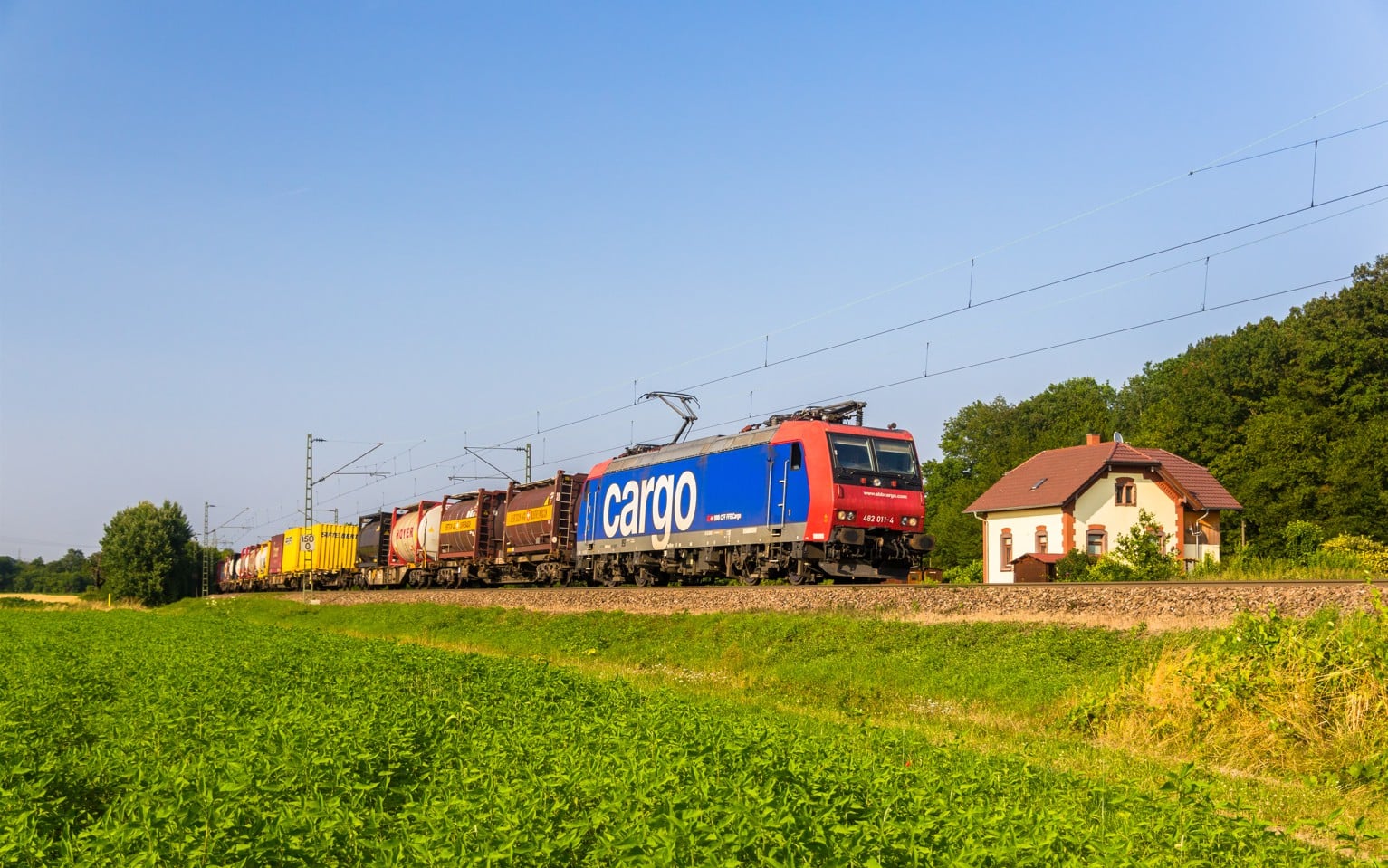 “At the same time, everything is ready for combined transport so that freight forwarders and shippers can transport goods in an environmentally friendly manner. We do not have to wait years or even decades for new technologies, but can start immediately and transport goods in a climate-friendly way,” adds Ralf-Charley Schultze from the Intermodal Association UIRR and initiator of the campaign “CT4EU.”
Share of Combined Transport on Rail has been Growing for Years
Clemens Bochynek from SGKV e.V., the national association for the actors of combined transport in Germany, emphasizes: “KV can already today efficiently serve a Europe-wide network of production sites and urban areas, and the share of KV in rail freight transport has been growing for years. This equally means that investments in the urgently needed rail infrastructure, as specified in the current paper from the federal government, are also direct investments in the future of KV. The system relies not only on capacities in the terminals but also on functioning railways and waterways.”
Photos: © Loginfo24