Lucerne University of Applied Sciences and Arts Aims to Revolutionize Rail Freight Transport
16. May 2023
UNITAX-Pharmalogistics Tests E-Trucks from Designwerk in Local Transport
17. May 2023
The first quarter results of the Post in 2023 are significantly lower than the previous year, as expected. The group result (EBIT) stands at 70 million francs as of the end of March 2023, which is about 75 million lower than the previous year. The result reflects the challenging environment in which the Post currently has to assert itself: fewer packages and letters, short-term negative effects of the interest rate turnaround, and persistently high inflation. In the first quarter, however, the Post was able to implement further important steps in its strategy: a new regional package center, completely climate-neutral delivery in Zurich and Bern, and milestones in secure digital communication, such as e-voting and communication with authorities.
With its strong financial foundation, additional efficiency measures, and the planned price increases, the Post is prepared for the current challenges. The result of the Swiss Post in the first quarter of 2023 was shaped by a geopolitically and economically tense, volatile situation. Therefore, it is significantly lower than in the very strong first quarter of the previous year: From January to March 2023, the Post generated a group result (EBIT) of 70 million francs – 75 million less than the previous year. This was achieved with a slightly higher operating income of 1,769 million francs. The group profit was 41 million francs, which also represents a significant decline, as it was 160 million the previous year.
It should be noted, however, that the Post sold its subsidiary Swiss Post Solutions (SPS) in the first quarter of 2022, which had a considerable impact on the profit. “We knew that 2023 would be a very challenging year for the Post. The result of the first quarter clearly reflects this already,” says Alex Glanzmann, CFO of the Post. He emphasizes: “It is all the more important that we keep the long-term perspective in mind. We must continue to work consistently towards growth and development, sustainability, pricing measures, and efficiency improvements. The latter two levers of our strategy are particularly important now.”
Depressed Consumer Sentiment, High Inflation, and Negative Effects of the Interest Rate Turnaround
Four main factors influence the lower quarterly result. First, the still depressed consumer sentiment in Switzerland, which is significantly below the long-term average. People are buying less online, and the volume of packages has decreased by 3.6 percent compared to the previous year. Second, the trend towards digitalization has led to a further decline in sent letters (–4.4 percent compared to the first quarter of 2022) and significantly fewer deposits at post counters (–19 percent compared to the same period in 2022). Third, high inflation has also hit the Post hard, as costs for fuel, energy, transport, and materials have risen significantly. As a socially responsible employer, the Post also pays its employees a wage adjusted for inflation. Fourth, the interest rate turnaround had negative impacts on the business operations of PostFinance in the direct quarterly comparison. In the first quarter of 2022, PostFinance still generated income from credit fees and the interbank money market. Since the shift to positive interest rates, credit fees have completely disappeared. Accordingly, the operating result of PostFinance in the first quarter fell to 53 million francs, 35 million lower than the previous year. In contrast, there are new revenues from the interest on deposits at the national bank and higher returns on financial investments in the interest business. In the medium term, PostFinance expects rising interest income on financial investments due to the interest rate turnaround. However, this effect will only have a positive impact on the Post’s results with a delay. PostAuto benefited from the strong recovery in public transport after Corona and transported almost 45 million passengers in the first quarter, the highest number ever in the first quarter. This contributed to an increase in operating income in the mobility services sector by 8 million francs, although this was accompanied by higher operating costs due to inflation.
Regional Package Processing, Climate-Neutral Delivery, and Digital Services
In the first quarter, the Post was able to implement further important steps in its “Post of Tomorrow” strategy: In March, the Post opened a new regional package center in Pratteln. This brings the Post closer to households and businesses in the greater Basel area. This shortens delivery routes further and contributes to environmental protection. In terms of sustainability, the Post achieved another important milestone in the first quarter: since February, the Post has been delivering letters and packages in Zurich and Bern exclusively with electric vehicles. In its efforts to bring letter confidentiality into the digital age, the Post also reached important milestones in the first quarter: together with the canton of Bern, it introduced the digital mailbox for the Bernese population. Additionally, the Post’s e-voting system is now ready to be used for the votes in June in the three cantons of Basel-Stadt, St. Gallen, and Thurgau.
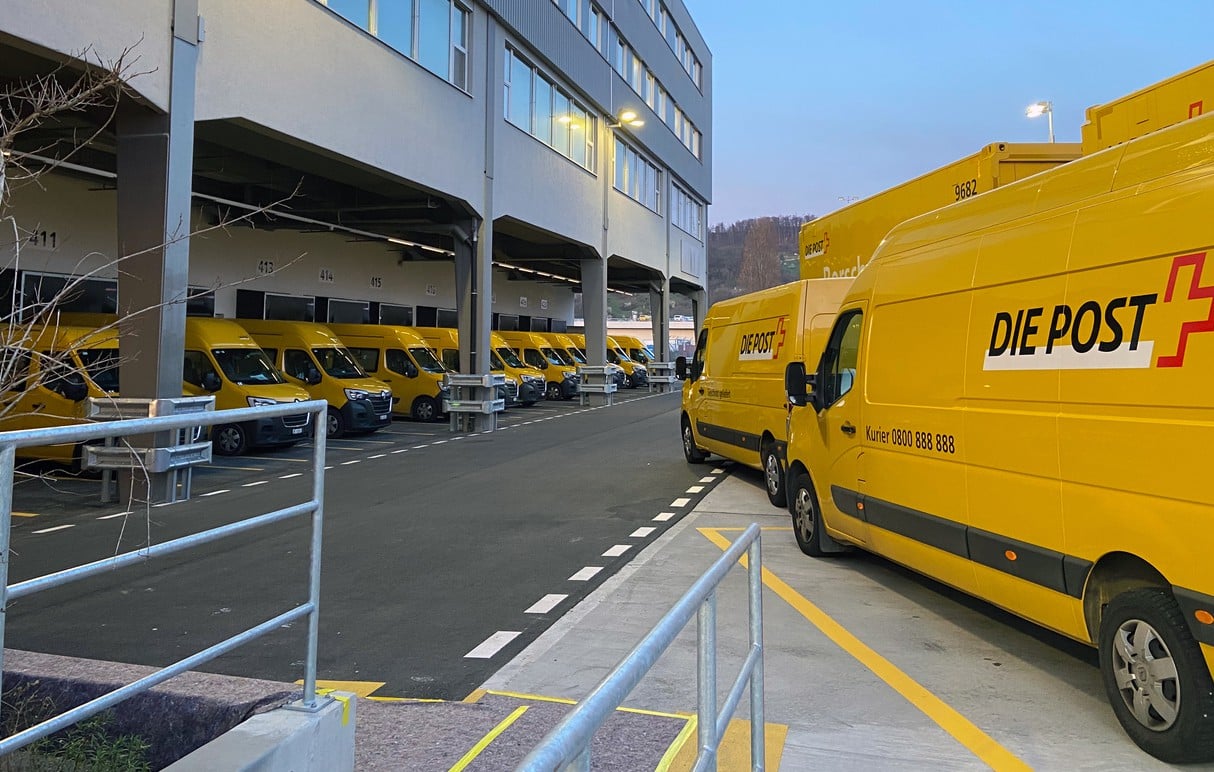 The new package center of the Swiss Post in Pratteln
Efficiency and Pricing Measures Come to the Fore
The Post has a strong equity base. This is necessary to meet the challenges in the currently demanding environment and to remain on the growth path despite difficult conditions. “This growth is essential for the Post to compensate for the ongoing declines in letters and cash transactions at the counter. Only in this way can we fulfill our public service mandate for the Swiss population and economy and finance it sustainably in the future,” says CFO Alex Glanzmann. However, the path taken with the “Post of Tomorrow” strategy also requires that the Post can increasingly focus on the pillars of efficiency and pricing in the given environment. It must tighten its belt and aggressively implement the efficiency measures it can influence on its own. Additionally, the Post must also be allowed to make necessary price increases. Only in this way can it compensate for the declines in letters and packages as much as possible and bear the very high inflation.
Photo: © Swiss Post