Book ‘The Reinvention of Logistics’ by Peter H. Voss
20. July 2023
HHLA tests digital solution for access to container terminals
21. July 2023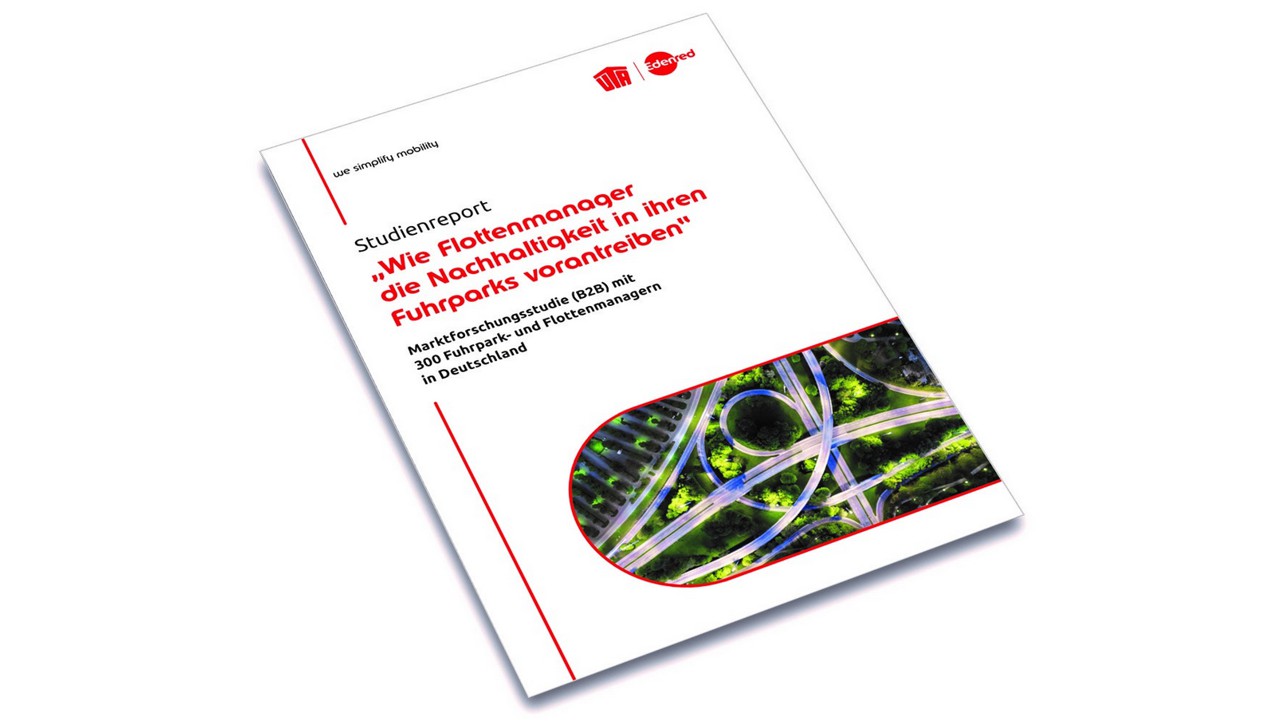
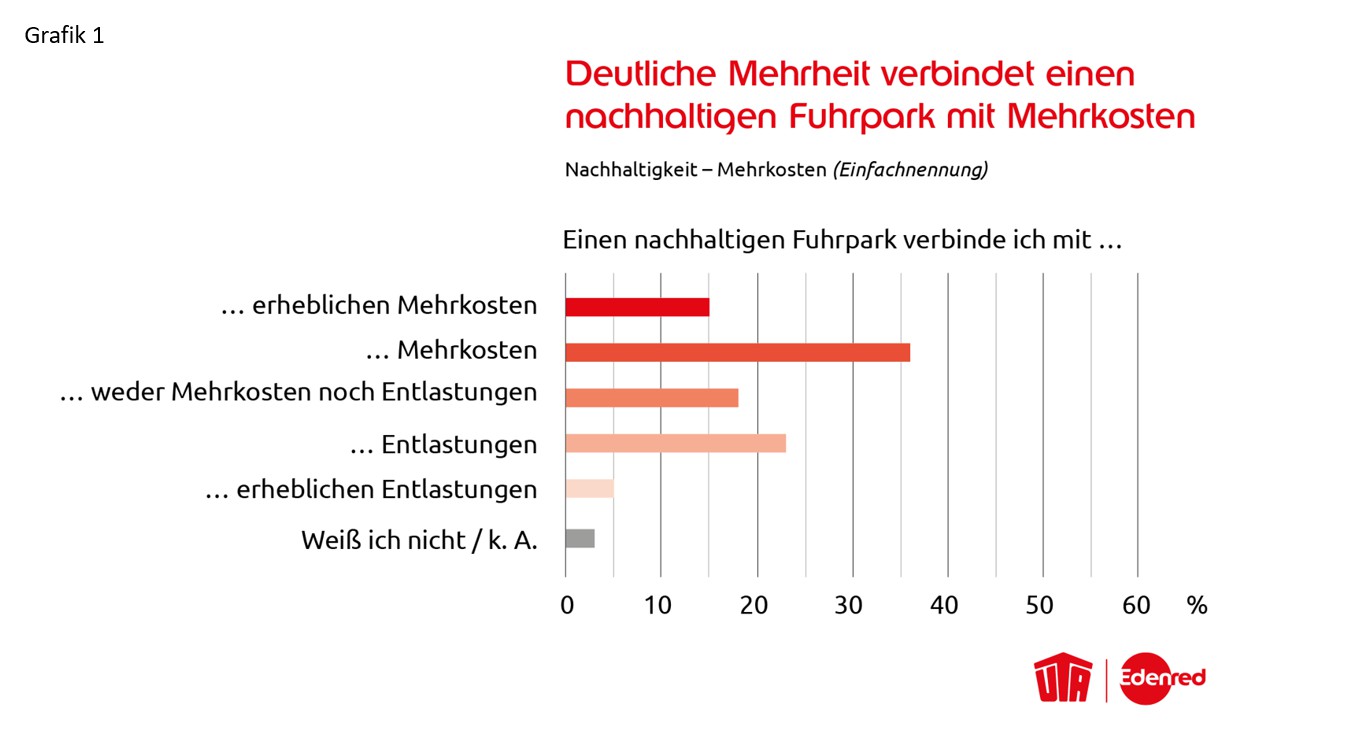
In order to actively drive the mobility transition, commercial fleets need to adopt more sustainable practices in the coming years. However, despite the increasing importance of this topic and its long-term potential for cost reduction, every second fleet manager (51 percent) initially associates the required transition with additional costs. This is a central finding of the current study “How Fleet Managers Promote Sustainability in Their Fleets,” conducted by UTA Edenred, one of the leading mobility service providers in Europe and part of the Edenred Group, which surveyed 300 fleet managers in March of this year.
(Kleinostheim) Accordingly, only one in four (28 percent) expects financial relief, while nearly one in five (18 percent) anticipates a stable cost level with this step. (Graphic 1)
 On German roads, too much CO2 is still being emitted. To achieve the climate goals set by the federal government by 2030, reductions would need to be significantly accelerated in the coming years. However, although the fleets of German companies offer considerable potential here, more than one in five companies (22 percent) currently has not defined any climate goals for their company vehicles. 40 percent of the surveyed fleet managers, on the other hand, have set a CO2 reduction target, while over a quarter (28 percent) aim to become climate- or CO2-neutral by 2030. (Graphic 2)
“Mobility today must not only be simple but also sustainable,” says Richard Röhr, Sales Director Fleet & Mobility DACH at UTA Edenred. “That’s why we advise fleet managers on reducing the CO2 emissions of their fleets and offer them tailored solutions, services, and environmentally friendly initiatives. This way, they can meet the stricter emissions regulations for their vehicles.”
Among the solutions is the sustainability program “Move for Good,” which allows transport and mobility customers to improve the environmental compatibility of their vehicle fleets. Such offerings are of great interest to the surveyed fleet managers: More than 70 percent find them very interesting or interesting, while about a quarter is less interested.
 Fuel Savings for Climate Protection
Currently, fleet managers are most likely (41 percent) to focus on fuel savings to become more sustainable. However, almost as many respondents (40 percent) indicated that this measure is not an option for them. Furthermore, 39 percent of the surveyed fleet managers are currently transitioning their fleets to alternative drives. Here, too, opinions are divided, as 36 percent do not consider alternative drives an option. Nevertheless, nearly one in four (24 percent) plans to address the transition in drives in the future. Additionally, raising driver awareness is currently a viable means for a third of respondents (33 percent) to become more sustainable. While nearly one in five (19 percent) plans to train their drivers in the future, almost one in two (48 percent) fundamentally excludes this training.
Hydrogen and E-Fuels
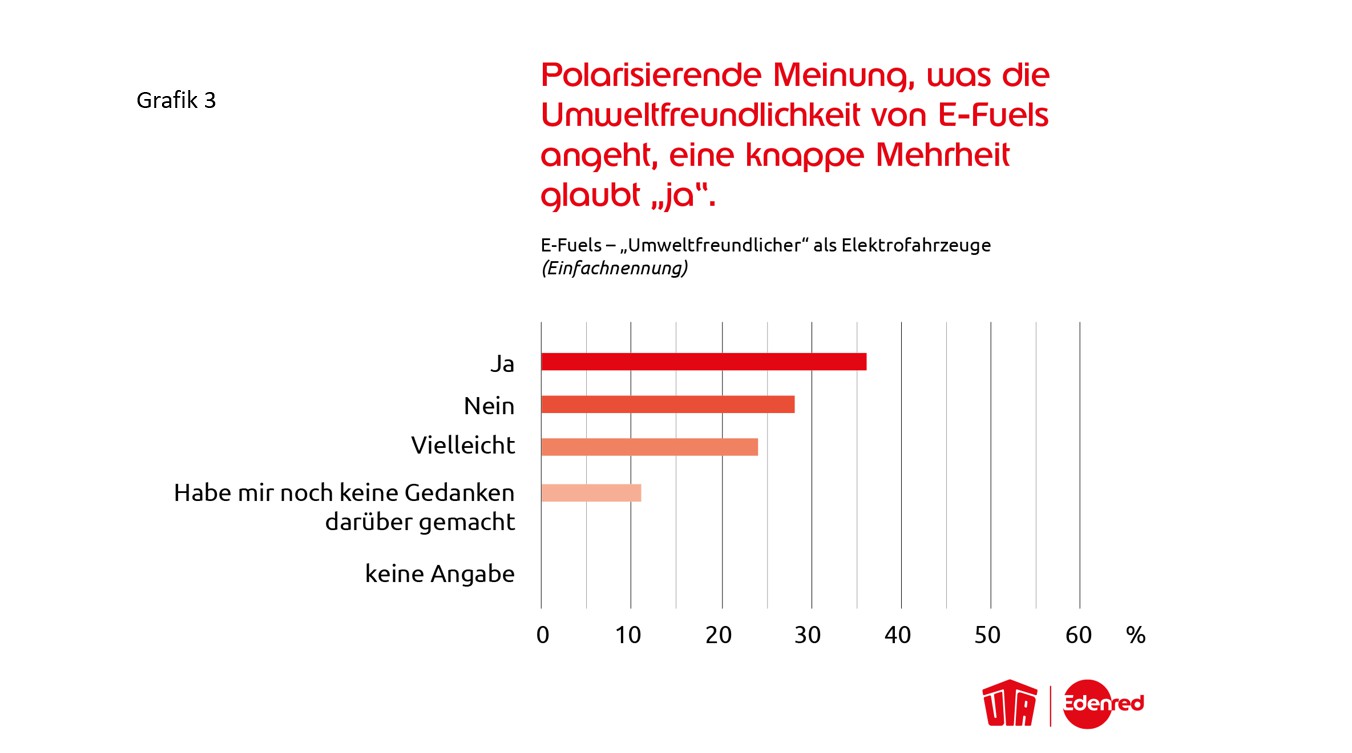
Another option for making fleets emissions-free in the future is “green” hydrogen. It is considered a clean alternative to vehicles with combustion engines. Hydrogen is particularly interesting in areas such as long-distance and heavy-duty transport, where electrification is not feasible in the foreseeable future. And although there is currently no widespread infrastructure in Europe, nearly one in three fleet managers (29 percent) plans to use hydrogen to operate their vehicles in the future. E-fuels have also come into focus in the discussion about sustainable mobility. However, while some see them as an environmentally friendly alternative to electric vehicles, others believe that vehicles powered by e-fuels can theoretically be climate-neutral in the balance, but still emit CO2 and pollutants locally. The same polarizing opinion is reflected in the survey. While more than a third (36 percent) of the surveyed fleet managers believe that e-fuels are more environmentally friendly than electric vehicles, more than a quarter (28 percent) think the opposite. Almost another quarter (24 percent) is still uncertain, while one in ten (11 percent) has not yet thought about e-fuels. (Graphic 3).
 Download Market Study
Graphics: © UTA Edenred