ANITA Shows Efficiency Potential in Road-Rail Transshipment
1. October 2023
Bertschi and Dow Launch Pilot Project for Sustainable Chemical Logistics
3. October 2023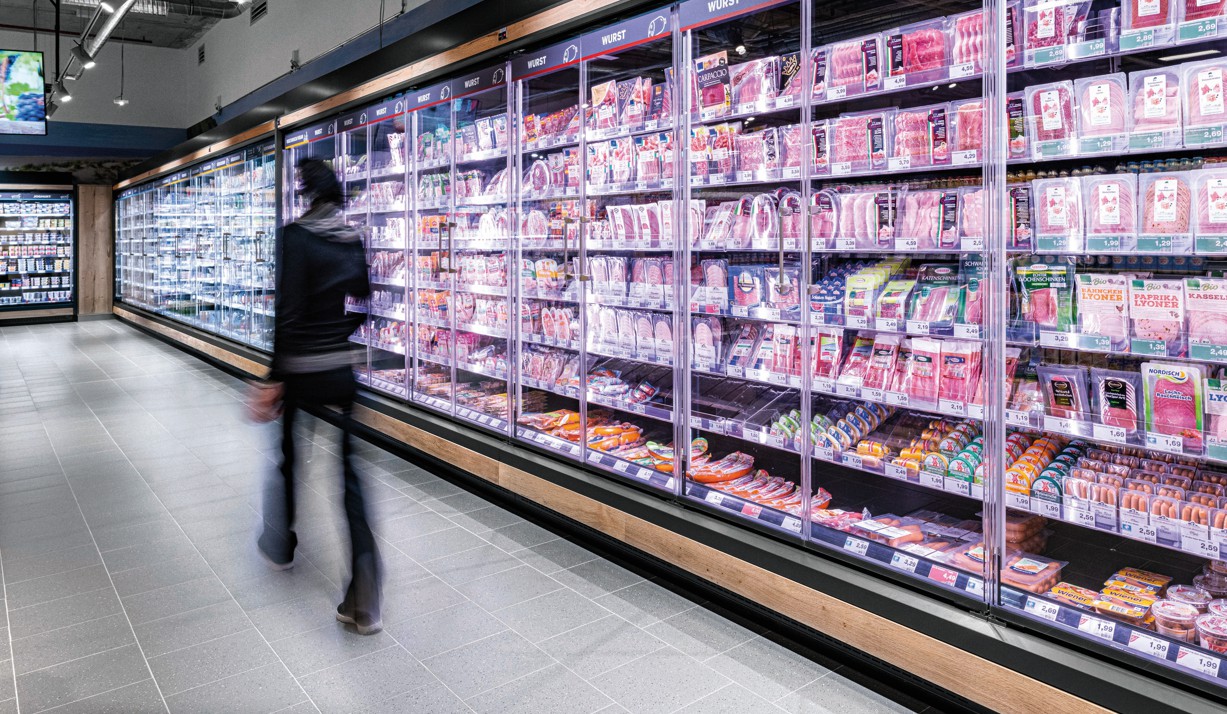
The Austrian complete provider of refrigeration furniture and cooling technology, Hauser, the Grocery Business Unit of intralogistics specialist TGW Logistics, and the University of Applied Sciences Steyr with the research initiative Logistikum.RETAIL have conducted a study on the refrigeration systems of tomorrow. What processes need to be covered in the food retail sector?
(Marchtrenk) What store or fulfillment concepts need to be considered? And last but not least: How do the requirements of traditional retailers differ from those of omnichannel providers or pure online players?
In the study, grocery retailers, online food retailers, and omnichannel specialists were surveyed. The overall process was the focus: from the production of food to its storage and sale at the point of sale. “Depending on whether it is a retailer, a pure online player, or an omnichannel provider, the requirements for refrigeration systems differ significantly,” explains Michael Schedlbauer, Vice President Business Development Grocery at TGW Logistics. “The survey showed that the level of automation is currently low, with a large part of the processes still being handled manually.”
Shop, Darkstore, or Fulfillment Center
In food retail, refrigeration furniture is used in various areas: in the store itself (at service or self-service counters) and away from the sales areas for storage or for picking deliveries.
To compile eFood orders, some companies use so-called dark stores, which are set up similarly to a supermarket. For optimal picking with short distances, they are architecturally optimized and rely on a mix of refrigeration furniture and larger cold storage rooms.
Fulfillment centers in the food sector typically have four different temperature zones, each of which presents specific requirements for design and technology:
- Dry goods
- Cooling area 2-6 °C (dairy products, sausage, fruit)
- Cooling area 0-2 °C (convenience, meat, fish)
- Freezing area
A particular challenge is the appropriate sizing of the cold storage facilities to optimally meet customer requirements, benefit from the lowest possible energy costs, and achieve a high return on investment (ROI). “Ultimately, the needs and requirements of all stakeholders must culminate in a coordinated concept so that ‘shopping of the future’ is made as attractive and sustainable as possible for consumers. With the expertise of the project partners in the study, the topic is in the best hands,” says Gerhard Hetzmannseder, Director Products & Engineering at Hauser.
The study made one thing clear: the greatest challenge of a temperature-controlled supply chain is maintaining a continuous, uninterrupted cold chain. From goods receipt to storage and picking to the last mile. Traceability must be ensured at all times. “Moreover, for many companies in the industry, other factors are increasingly coming into focus: in addition to ergonomics for employees, sustainability, energy consumption, and flexibility are gaining importance,” emphasizes TGW expert Michael Schedlbauer.
Perspectives in the Cold Supply Chain Highlighted
“The research approach allowed for the identification of perspectives and fields of action in the cold supply chain in the context of different store and fulfillment concepts and the derivation of requirements for refrigeration infrastructure/solutions,” emphasizes FH Assistant Professor Dr. Michael Plasch. “Through the development of the three use cases (online-only, hybrid, and store), specifics of each business model could be taken into account, and insights regarding assortment breadth, data exchange, and the use of technologies and technical equipment were gained.”
Photo: © TGW Logistics