TransPack-Krumbach Moves to New Location in Neuburg/Kremmel
10. October 2023
UPS Healthcare Installs Pickup Point Locations
10. October 2023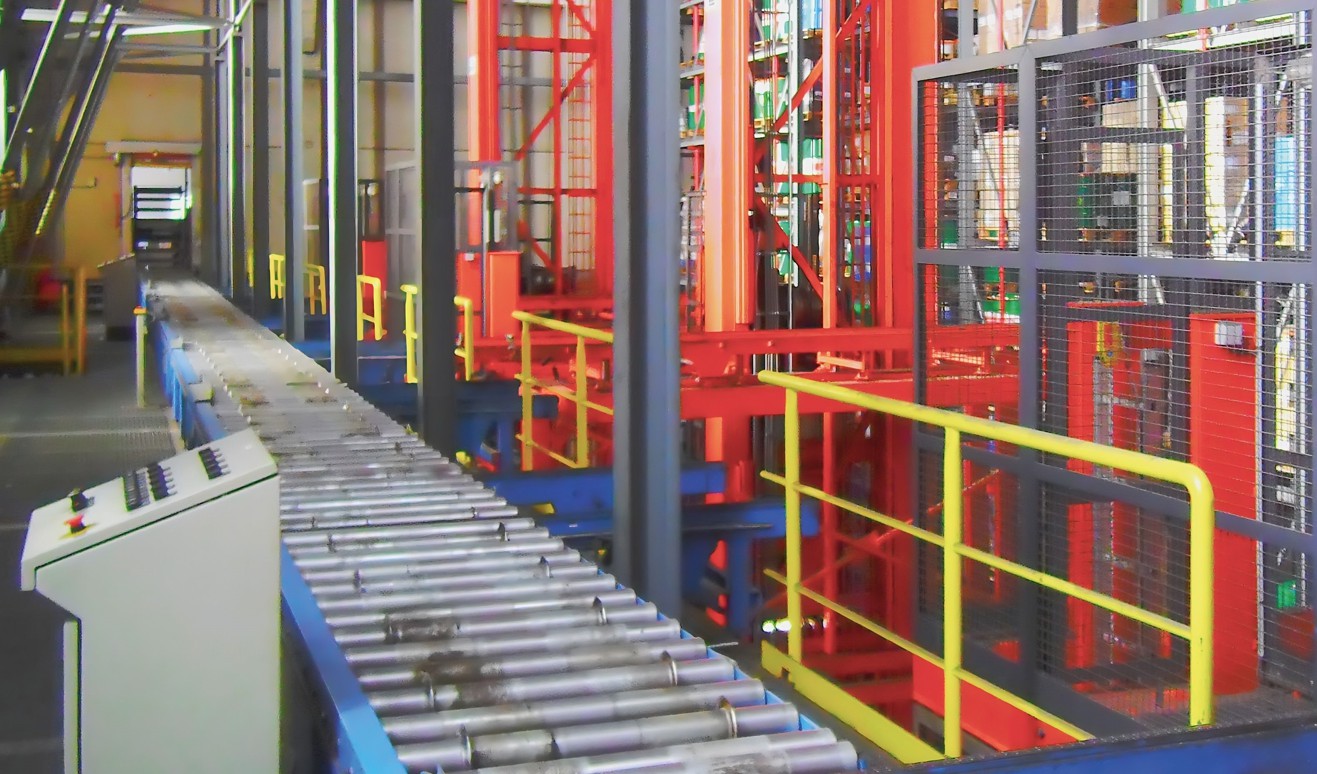
A solidly constructed high-bay warehouse can meet the performance requirements of the operator practically without limitations even after 20 years of intensive use. Provided that regular maintenance and servicing of all components are ensured, the lifespan of storage and retrieval systems or pallet conveyor technology can be extended even further through targeted retrofitting. With the support of LogBer, costly new investments can be avoided in a comparatively simple manner.
(Ahrensburg) “Renewing aging plant components and modernizing outdated control and drive technology is still economically viable and sensible for a high-bay warehouse even after more than 30 years of operation,” says Gerhard Keller, Managing Director of LogBer GmbH. “Typically, such an investment is amortized over 15 to 20 years, but in practice, even high-bay warehouses with 24/7 operation and high performance requirements often function well beyond this period.” As an example, Gerhard Keller cites a facility built in 1980 that underwent a targeted retrofit based on a concept developed by LogBer 15 years ago and is still in operation unchanged after more than four decades.
However, for retrofitting to succeed in a high-bay warehouse, comprehensive preparatory work and experienced logistics planners who know how to handle the uncertainties of such a project are required. In this specific case, LogBer accompanied the renewal of the entire control technology for both the storage and retrieval systems and the pallet conveyor technology. All drives of the storage and retrieval systems were replaced with energy-efficient and easily starting drives. One-sided worn drive rails had to be ground down, and a storage and retrieval system damaged by high dynamic forces had to be completely renewed due to significant weld seam cracks that had formed in the carriage and mast.
Several Hurdles to Overcome
However, there were still several hurdles to overcome, reports LogBer Managing Director Gerhard Keller: “The manufacturer and installer of the high-bay system no longer existed. Nevertheless, we found three companies in the logistics market specialized in retrofitting third-party systems for an initial inspection and assessment of the possible costs.” Ultimately, the systems were modernized aisle by aisle while in operation: controls (PLC, sensors, etc.) were brought up to date, the drive technology was replaced with more energy-efficient and easily starting systems, drive and guide rails were realigned, drive rails were ground, running wheels were renewed, and finally, the warehouse management and material flow control were adapted to contemporary logistical requirements.
Nevertheless, Gerhard Keller notes: “The preparation, planning, and execution of a retrofit/reengineering project is overall very time-consuming, and the necessary measures are difficult to estimate in advance.” To assess the effort as accurately as possible, LogBer divides the process into four phases: Following the analysis of the current situation and operational requirements, the development of the retrofit concept takes place, followed by detailed planning and the tendering of the necessary work, and finally, realization, testing, and commissioning follow.
Great Effort Pays Off
“While the effort is quite substantial in the end, it is definitely worth it,” summarizes Gerhard Keller. The retrofit of the facility built in 1980, realized with the support of LogBer, ultimately made the construction of a new high-bay warehouse unnecessary – reducing costs to only 20 percent of the otherwise required new investments.
Photo: © LogBer