King Willem-Alexander of the Netherlands Visits Duisburg Port
14. November 2023
Arvato Expands Collaboration with Rituals
17. November 2023
In Germany, rail traffic is controlled from over 2,500 highly diverse signal boxes. For years, restrictions have been increasing due to the non- or under-staffing of signal boxes. This is evidenced by a recent survey from the past three months, published today by the FREIGHT RAILWAYS on DB-Watch.
(Berlin) From August 11 to November 5, at least 105,000 minutes of unstaffed signal boxes were documented nationwide – equivalent to almost 73 days. The actual number is unknown, as the operator DB Netz does not publish data*. “In addition to the dilapidated network and many construction sites, non- and under-staffed signal boxes are increasingly becoming a driver for the many delays. Just imagine if roads were closed because no one was there to switch the traffic lights,” says Neele Wesseln, Managing Director of the FREIGHT RAILWAYS. “We call on DB Netz to build up personnel, to staff the signal boxes continuously, and to pay financial compensation to the railway companies in case of non-performance. This relieves the affected companies and gives DB Netz a financial incentive to address personnel shortages.”
Already pointed out the crisis in 2013
As early as 2013, then-Chancellor Angela Merkel urged DB to ensure that “trained personnel is available and that efforts are made to equip this personnel base so that not every time thousands of people have to suffer in cases of illness and vacation.” At that time, a signal box in Mainz was completely out of service for more than a week, leading to massive delays across the entire network and costing the responsible member of the DB Netz board their job.
Despite the appeal from the highest level and the promise of improvement from DB, the situation has worsened again in recent years, contributing to quality problems in rail transport. “According to the evaluation of the outage reports available to DB-Watch, signal boxes in the DB network are under- or unstaffed for an average of nearly seven and a half hours per day. However, we cannot identify effective countermeasures,” says Wesseln. The signal box “Hanau South Side” in Hesse is under-staffed almost daily. During the aforementioned period, the signal box was unstaffed or under-staffed for more than 373 hours. As a result, no train and shunting operations can take place on eight tracks. But not only stations are affected; entire sections of track are also impacted: In September alone, the signal boxes in Beilrode, Falkenberg, and Rehfeld were out of service for over 300 hours. Consequently, the Halle-Cottbus route, which is one of the most important international freight corridors to and from Eastern Europe, was not passable on any single day in September.
Particularly at night, there is a lack of personnel
Particularly at night, there is a lack of personnel in the signal boxes. Wesseln: “This primarily affects rail freight transport, as it mainly operates at night. DB Netz allocates the scarce capacities in favor of passenger transport, thereby harming the rail freight companies.” DB Netz does not seem to be able to manage the situation in the short or medium term, as shown by the signal box in Düsseldorf-Derendorf. Already in July, DB Netz announced to the companies that the signal box would be unstaffed for at least five hours daily from July 28 to at least September 8.
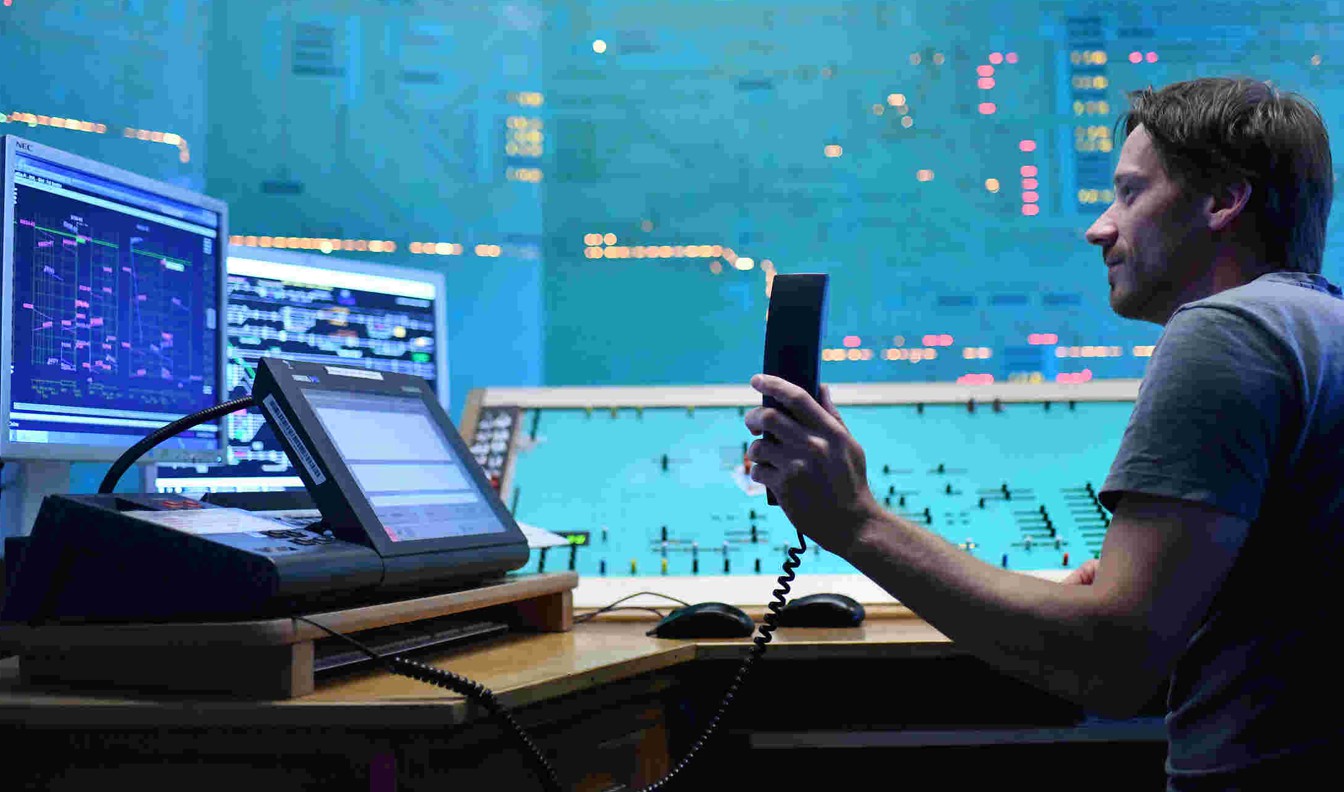 In addition to an insufficient personnel base, the high personnel demand due to slow automation is also a problem. “With the help of electronic or digital signal boxes, this problem could be countered, as the personnel deployed there can manage significantly larger sections of the network. However, DB Netz is also late in automating the signal boxes,” Wesseln assesses. The number of electronic signal boxes has only increased from 469 to 492 from 2020 to 2022, and only two of the 2,521 signal boxes in Germany are digitized. In response to the FREIGHT RAILWAYS’ inquiry about when full staffing of the signal boxes can be expected, DB Netz could not provide a specific implementation date.
Complaint filed with the Federal Network Agency in early September
As early as September, the FREIGHT RAILWAYS filed a complaint with the Federal Network Agency, as DB Netz is not sufficiently fulfilling its legal obligation to provide uninterrupted access to the rail infrastructure. Since then, the Railway Regulation Chamber has been reviewing the ongoing access problems in a procedure against DB Netz.
Overview page for signal boxes on DB-Watch
Photo: © Deutsche Bahn