DKV Expands eTruck Charging Network in Cooperation with Milence
14. January 2024
FREIGHT RAILWAYS fear track price increase of up to 113 percent
16. January 2024
Companies with vehicle fleets worldwide, and particularly in Germany, are faced with a mammoth task: the electrification of their own fleets. Although the electricity price brake that came into effect retroactively on March 1 shows initial effects in industry and private consumption, the Charging Station Check 2023 reveals that the costs for using public charging stations remain high. In a guest contribution, Jürgen Schachner, Regional Sales Director DACH at Samsara, demonstrates how data supports the transition to e-mobility.
By: Jürgen Schachner
Industry experts are concerned about energy prices and predict: the urgently needed shift to electric vehicles is not only made more difficult, but all investments in e-fleets could also be called into question. This development is even more drastic when looking beyond passenger car fleets to truck fleets. In August of last year, there were only two 300KW fast chargers for trucks across Germany. They are particularly lacking at highway rest areas and country roads. The concern about rising costs and many other challenges that fleet managers immediately think of when it comes to electrifying commercial vehicle fleets is not unfounded.
The Giants of the Industry are Investing Heavily
However, these challenges can not only be overcome, but they can also be truly rewarding. This is demonstrated by some pioneers in the industry, who have already made significant progress in the transition to electric vehicles and have committed to replacing thousands of gasoline and diesel vehicles with corresponding electric vehicles.
For example, Deutsche Post DHL Group. The leading provider in the logistics industry has consciously chosen to promote climate-friendly operations. And this comes with significant investments. As part of these efforts, 7 billion euros are to be invested over the next ten years to achieve logistics with net-zero emissions. The goal: by 2030, the share of electric vehicles should reach 60 percent. This is intended to ensure climate-neutral transport and the delivery of goods. E-commerce giant Amazon is also planning investments of one billion euros in the next five years to electrify its delivery and goods traffic in Europe. Specifically for Germany, 400 million euros are earmarked, the company announced.
 Data is a Key Element
But investing in vehicles and drive technologies alone is not enough. The transition to electric vehicles is highly complex, and fleet managers are aware of this. Without data-collecting telematics platforms, this transformation of an entire fleet is nearly impossible, as they provide important answers to even more important questions. Decisions about investment cycles, electric vehicles, and routes can be made using data based on numbers rather than gut feelings. The analysis of individual vehicle data, including age structure, mileage, average CO2 emissions, and maximum daily mileage, enables targeted identification of fleet units that are suitable for electrification. A proven telematics solution provides this complete data, which is collected via standardized interfaces such as FMS or OBDII.
The Magical Connection of Connected Telematics
When companies use intelligent telematics and connected software, they gain access to data about the performance of individual vehicles – e.g., kilometers traveled per charge, charging times, and wear. In particular, this data can be used to evaluate different vehicle types that are deployed on various routes and under varying conditions. Data synergies, big data, and the use of AI enable a holistic view of one’s own fleet based on key criteria. This data is crucial when companies develop a strategy for electric vehicles.
It is clear that the insights needed for these decisions come from intelligent, connected telematics systems that offer more than just dashcams or GPS tracking. Such platforms are not only connected to the internet via mobile networks, allowing data to be available in real-time and location-independent, but they also connect various aspects of a fleet – such as maintenance, fuel efficiency, route planning, and safety – to obtain a complete picture.
Technologies of this kind are already available for internal combustion engine fleets (ICE fleets). However, these solutions have now been specifically tailored to electric vehicles, which provide real-time charging status and warning services for each vehicle, also addressing the so-called range anxiety. Route planning takes into account the battery charge status of the vehicles. This ensures that drivers have enough energy available to complete their daily tasks. Additionally, navigation to the nearest charging stations is provided if necessary. Reports on energy consumption help ensure that vehicles – whether fully electric or plug-in hybrids – are used efficiently.
Advanced telematics systems also provide supportive services in the area of sustainability. Consumption data for electric vehicles as well as for vehicles with internal combustion engines can be used by telematics to illustrate the individual impact of each vehicle on the CO2 balance of the respective company. While the CO2 emissions for vehicles with conventional drives are calculated using a standardized formula, this approach is not applicable for determining the environmental impact of electric vehicles, as they do not emit exhaust gases.
Efficient Fleet Management through Connected Telematics
In the constant tension between internal combustion engines and electric vehicles, an integrated telematics platform offers fleet operators the opportunity to manage both vehicle types in parallel. In a world where mixed fuels are the norm, this ensures that fleets operate smoothly and without interruptions.
A central point of this management is energy certainty for drivers on the road. The seamless connection with the vehicles allows fleet managers a real-time view of the charge status of each individual vehicle on the road. This information is available to managers with the same precision as to the drivers themselves.
Intelligently combined with route planning software, fleet operators immediately learn whether an electric vehicle can complete its route without unscheduled stops or needs to stop for a spontaneous charge. Thanks to real-time data and clever technology, it is no longer a question of when to stop for charging, but the decision is based on the battery status in the context of the planned route and the available charging stations. For maximum efficiency, the system could even coordinate charging sessions with the drivers’ breaks. In the event of unforeseen charging stops, the software automatically selects the nearest and most efficient charging points. Drivers and fleet managers can rely on not being left in the lurch in any situation.
In clear terms: the targeted use of data to monitor the charge status of electric vehicles and to incorporate optimal charging stops into the drivers’ routes is crucial to dispel range anxiety and ensure smooth operations.
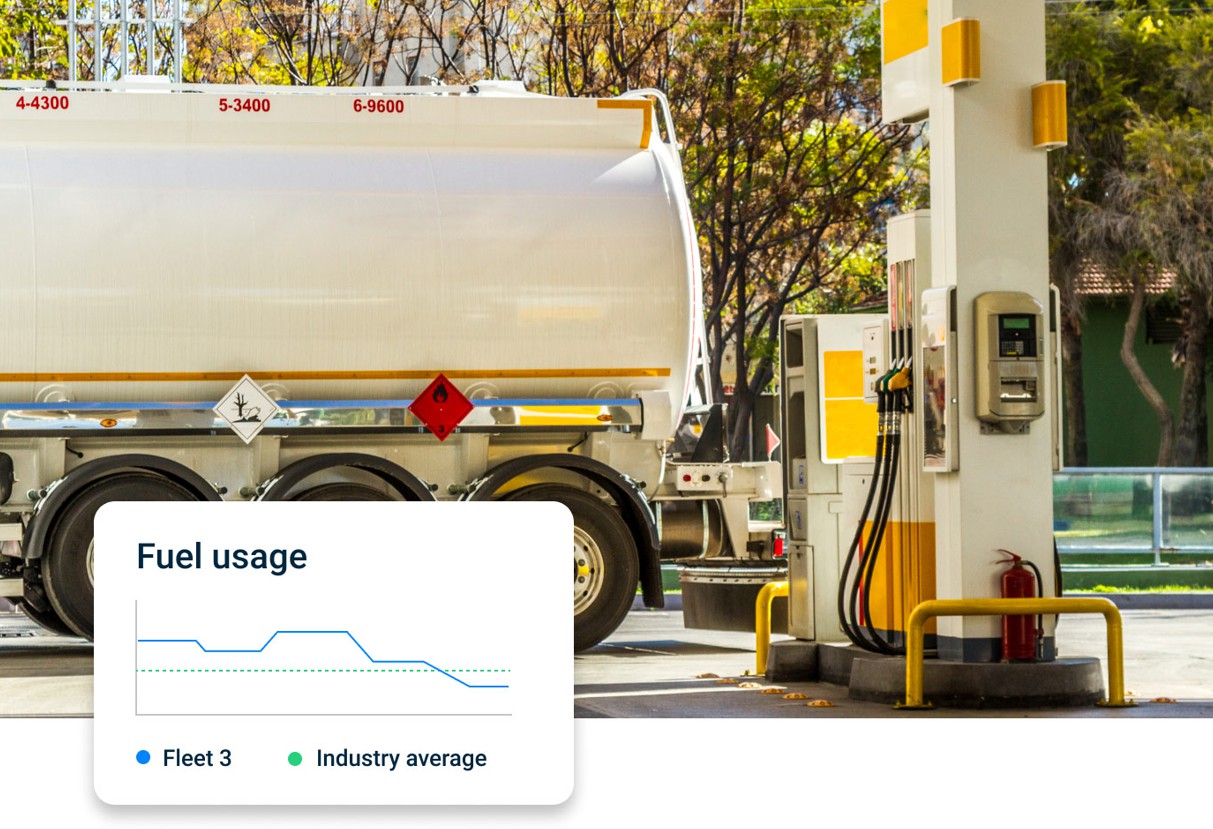 Maximized Energy Efficiency through Strategic Approach
As electric vehicles currently have a more limited range, it is particularly important to plan charging carefully, manage charging sessions, and assign vehicles to suitable routes. Many factors come into play here. Route-specific data such as speed profiles, the topography of the route, and even current outside temperatures should be considered to determine the expected range of an EV vehicle. Because these parameters can – unlike vehicles with internal combustion engines – have a significant impact on actual energy consumption.
The use of vehicle data collected during driving can promote an environmentally friendly driving style for electric vehicles. By identifying environmentally harmful driving behavior and encouraging a smooth driving style with gentle braking and acceleration, battery range can be maximized further.
Special eco-driving programs tailored to electric vehicles can also provide a significant advantage in terms of range. Unlike conventional internal combustion engines, electric vehicles do not have idle time that could negatively affect the eco-driving balance. However, auxiliary consumers such as air conditioning or heating have a greater impact on the eco-driving balance in electric vehicles than in gasoline or diesel cars. It is also important to consider the recuperation behavior, where electric vehicles can even recover energy during braking.
Data-Driven into the Electric Future
While the era of ICE vehicles is not yet over, transport and logistics companies are inexorably heading towards a turning point. The continuously growing importance of data will ultimately be decisive. Without data, the long-term survival of modern fleets is not guaranteed. One thing is certain: in the future, fleets will not only be electric but also data-driven.
Jürgen Schachner is Regional Sales Director DACH, Majors at Samsara. He has twelve years of experience in leadership and senior management positions and several years of experience in the asset-intensive industry. Schachner came to Samsara from Oracle, where he was last a Sales Director leading an international team covering multiple regions in Europe. Prior to his time at Oracle, he was a Senior Solution Strategist at CA Technologies.
Photos: © Samsara