MotionMiners with Sensor-Based Intralogistics Fleet Analysis
6. February 2024
THE FREIGHT RAILWAYS fear even slower rail expansion
6. February 2024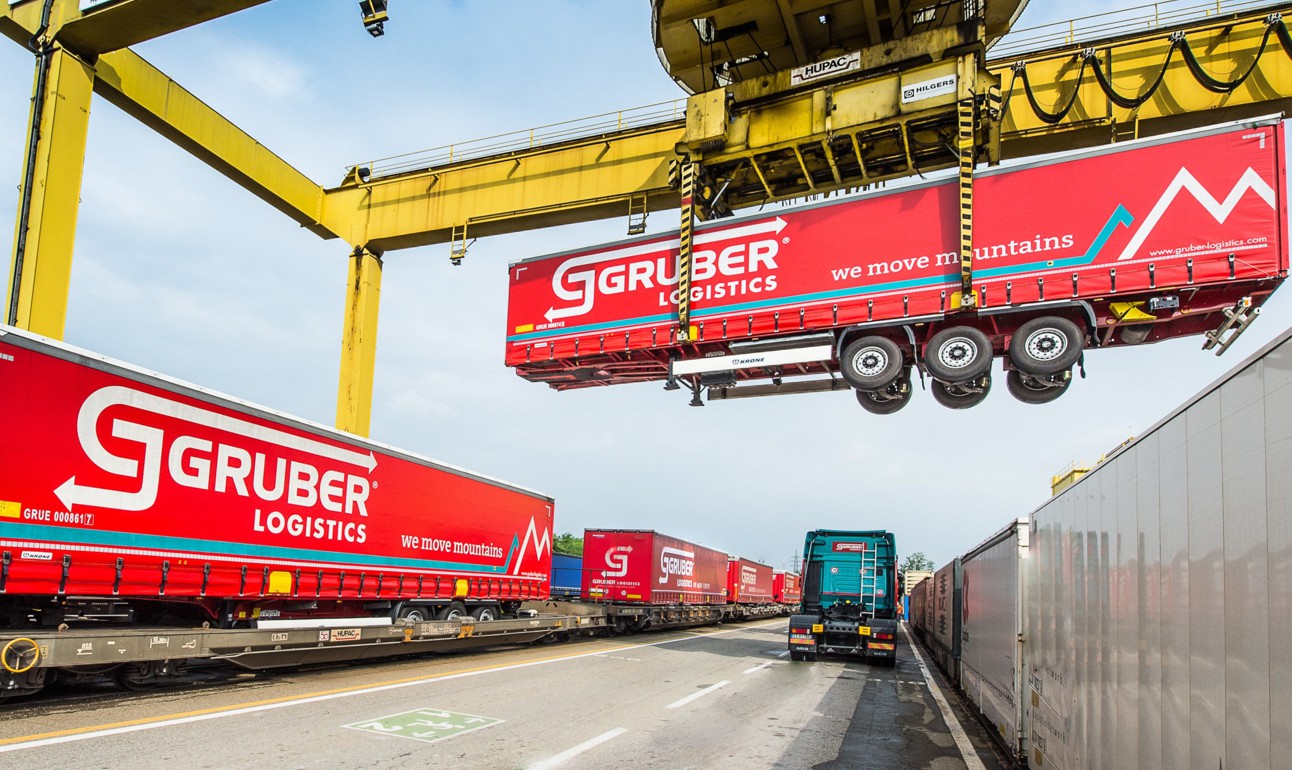
Gruber Logistics strengthens its commitment to sustainable transport shift to rail. To this end, the multinational logistics company has increased its service between Verona, Italy, and Leipzig, Germany, to a daily frequency at the turn of the year, nearly doubling the available capacity.
(Auer) While Gruber Logistics has already extensively relied on combined road/rail transport, it aims to promote the modal shift of transport flows for the industry as a whole through its participation in the recently launched EU research project ESEP4Freight (European Shift Enabler Portal for Freight).
ESEP4Freight is funded with 1.3 million euros by Europe’s Rail Joint Undertaking (EU-Rail) and coordinated by the Department of Transport Planning at the Royal Institute of Technology (KTH) in Stockholm. A total of nine partners from five countries are involved in the research project. In addition to Gruber Logistics and KTH, these include: the European rail Research Network of Excellence (EURNEX), the Polytechnic University of Madrid, the International Union for Combined Road-Rail Transport (UIRR), the Fundació Eurecat, Tenalach Consulting, the Study Society for Combined Transport (SGKV), and the Consortium for the Agricultural Industrial Zone of Verona (ZAI).
Demand for intermodal services is growing
Martin Gruber, CEO of Gruber Logistics, says: “The demand from our customers for intermodal services, especially on the Brenner route, is continuously growing despite challenging framework conditions in this area. Thanks to our enhanced rail service between Germany and Italy, we can now meet this demand.” Regarding the research project, he adds: “As a pioneer in decarbonization, we invest in innovative transport routes and drives to actively contribute to the sustainable transformation of the industry. The modal shift is an essential part of our strategy. Gruber Logistics’ participation in research projects like ESEP4Freight underscores our ongoing commitment to greater sustainability in the supply chain.”
Over a period of 24 months, the research consortium is working towards three main objectives:
- The development of web-based services: As part of ESEP4Freight, a range of web-based services will be developed, integrated, and validated on an open-access platform, including an interactive map of the existing European rail freight infrastructure with route and schedule views. A CO2 calculator, a contract toolbox, and a matchmaking tool are also planned.
- Recommendations for legal and contractual adjustments: The partners of the research project aim to jointly develop recommendations for adapting the current contractual and legal framework in intermodal transport to the needs of the various stakeholders in the supply chain.
- Collaboration and information exchange: Finally, the partners plan to involve a wide range of stakeholders in the European logistics market to identify their information needs and to test and disseminate the results of ESEP4Freight.
Photo: © Gruber