BALM Releases Toll Statistics 2023 for Germany
Feb 18, 2024 at 11:33 AM
Hellmann Becomes Partner of the Digital Hub Logistics in Hamburg
Feb 20, 2024 at 12:38 PM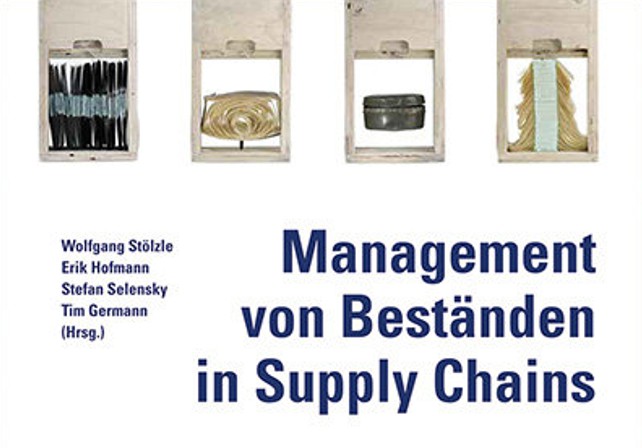
In traditional logistics concepts of the 1990s, inventory was one of the most important optimization levers, closely linked to efforts to improve delivery service. Especially in cases of highly fluctuating and poorly predictable demand patterns, inventory was strategically built up to ensure short delivery times to customers. In the second edition of the book “Inventory Management in Supply Chains,” the authors delve deeper into this topic, which is more relevant than ever.
(Zurich) The subsequent trend towards lean delivery concepts such as Just-in-Time, Just-in-Sequence, or Warehouse-on-Wheels made inventory appear in a different light – in many places, the paradigm of low or no inventory delivery to industry and trade prevailed. This prompted many industries to initiate projects aimed at reducing inventory.
Such opposing movements – briefly outlined – already illustrate the tension surrounding inventory: are they a curse or a blessing? The illustrative ups and downs have recently resurfaced: In light of disrupted supply chains during the Corona crisis and afterwards, there were quickly loud voices demanding an increase in inventory to secure customer supply. With some delay, the well-known bullwhip effect set in: the delayed incoming delivery quantities were far too high, warehouses filled up, and markets often could no longer absorb the supply. Inventory – a curse or a blessing?
Classic Logistics Concepts Are Being Replaced
Questions surrounding inventory seem to be a perennial issue. With the expansion of the classic logistics perspective towards value creation networks – so-called supply chains – the focus shifts to the collaboration of several legally and economically independent companies in procurement, production, and distribution. The classic logistics concepts, which are based on individual companies, are being replaced by inter-company, highly process-oriented supply chain solutions in light of globalization and increasing division of labor.
Currently, many questions regarding inventory management in value creation networks are being reexamined: How can inventory be optimized across companies? Which actors benefit from such optimization? Who is responsible for inventory, and how is the role of traditional inventory managers changing? Who bears the costs for inventory as well as the investments necessary for inventory-optimized supply chain solutions? And regarding supply chain disruptions: how can value creation networks be made resilient without massively increasing inventory everywhere?
Rethinking Inventory Management Is Long Overdue
It is therefore long overdue to rethink inventory management at least in part. A recently published anthology by Versus Verlag supports this, containing both academic and practical approaches to inventory management in supply chains. This includes, for example, fields of action and methods, practical optimization models complemented by lived concepts and case studies, as well as development trends that also address the vulnerability of value creation networks in light of inventory.
*Literature Reference: Stölzle, Wolfgang / Hofmann, Erik / Selensky, Stefan / Germann, Tim (Eds.): Inventory Management in Supply Chains. 2nd, completely revised and significantly expanded edition. Versus Verlag. Zurich 2024. Click here to order
Photo/Cover: © Versus Verlag