HHLA Reports a Decline in Revenue and Throughput in 2023
20. February 2024
THE FREIGHT RAILWAYS Fear Chaos Due to Track Renovation
20. February 2024
It is quite extraordinary when a road transport association, such as the Swiss commercial vehicle association ASTAG, criticizes the expansion of rail infrastructure, which is essential for progress in shifting traffic. And this is not happening in Switzerland, but in Germany, where the expansion of rail infrastructure is lagging years behind. In particular, according to ASTAG, the expansion of the NEAT access route in the Rhine Valley between Karlsruhe and Basel should be accelerated.
(Bern) The Swiss shift policy is working – as evidenced by the record-high market share of rail transport across Europe. The basis for this is close cooperation among the entire logistics industry. The Swiss commercial vehicle association ASTAG considers further progress to be possible. However, urgent expansions of rail infrastructure in Germany are needed for this.
The efforts to shift freight transport are showing results. Thirty years after the adoption of the Alpine Protection Article (February 20, 1994), 74 percent of all goods in transit from border to border are transported by rail through Switzerland. This gives the market share a level that is unmatched anywhere else in Europe. The foundation and prerequisite for this have been and are joint efforts of the entire logistics industry. This includes close cooperation between rail and road (co-modality), optimization of transport chains, as well as automation, efficiency improvements, and innovation among the involved actors.
Financing through Road Transport
The Swiss commercial vehicle association ASTAG also reminds of the financial commitment of the road transport industry via the performance-related heavy traffic fee (LSVA). With a cumulative total of 30 billion francs since 2001 – which is more than the total costs of the NEAT – the payments from vehicle owners now amount to 1.7 billion francs per year; two-thirds of this flows into the rail infrastructure fund (BIF). “Road transport significantly contributes to the financing of rail projects,” summarizes ASTAG central president Thierry Burkart: “In short, our members finance the shift policy!”
More Transit Traffic on Rail Only with Rail Expansion in Germany
According to ASTAG, even more transit traffic on rail is quite possible. As the Federal Council rightly points out in the latest shift policy (p. 74), “productivity and efficiency” in rail freight transport are, however, “insufficient.” Therefore, measures are needed for more quality and reliability. The need for action is particularly urgent on the so-called NEAT access routes in Germany (Rhine Valley); here, the capacity expansions that have long been contractually promised must be urgently implemented. No further progress is to be expected from LSVA increases that unilaterally burden heavy traffic – previous developments have shown that quality determines the choice of transport mode, not primarily costs.
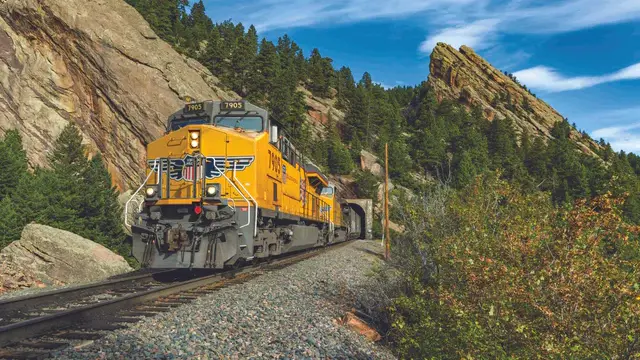
Photo: © Loginfo24