Swiss ASTAG Criticizes Germany’s Pace in Rail Expansion
20. February 2024
UPS Ends MD-11 Flights at Its Air Hub in Cologne
22. February 2024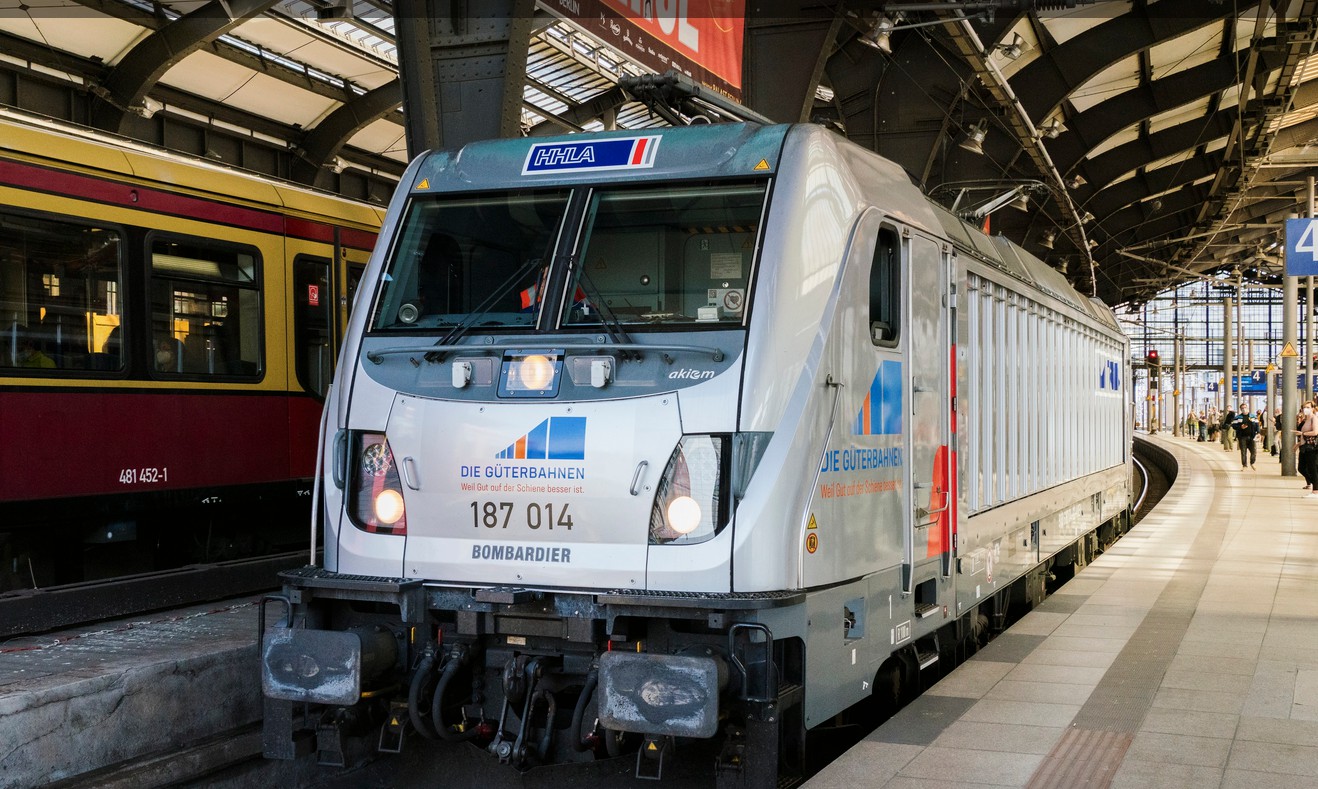
In June 2022, DB and the Federal Minister of Transport presented a new construction strategy for the most heavily trafficked routes of the aging rail network, grandly dubbed “general renovation.” 40 corridors covering a total of 4,300 kilometers, or 15 percent of the rail network, are to be modernized by 2030 in five-month intensive construction phases. THE FREIGHT RAILWAYS, which have supported the new concept from the beginning but also set conditions for its implementation, are seeing more and more dark clouds on the horizon. Conflicts are escalating in Bavaria and Lower Saxony.
(Berlin) “Too much bad news!” is the view of the FREIGHT RAILWAYS regarding the renovation, modernization, and expansion of the rail network. FREIGHT RAILWAYS Managing Director Peter Westenberger said in Berlin: “The ‘valley of tears’ proclaimed by railway chief Lutz must not become the Death Valley of the railway industry and the transport transition. The corridor renovation strategy needs more efficiency and less superficial PR.”
In their 4th status analysis of the DB concept for “general renovation” presented in 2022, the association sees alarming developments even before the actual start of the Riedbahn pilot project in the summer.
Known DB Problems:
- Point 1: Costs are exploding. Initially, 500 million euros were mentioned for the Riedbahn, but we are now at 1.3 billion euros. That DB and the federal government now want to limit all promised federal funds until 2027 to the existing network is unacceptable. At the same time, network expansion at critical points must be accelerated, not slowed down.
- Point 2: Missed deadlines. Of the nine corridors currently planned, interruptions are already expected to be extended beyond the announced five months for five of them. Altogether, the railways and their customers are expected to be rerouted or transported in replacement buses for 18 months longer than announced. Currently, during a kind of dress rehearsal, the subsequently announced closure of the Riedbahn had to be unexpectedly extended three times – by a total of one third.
- Point 3: Lack of capacity for diversions. From the perspective of the FREIGHT RAILWAYS, only one third of the 39 additional corridors have an unproblematic diversion concept. For some corridors, preliminary expansion measures – not just upgrades of existing facilities – would need to be taken, but DB is not moving an inch on this.
Waves are particularly high
Currently, waves are particularly high between the FREIGHT RAILWAYS and DB regarding two corridor plans for the year 2026. The partial postponement of the originally planned complete closure of the Hamburg-Lüneburg-Uelzen-Celle-Hannover route in 2026 to 2029, which is supported by the FREIGHT RAILWAYS, apparently will not be used for simultaneous capacity expansion, which was already agreed upon in the region in 2015. Given the chronically tight capacities for many years, this would be the opposite of the common good. Westenberger: “In a letter, we called on DB, the federal government, and the state of Lower Saxony yesterday to use the planned closure in 2029 for the best possible expansion of the route and to separate the planning from the simultaneously necessary discussion about an additional new line.”
Bottleneck Danube Route near Passau
Whether DB is adequately addressing the freight railways along the Danube route from Passau to Austria will be a litmus test for the overall support of the concept, according to Westenberger. Even in the second attempt, DB InfraGO could not present an acceptable diversion concept. Up to 60 of the daily 130 freight trains are expected to be completely eliminated, as DB puts it. Westenberger: “For about five million tons of freight, there is no capacity on the road either. To impose such a loss on the industry is like recommending someone to hold their breath every other breath for five months. We reject proposed diversion routes via Wroclaw in Poland with a 320-kilometer detour and have suggested alternatives in a position paper submitted to DB.”
Photo: © THE FREIGHT RAILWAYS